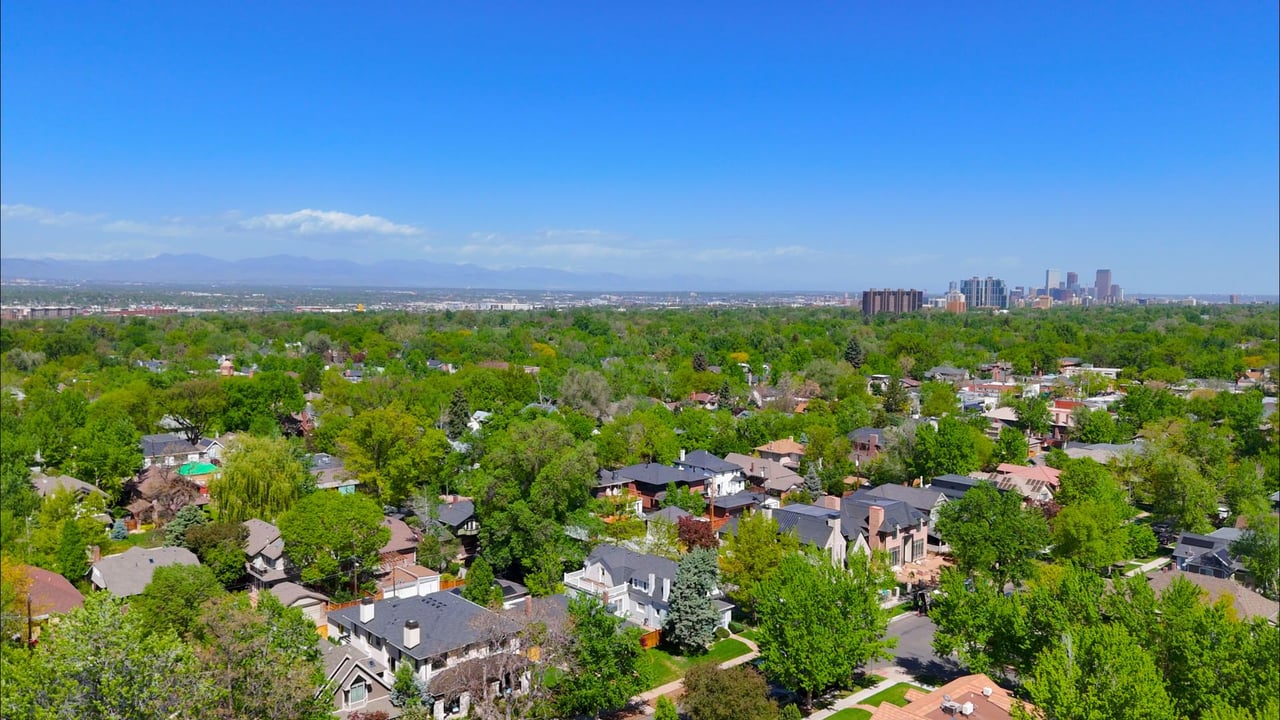
How Denver property taxes are calculated, why your bill or mortgage payment can change, and what homeowners, buyers, and sellers should check before making their next decision.
Updated October 20, 2026. Denver-specific calculations and deadlines below apply to the City and County of Denver unless otherwise stated. Other Denver metro counties and taxing districts require their own property-specific review.
If your Denver property-tax bill or monthly mortgage payment increased, the first step is to identify what actually changed. Your property’s valuation, assessment rates, local mill levies, exemptions, insurance costs, and escrow balance can all affect the numbers, but they do not explain the same thing.
Here is the short answer: Colorado property taxes are generally paid one year after the tax year. Taxes paid during 2026 generally relate to tax year 2025. Denver’s calculation for those residential taxes uses separate school and local-government assessment rates, so applying one generic percentage to your home’s current price can produce a misleading estimate.
My advice is to start with the actual statement for your property, not a county-average tax rate, a neighbor’s bill, or an online payment calculator. Once you identify the tax year and compare the individual components, it becomes much easier to understand the change and decide what to do next.
This guide walks through the calculation, the dates that applied in 2026, the options worth investigating now, and the information buyers and sellers should verify heading into 2027.
First, Understand the Difference Between the Tax Year and the Payment Year
A lot of property-tax confusion starts with the phrase “2026 taxes.” Someone may mean a bill paid during 2026, a valuation assigned for 2026, or an escrow adjustment that appeared on a 2026 mortgage statement.
Those are different events.
Term | What it generally means | What to check |
|---|---|---|
Tax-year 2025 property taxes | The property-tax liability generally paid during calendar year 2026. | The statement labeled for tax year 2025 and the payment history. |
Tax-year 2026 property taxes | The property-tax liability generally paid during calendar year 2027. | The 2026 valuation, applicable assessment rules, and final levies for that tax year. |
A 2026 escrow adjustment | A mortgage-servicer payment change that may reflect taxes, insurance, an escrow shortage, or a combination. | The servicer’s escrow analysis, not just the county tax statement. |
Denver’s official assessment FAQ explicitly identifies the current calculation as “2025 taxes payable in 2026.”
Before comparing two bills, make sure you are comparing the same type of document and consecutive tax years. A Notice of Valuation is not a payment receipt, and an escrow analysis is not a new county assessment.
How Denver Property Taxes Are Calculated
The basic relationship is:
Applicable assessed value × mill levy ÷ 1,000 = property tax for that levy component.
The important detail is how the assessed value is determined. For Denver residential property, the school and local-government components can use different assessment rates. You calculate the relevant components and add them together.
Actual Value Is Not the Same as Assessed Value
Actual value is the assessor’s valuation under Colorado’s property-assessment rules. Assessed value is the amount derived after applying the relevant assessment rate and any applicable adjustments or exemptions.
Neither should be confused with a current listing price, an automated estimate, or the amount you personally think the house would sell for today.
What Is a Mill Levy?
One mill equals $1 of tax for each $1,000 of assessed value. A levy of 27.328 mills is therefore expressed as 0.027328 when used as a decimal multiplier.
Local taxing entities set their levies. The assessor values property; the assessor does not independently choose your total property-tax bill.
Denver’s Residential Rates for Tax Year 2025, Payable in 2026
Component | Residential assessment rate | Published general mill levy |
|---|---|---|
Local government, including the listed urban drainage component | 6.25% | 27.328 mills |
Schools | 7.05% | 52.274 mills |
Source: Denver’s published tax calculation and assessment FAQ.
These are Denver’s published general figures, not a universal formula for every property in the metro. Review the actual statement for exemptions, additional districts, assessments, or other property-specific items.
A Worked Example: Property Taxes on a $625,000 Denver Home
Denver provides an example using a residential actual value of $625,000. Using the city’s published tax-year 2025 figures, without a property-specific exemption or additional charge, the calculation works as follows.
Calculation | How it works | Result |
|---|---|---|
Local-government assessed value | $625,000 × 6.25% | $39,062.50 |
Local-government tax | $39,062.50 × 27.328 ÷ 1,000 | $1,067.50 |
School assessed value | $625,000 × 7.05% | $44,062.50 |
School tax | $44,062.50 × 52.274 ÷ 1,000 | $2,303.32 |
Combined annual amount | $1,067.50 + $2,303.32 | $3,370.82 |
This reproduces the residential example on Denver’s assessment FAQ. It is not a quote for every $625,000 listing, and the purchase price is not automatically the assessor’s actual value.
The example matters because it shows why one assessment rate multiplied by one combined mill levy is not the right shortcut when the components use different assessed values.
For a home you own or are considering buying, use its current county record and statement. Then confirm how the relevant year’s rules apply.
Why Can Your Tax Bill Increase If Current Home Prices Have Not?
A property-tax bill and today’s market price do not move together automatically. There are several reasons a bill can change without an equivalent change in what the property might sell for today.
1. The Assessor Uses a Statutory Valuation Period
Denver explains that real property is generally reappraised in odd-numbered years using a defined sales period. Its 2025 values were based on sales between July 1, 2022, and June 30, 2024.
Denver’s 2026 protest form also identifies a base period ending June 30, 2024. That means a current automated estimate or a recent market slowdown does not, by itself, establish that the assessor used the wrong value.
See Denver’s 2026 real-property protest form for the valuation date and evidence instructions.
2. Assessment Rules and Value Adjustments Can Change
Denver’s explanation of the transition from tax year 2024 to 2025 identifies the removal of the prior value reduction and the separation of residential assessment rates for local-government and school levies.
Those changes affect the calculation even if actual value stays the same. But that does not justify saying every homeowner experienced the same increase or that one statewide percentage explains every bill.
3. Local Mill Levies Can Change
School districts, local governments, and other applicable taxing entities establish levies. A change in those levies can affect the bill independently of the assessor’s actual value.
Compare the line items on consecutive statements rather than look only at the total due.
4. Property-Specific Treatment Can Change
An exemption, classification, improvement, correction, or other property-specific change may affect the calculation. If the statement no longer reflects treatment you expected, ask the assessor or the appropriate office to explain it.
The useful question is not simply “Did taxes go up across Denver?” It is “Which inputs changed on this property, for this tax year?”
How to Find and Check Your Denver Property-Tax Record
Start with the county’s official records rather than a listing website’s tax estimate.
Denver’s property-tax payment page explains how to access the property search, locate “Tax Documents,” and download the statement for the applicable year.
Have these items available:
- The property address and parcel or schedule number.
- The current and prior tax statements.
- The Notice of Valuation or current property record.
- Any exemption or classification documentation.
- Payment confirmations, if the issue involves an unpaid balance.
- The mortgage-servicer escrow analysis, if your monthly payment changed.
Check the basic property characteristics, including size, use, improvements, and other relevant facts. If something appears incorrect, identify the specific discrepancy and ask which correction or review process applies.
A record correction, valuation protest, payment dispute, and escrow complaint are different processes. Finding the right one early can save a lot of frustration.
When Were Denver Property Taxes Due in 2026?
Denver allows eligible real-property taxes to be paid in full or in two installments. April 30 is the full-payment deadline, not the second-installment deadline.
Payment option | Standard deadline | 2026 date |
|---|---|---|
First installment | Last day of February, adjusted for a weekend or holiday | March 2, 2026 |
Full payment | April 30 | April 30, 2026 |
Second installment | June 15 | June 15, 2026 |
These deadlines are now past. Denver states that a deadline falling on a weekend or holiday moves to the next business day. Certain small balances and other charges have different payment treatment; check the official payment instructions and your statement.
If you have an unpaid balance, contact Treasury for the current amount due and instructions. Do not rely on an old statement to calculate what will satisfy the account now.
If your mortgage servicer pays the taxes, verify the disbursement and county payment record rather than assume an escrow arrangement means every payment was handled correctly.
Can You Still Challenge a Denver Property Valuation?
The regular Denver real-property protest deadline for 2026 was June 8, 2026. The city’s published form says protests had to be received or postmarked by that date.
Because this article was updated in October, that is a past deadline, not an instruction to file a regular 2026 protest now.
What Makes a Valuation Challenge Different From a High-Bill Complaint?
A valuation challenge concerns the property’s value under the applicable rules. It is not simply an objection that the bill is expensive or that the current market feels weaker.
Potential evidence may include relevant comparable sales, documentation of incorrect property characteristics, photographs of condition issues, and other information accepted under the applicable process.
The valuation date and evidence period matter. Denver’s 2026 form asks for an estimate of value as of June 30, 2024, using the identified base-period framework. Do not assume every sale or appraisal performed today is relevant to that valuation.
Missing the Regular Deadline Does Not Mean Every Prior-Year Option Is Closed
Denver provides a separate Petition for Abatement or Refund of Taxes process for eligible prior-year issues. Its current forms page states that new petitions submitted during calendar year 2026 may concern tax years 2024 and 2025.
That is not the same as reopening the regular 2026 protest window, and it is not an automatic refund.
Denver’s instructions describe restrictions, including limits on overvaluation claims when the value for that year was already protested and a Notice of Determination was issued. Supporting evidence must match the relevant tax year and valuation period.
Start with Denver’s current abatement forms and filing information. Confirm eligibility, the proper year, and the appropriate process with the county or a qualified professional before relying on it.
A Protest or Petition Can Have More Than One Outcome
Denver’s protest form states that a review can increase, decrease, or leave the actual value unchanged. A filing is not a guarantee of a reduction.
If you receive a determination and disagree with it, follow the instructions and deadlines in that determination. Do not assume the original protest deadline governs every later appeal step.
Did Your Property Taxes Increase, or Did Your Mortgage Payment Increase?
If your total mortgage payment rose, separate the components before attributing the whole change to taxes.
A mortgage escrow account may collect money for taxes and insurance. Your servicer analyzes the account and estimates future disbursements. A payment change can reflect higher expected bills, repayment of an escrow shortage, or both.
The Consumer Financial Protection Bureau’s escrow guidance explains why tax and insurance changes affect monthly payments and recommends contacting the servicer when problems arise.
Four Documents to Compare
Document | What it helps explain |
|---|---|
County tax statement | The tax liability and charges shown for the identified year. |
Insurance renewal | The premium and coverage terms for the new policy period. |
Annual escrow analysis | Past disbursements, projected expenses, and any shortage or surplus. |
Mortgage statement | The current payment breakdown and other account charges. |
Ask the servicer how much of the new payment covers future expenses and how much, if any, repays a shortage. Those are different budget items.
If you believe taxes were not paid correctly from escrow, contact both the servicer and the tax authority promptly. Keep records of your communications and follow the appropriate written dispute process when necessary.
Why County Averages Are Not Enough to Compare Denver Metro Property Taxes
I would not choose a home based on a claim that one metro county always has the lowest property taxes.
Addresses can fall within different school districts, special districts, and other taxing jurisdictions. Similar prices do not guarantee similar bills, even within the same city or county.
Compare the actual statements and applicable jurisdictions for the homes you are considering. Make sure the tax years match and identify any exemptions or property-specific treatment that may not describe your future ownership.
Do Not Double-Count Metro-District Taxes
A metropolitan district may levy property taxes that already appear in the property’s tax statement. A district may also have separately billed fees or other obligations.
Do not automatically add an estimated “metro-district fee” on top of the annual property tax without checking what is already included. At the same time, do not assume the tax statement captures every separate charge.
The Colorado Property Tax Map can help identify taxing jurisdictions, but the state warns that its data may not be current or complete. Confirm information with the county and relevant district.
My Denver neighborhood guides and Denver ZIP-code guide help with location research. The official property record is where we verify the tax obligations attached to an address.
What Denver Buyers Should Verify Before Making an Offer
Property taxes belong in the purchase decision before the offer, not as a surprise when the final payment estimate arrives.
Start with a comfortable monthly budget. Then ask your lender to apply property-specific information rather than assume the listing website’s calculator has captured the current tax, insurance, and ownership obligations.
Your Property-Tax Due-Diligence Checklist
- Confirm the property’s county, parcel number, and taxing jurisdictions.
- Obtain the most recent tax statement and identify the tax year.
- Review actual value, applicable assessed values, exemptions, and levies.
- Ask whether the displayed taxes reflect a seller-specific exemption or other treatment.
- Check district taxes and separate fees without counting the same item twice.
- For new construction, ask whether the available record reflects land alone, a partial improvement, or the completed property.
- Have the lender explain which tax assumptions appear in the payment estimate.
- Discuss closing prorations and later adjustments with the title team and the professionals handling your contract.
Do not assume buying a home automatically resets Colorado taxes to a simple percentage of the purchase price. Do not assume the seller’s current bill is your permanent future cost, either.
Budget for the Whole Property
Taxes are one part of the decision. Add a property-specific insurance quote, applicable HOA dues, maintenance, and likely near-term work.
For a condo or townhome, understand the association’s coverage, reserves, assessments, and owner responsibilities. My guide to insurance costs affecting Denver homeowners and associations explains why the insurance structure deserves attention.
For an older detached home, keep room for systems and repairs. Lower taxes do not eliminate a roof, sewer, HVAC, or drainage issue.
My Denver Buyer Game Plan helps organize the search and offer strategy. If you are deciding whether ownership fits your current finances, use my Denver rent-versus-buy guide alongside actual lender and property figures.
What Denver Sellers Should Document Before Listing
Buyers compare monthly costs as well as asking prices. Accurate records help them evaluate your property without unnecessary uncertainty.
Before listing, gather:
- The current tax statement and relevant prior statements.
- Documentation of any valuation determination, correction, or approved exemption.
- Available district disclosures and separate fee information.
- Current HOA information where applicable.
- Documents needed to explain any unusual balance or unresolved issue.
If you successfully challenged a valuation, provide the determination. Do not promise that the buyer will “inherit” an unchanged bill or qualify for the same exemption.
If the property carries higher recurring costs than competing listings, understand what that means for the likely buyer’s payment. It is one part of positioning the home, alongside condition, location, layout, and price.
My guide to what Denver buyers want explains the broader preparation conversation. If you are also purchasing another home, my sell-first versus buy-first guide helps frame the sequencing decision.
Denver Property-Tax Relief Resources Worth Checking
A valuation challenge, an exemption, a rebate, and a deferral are different tools. Each has its own eligibility rules and consequences.
Denver Property Tax Relief Program
Denver’s current program provides a partial refund to qualifying residents. The city identifies potential homeowner awards of up to $1,800 and renter awards of up to $1,000, depending on eligibility and the program calculation.
Applications for the 2025 rebate period are accepted from May 1, 2026, through April 30, 2027, or until available funds are spent. Income, residency, payment, and household requirements apply.
Homeowner eligibility is not based on income alone. The program identifies additional qualifying categories and documentation requirements, so review the complete rules before assuming you qualify.
Use the official Denver Property Tax Relief Program page for current eligibility, application instructions, and assistance.
State Exemptions and Deferrals
Colorado also maintains information about property-tax exemptions, classifications, rebates, and deferral programs. These should not be treated as interchangeable. A deferral, for example, should not be assumed to erase a tax obligation.
Start with the Colorado Division of Property Taxation’s relief-resource directory and confirm current terms with the administering agency.
What Should You Expect for Property Taxes Payable in 2027?
Taxes payable in 2027 generally relate to tax year 2026. As of this update, the state publishes the following residential assessment rules:
Component | Published assessment information | Official source |
|---|---|---|
Local-government levies | 6.80% after a reduction equal to 10% of the first $700,000 in actual value, subject to the stated $1,000 minimum assessed value. | |
School levies | 7.05% residential school assessment rate. |
These inputs do not, by themselves, establish your final bill. The property’s value, applicable adjustments or exemptions, and the relevant mill levies still matter.
I would not promise a reduction or reuse the 2025 mill levies as if they were a confirmed quote for the next payment year. Keep any preliminary estimate labeled by tax year and update it when the applicable figures are available.
There is another year distinction to watch: a new valuation issued during the 2027 reappraisal cycle generally concerns tax year 2027, with taxes generally payable in 2028. Read the notice and the county’s instructions before connecting a new value to the wrong payment year.
Your October 2026 Property-Tax Action Plan
- Download the tax statement and property record. Identify the parcel and tax year.
- Compare the inputs with the prior year. Look beyond the total due.
- Separate taxes from escrow. Review insurance and any shortage repayment.
- Check whether the issue concerns value, billing, payment, or program eligibility.
- Contact the appropriate office and retain the response.
- Update your household budget using documented costs and clearly labeled estimates.
- If buying or selling, make the property-specific information part of the transaction planning.
Question | Starting point |
|---|---|
Is the property record or valuation incorrect? | County assessor. |
What is due, and was payment received? | County treasurer; Denver’s Treasury Division for Denver properties. |
Why did the monthly mortgage payment change? | Mortgage servicer. |
What does a district tax or separate fee cover? | The district and relevant county records. |
Does a challenge, exemption, rebate, or deferral apply? | The administering office and, where appropriate, a qualified tax or legal professional. |
For the rest of the ownership budget, my Denver cost-of-living guide provides a broader framework.
If you are relocating from Texas, use my separate Texas vs. Colorado property-tax comparison. It focuses on the cross-state decision rather than how to troubleshoot an existing Denver bill.
Frequently Asked Questions About Denver Property Taxes
Are property taxes paid in 2026 for tax year 2025?
Generally, yes. Colorado property taxes are paid in arrears, and Denver identifies its current calculation as tax-year 2025 taxes payable in 2026. Always check the tax year on the statement, especially when comparing it with a valuation notice or mortgage-servicer escrow analysis.
What is Denver’s property-tax rate in 2026?
There is not one purchase-price percentage that accurately describes every property. For tax-year 2025 taxes payable in 2026, Denver publishes a 6.25% residential assessment rate for local-government levies and 7.05% for school levies, with the respective mill levies applied to those assessed values. The property’s statement determines any additional items or property-specific treatment.
How much are property taxes on a $600,000 Denver home?
Start by determining whether $600,000 is the purchase price or the assessor’s actual value. Those are not automatically the same. Then apply the correct tax-year rules, relevant levies, exemptions, and other statement items. A listing-site estimate is a starting point, not a reliable property-specific tax quote.
Why did my tax bill increase if current home prices did not?
The valuation may reflect an earlier statutory sales period, while assessment rules, value adjustments, exemptions, or levies may also have changed. Compare consecutive statements to identify the actual cause. A current automated home estimate does not explain every input in the tax calculation.
What is the difference between actual value and assessed value?
Actual value is the assessor’s valuation under the applicable rules. Assessed value is derived after the relevant assessment rate and any applicable adjustments or exemptions. The mill levy is applied to the relevant assessed value, not simply to the current asking price.
What is a mill levy?
A mill is $1 of tax for each $1,000 of assessed value. To calculate a component using a levy stated in mills, multiply the applicable assessed value by the mill levy and divide by 1,000. When components use different assessed values, calculate them separately.
When were Denver property taxes due in 2026?
The standard first-installment deadline moved to March 2, 2026, because the last day of February fell on a weekend. Full payment was due April 30, 2026, or the second installment was due June 15, 2026. These dates are past. Contact Treasury for current balances and instructions if an amount remains unpaid.
What was Denver’s 2026 property-value protest deadline?
Denver’s official 2026 real-property protest form states June 8, 2026. That was the regular valuation-protest deadline, not a payment date. A later appeal or prior-year abatement has its own process and requirements.
Can I do anything after the regular protest deadline?
Possibly, depending on the issue and tax year. Denver’s current forms page says new abatement petitions submitted during 2026 may concern tax years 2024 and 2025. Eligibility and prior-protest restrictions apply. That process does not automatically reopen the regular 2026 protest window.
Can I use today’s comparable sales to challenge my assessment?
Use evidence appropriate to the statutory valuation date and the process involved. Denver’s 2026 protest form identifies a base period ending June 30, 2024. A recent sale or appraisal is not automatically the right evidence simply because it reflects today’s market.
Will a successful valuation challenge automatically produce a particular refund?
No. The determination, applicable tax calculation, payment history, legal standing, and procedural rules matter. Do not assume a percentage change in value guarantees a matching percentage refund. Confirm the result with the county and retain the written determination.
Why did my mortgage payment increase by more than the tax increase?
The change may include higher insurance, increased estimated future escrow expenses, and repayment of a prior escrow shortage. Review the escrow analysis and mortgage statement alongside the tax and insurance bills. Ask the servicer to separate the ongoing expense adjustment from any shortage repayment.
Are metro-district taxes already included in my property-tax bill?
They may be. Review the statement’s taxing-district lines and confirm whether the district also bills separate fees. Do not automatically add a second estimated district tax on top of a total that already includes it.
Which Denver-area county has the lowest property taxes?
A county ranking is not enough to answer what you will pay on a specific home. The address, value, school district, special districts, exemptions, and applicable levies all matter. Compare actual properties and consistent tax years rather than choose a location from a county-average percentage.
Does buying a home automatically reset the tax bill to the sale price?
Do not assume a simple purchase-price reset or an unchanged seller bill. Colorado’s valuation process, applicable tax year, improvements, exemptions, and local levies affect the result. Ask the county and lender how the property should be estimated for your purchase.
What should buyers check on a new-construction tax estimate?
Ask whether the available tax record reflects the land, a partially completed improvement, or the completed property. Review district obligations and have the lender explain the assumptions in the payment estimate. An existing bill may not describe the cost once the property is fully assessed.
Does Denver offer property-tax assistance?
Yes, for qualifying residents. The current Denver Property Tax Relief Program accepts applications for its 2025 rebate period through April 30, 2027, or until available funds are spent. Income, household, residency, and payment requirements apply. Other exemptions and deferral programs have separate rules.
Will Denver property taxes go down in 2027?
There is no universal answer. Taxes payable in 2027 generally concern tax year 2026. The state has published assessment-rate information, but the property’s value, exemptions, relevant levies, and other applicable items determine its bill. Do not treat a policy change as a guaranteed reduction for every owner.
Can Sallie Simmons help me understand property taxes before buying or selling?
I can help you gather the relevant records, identify ownership-cost questions, and put them into the broader real estate decision. The county, lender, title team, district, and qualified tax or legal professionals remain the appropriate sources for official calculations, determinations, and advice within their roles.
Make Property Taxes Part of the Plan Before You Buy or Sell
If you are comparing homes, preparing to list, or deciding whether a move fits your budget, the asking price is not the entire financial picture.
I can help you organize the tax records, insurance questions, association or district obligations, and condition considerations that belong in the decision. Then we can evaluate the property alongside your comfortable payment, timing, and the alternatives available to you.
If you already own a home and have a billing or valuation concern, start with the appropriate county office. If the question is how those costs affect a purchase, sale, move-up, downsizing, or relocation decision, that is where I can help put the pieces together.
Contact Sallie Simmons or call or text 662.588.2420.
For more buying, selling, neighborhood, and ownership resources, visit my Denver Real Estate Resource Center.