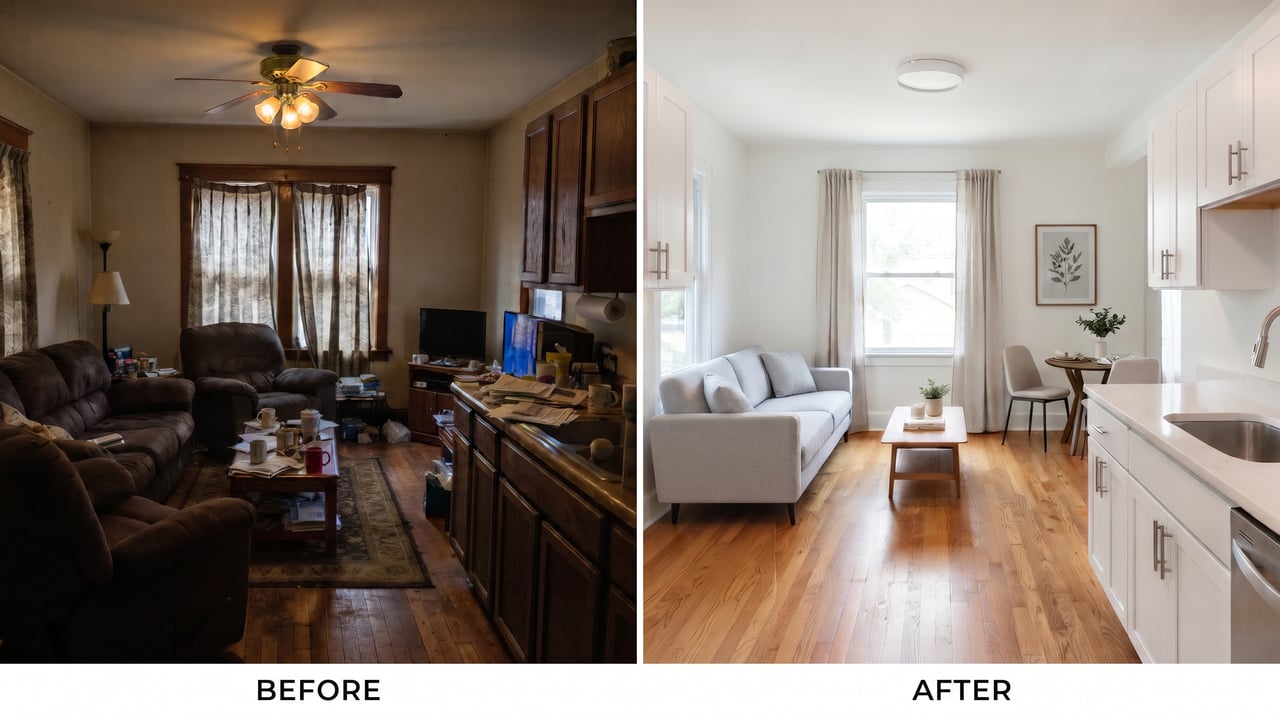
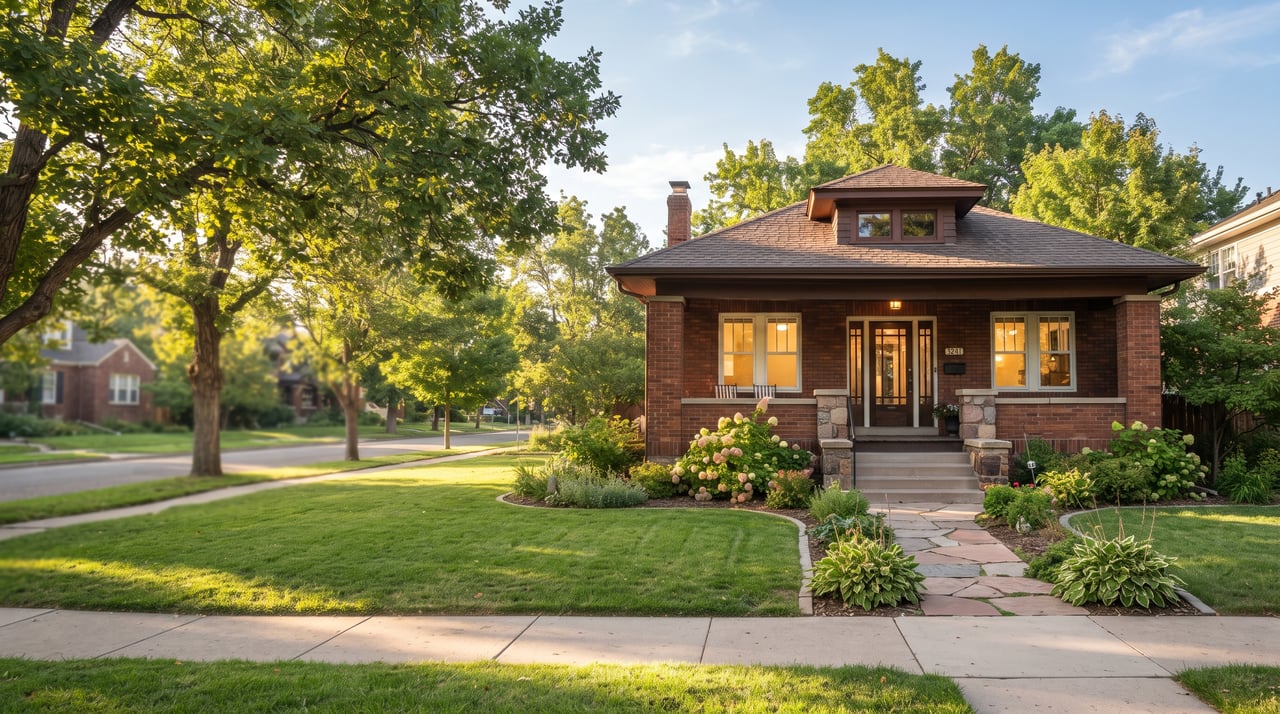
If you felt completely shut out of the Denver market a couple of years ago, 2026 looks and feels very different. Instead of frantic bidding wars, we’re in a more balanced environment where buyers actually have time to think, compare, and negotiate. That’s especially good news for first-time buyers navigating rates, down payments, and tight budgets.
The even better news? Between low‑down‑payment loans and Colorado down payment assistance, some qualified buyers are getting into homes with as little as $1,000 of their own money into the transaction — not 20% down and not years of saving. I break the mechanics of that path down in detail here: How to Buy a Home in Denver with $1,000 Out of Pocket.
This First‑Time Homebuyer Playbook walks you through the entire process, step by step, so you know exactly what to do, when to do it, and how to use 2026’s market conditions — and available programs — to your advantage.
Step 1: Know the 2026 Denver Market You’re Walking Into
Two to three years ago, the Denver market was dominated by:
- Ultra‑low inventory and heavy bidding wars, especially in core neighborhoods.
- Waived inspections, tight deadlines, and aggressive appraisal gaps.
- Buyers throwing every extra dollar at offers just to win.
In 2026, the picture has shifted:
- Inventory has increased, giving buyers more choice and some leverage.
- Prices have flattened compared with earlier spikes, and days on market are longer than peak years.
- Sellers are more open to negotiations on price, concessions, and inspection items.
That doesn’t mean every home is a bargain. The best‑priced, best‑presented homes in the strongest locations can still move quickly and attract multiple offers. But as a first‑time buyer, you now have the breathing room to be strategic instead of desperate — if you have a clear plan.
Step 2: Build Your Money Foundation (Comfort Number, Not Just Approval)
Start with Your “Comfort Payment,” Not the Purchase Price
Most online tools and even some lenders frame things around, “How much house can you afford?” A better question is, “What monthly payment feels comfortable in a normal month, after everything else in your life?”
Your true monthly housing cost usually includes:
- Principal and interest on the mortgage.
- Property taxes, which vary by county and municipality.
- Homeowner’s insurance (and potentially mortgage insurance).
- HOA dues or metro district fees, if applicable.
- Utilities and basic maintenance, which depend heavily on home age and size.
In our Strategy Session, we reverse‑engineer from a monthly payment that feels realistic for you and then work back to a price range that fits today’s rates — not the other way around.
Know Your Up-Front Costs (Before Assistance)
Before we layer in any assistance, most first‑time buyers are looking at:
- Down payment (often 3–5% down, not 20%).
- Closing costs (lender fees, title, recording, prepaids for taxes and insurance).
- Inspection and appraisal costs.
- Moving expenses, initial furnishings, and basic “day one” repairs or updates.
Once you understand both the monthly and up‑front picture, the next step is to shrink the cash needed using the right loan products and down payment assistance.
Step 3: Choose the Right Loan + Down Payment Assistance Strategy
Low-Down-Payment Loans Most First-Time Buyers Use
The 20% down “rule” is a myth for most first‑time buyers. In Colorado in 2026, many first‑time buyers use:
- Conventional loans with 3–5% down. Often with more flexible mortgage insurance options and strong fit for buyers with decent credit.
- FHA loans with 3.5% down. Helpful for buyers with slightly lower credit scores or needing more flexible debt‑to‑income guidelines.
- VA loans with 0% down. For eligible veterans and active‑duty service members.
Colorado & Denver Down Payment Assistance (Where $1,000 Down Comes In)
On top of those loan types, Colorado has some of the most robust first‑time buyer assistance in the country. Examples include:
- CHFA down payment assistance. Grants and second mortgages that can cover a large portion of your down payment and closing costs when paired with a CHFA first mortgage.
- metroDPA and local programs. Targeted to Denver metro buyers, sometimes offering significant assistance with income and purchase price limits.
- CHAC and city/county funds. Additional options tied to income limits, education courses, and buying within specific areas.
Many of these programs only require you to bring a minimum of $1,000 of your own funds into the deal, with the rest of the down payment and some or all closing costs covered by the loan + assistance combo. That’s the basis for the “buy a home with $1,000 out of pocket” strategy.
I break down that exact path, including pros, cons, and real‑world example numbers, on this page: How to Buy a Home in Denver with $1,000 Out of Pocket.
Your Loan & Assistance Playbook
- Step 1: Pre-qualify with a Colorado‑savvy lender. Not every lender is fluent in CHFA, metroDPA, or local grants. We’ll make sure you’re talking to someone who is.
- Step 2: Check your eligibility for multiple programs. We’ll see if you qualify for CHFA, city/county programs, or layered options based on income, credit score, and purchase price.
- Step 3: Decide how much cash you want to keep. In a more balanced market, it can be smarter to keep a healthy emergency cushion and use assistance to bridge the gap.
Step 4: Follow a 90-Day First-Time Buyer Timeline
90–60 Days Before You Want Keys
- Gather pay stubs, W‑2s, tax returns (if self‑employed), and bank statements.
- Talk to a lender and get pre‑qualified (or better, pre‑approved) with real numbers.
- Review your credit profile and discuss whether any quick clean‑up moves make sense.
- Clarify lease dates, job timelines, school calendars, and any non‑negotiable dates.
60–30 Days Before You Want to Be Under Contract
- Get fully pre‑approved, ideally with underwriting started or completed.
- Finalize your realistic price range based on monthly comfort and program limits.
- Shortlist 3–6 target areas based on commute, vibe, and price point.
- Start touring homes intentionally (no “just for fun” tours that don’t fit your criteria).
Offer to Closing (Typically 30–45 Days)
- Write an offer that balances price, protections, and strength.
- Complete inspections (home, sewer, radon as appropriate) and negotiate repairs or credits.
- Finalize loan, appraisal, and any required education courses for assistance.
- Review closing disclosure, complete final walkthrough, sign, and get keys.
Step 5: Make Neighborhood Fit Just as Important as the House
First‑time buyers often get fixated on finishes and forget that the one thing you can’t fix after closing is the location.
Think Beyond the Listing Photos
- Commute reality: drive your actual commute at your actual hours.
- Daily life: where are your grocery, gym, daycare, and favorite coffee spots?
- Noise and parking: visit mornings, evenings, and weekends to see the “real” vibe.
We’ll use your priorities — schools, walkability, trail access, yard space, price per square foot — to build a shortlist, then pressure‑test those areas together. This also matters for assistance programs, which sometimes have area or price limits tied to specific counties.
Step 6: Negotiate Using 2026 Rules, Not 2021 Trauma
The negotiation playbook has changed. In 2026, you typically have more flexibility to:
- Ask for seller credits. Rather than just squeezing the price, we can often negotiate credits toward closing costs or a rate buydown — especially on homes that have been on the market a bit longer.
- Keep inspections. You don’t have to waive inspections to be competitive. Instead, we use inspection results to identify health, safety, and big‑ticket issues and request repairs or credits where appropriate.
- Be selective. Homes that are clearly overpriced or have been sitting allow more room to negotiate below list or negotiate after the market has given feedback.
For “A+” homes in “A+” locations, we decide in advance what your max comfort level is and what protections you refuse to give up. The goal is to win the right house without waking up to buyer’s remorse.
Step 7: Be Rate-Conscious Without Waiting Forever
Rates in 2026 are higher than the ultra‑low years, and that absolutely affects your payment. The buyers who are winning now are not waiting for magic; they’re using smarter tools:
- Payment‑first searching. We build your search around a target monthly payment, then explore how different price points, taxes, and HOA dues affect that number.
- Temporary and permanent buydowns. In many deals, seller credits can be applied to reduce your rate for the first couple of years (2‑1 buydown) or even for the life of the loan.
- Refinance readiness. You never want to bank on lower rates, but we can position you so that if rates improve meaningfully, you’re in a good spot to refinance and lower your payment later.
The combination of more inventory, more negotiation room, and assistance programs often means it’s possible to buy in 2026 in a way that still feels conservative and sustainable.
First-Time Homebuyer Playbook Checklist
Use this as a quick status check.
Money & Financing
- I know my comfortable monthly payment range (not just my max approval).
- I understand my up‑front costs: down payment, closing, inspections, moving.
- I’ve spoken with a lender who understands Colorado first‑time buyer programs.
Down Payment & Assistance
- I know whether I might qualify for CHFA, metroDPA, or local assistance.
- I understand that some buyers buy with as little as $1,000 out of pocket and I’ve read this page: How to Buy a Home with $1,000 Out of Pocket.
- I have a plan for how much of my own cash I want to keep in reserve.
Search & Neighborhood Fit
- I’ve clarified commute limits and realistic drive times.
- I’ve shortlisted neighborhoods that fit my lifestyle, budget, and assistance limits.
- I’ve physically visited at least a couple of those areas.
Offer, Inspection & Closing
- I understand the steps from offer → inspection → appraisal → closing.
- I know which contingencies I won’t waive and my true walk‑away price.
- I have a rough timeline mapped from “start looking” to “keys in hand.”
Want This Playbook Customized to Your Situation?
You don’t have to piece this together from random TikToks and conflicting advice. If you’re even thinking about buying in the Denver area — now, next season, or “sometime soon” — the best next step is a clear, personalized plan.
I offer a no‑pressure Denver Real Estate Strategy Session where we’ll:
- Walk through your timeline, goals, and budget in plain language.
- Look at what’s actually happening in your target neighborhoods and price range.
- Map out your next best steps — including whether a low‑down‑payment or $1,000‑out‑of‑pocket path might make sense for you.
You’ll walk away knowing what’s realistic, what’s possible sooner than you think, and exactly what to focus on now so you’re ready when the timing feels right.