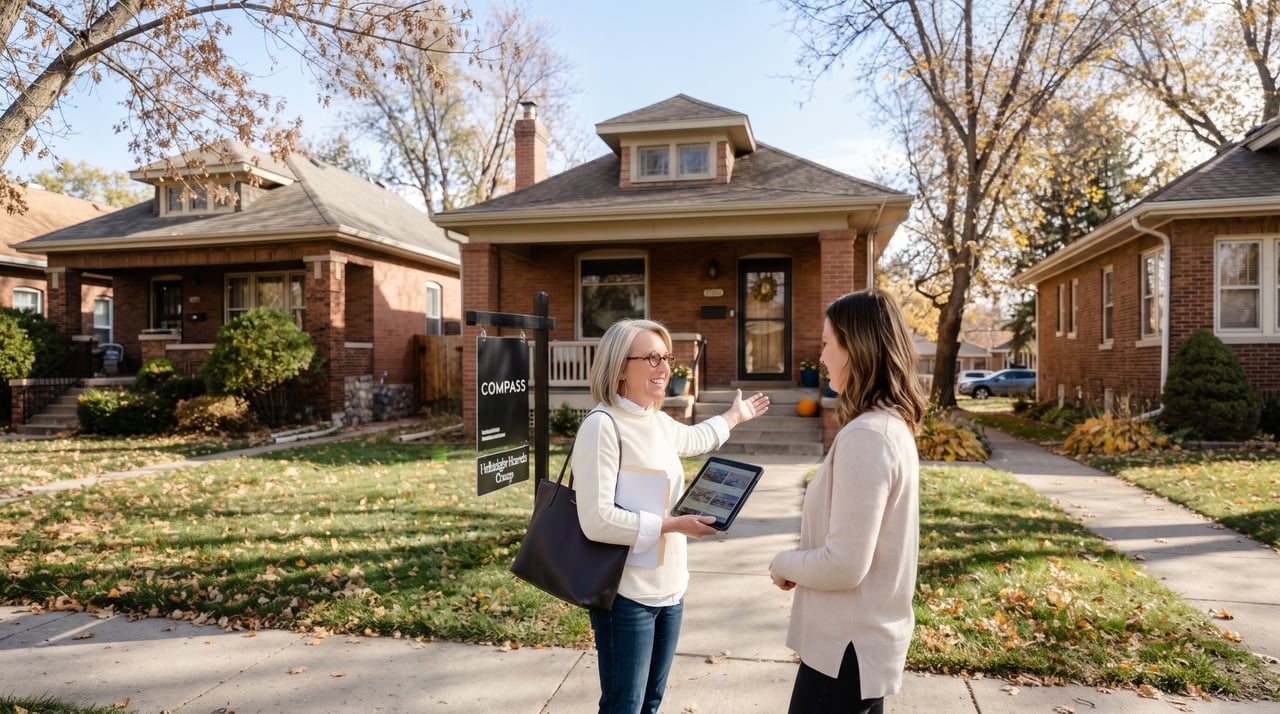
By Sallie Simmons, Denver REALTOR®
Compare home size, neighborhood feel, commute, outdoor recreation, and ownership costs to decide whether Denver or Lakewood fits your budget and daily life.
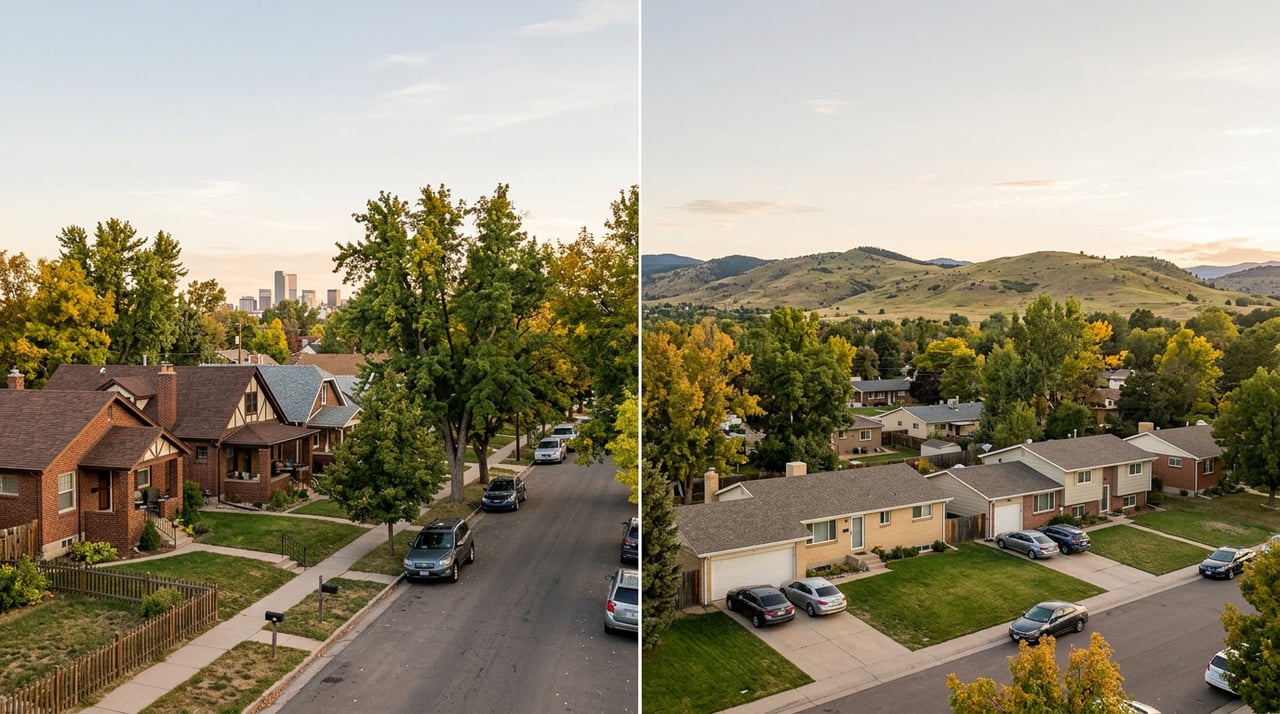
The Question Is Usually About Tradeoffs
Denver may fit better if you want a closer-in neighborhood where restaurants, coffee, parks, and city destinations are part of your regular routine. Lakewood deserves a serious look if your ideal home base includes access to hiking and biking trails, summer afternoons at Bear Creek Lake Park, shopping and dinner in Belmar, concerts at Red Rocks, and a location on the west side of the metro.
Lakewood is not simply the place you consider when you want a bigger house. Denver is not automatically the better choice for every buyer who likes restaurants and an active neighborhood. Both offer different ways to build a daily routine you enjoy.
If you are planning to buy in 2027, the useful question is not, “Which city is better?” It is, “Which combination of house, location, lifestyle, and ownership costs works best for me?”
Most buyers are not really choosing a municipal boundary. They are weighing an extra bedroom against a shorter commute. A usable garage against walking to dinner. A trail nearby against a favorite neighborhood business district. An updated kitchen against the cash they want left after closing.
Denver and Lakewood can both work. The right answer depends on what you refuse to compromise on and which tradeoffs you can comfortably live with.
This guide is for buyers preparing for a 2027 purchase. It is not a prediction about next year's mortgage rates, home prices, inventory, or appreciation. Those conditions need to be evaluated when you are ready to buy.
Denver vs. Lakewood at a Glance
Use this comparison to decide what to investigate. It is a starting point, not a promise that every home in either city will deliver the same experience.
If this matters most | What to compare in Denver | What to compare in Lakewood |
|---|---|---|
Walking to restaurants and coffee | Homes near the neighborhood business districts you would actually use. | Homes near Belmar or other local destinations, with attention to the actual walking route. |
More home or yard within your budget | Available layouts, lot sizes, condition, parking, and attached versus detached options. | Whether current listings provide more useful space, a garage, or a usable yard at the same total budget. |
Downtown access | The trip from the specific neighborhood to your workplace or regular destination. | The actual drive or W Line connection, including travel to and from the station. |
Hiking and mountain biking | The route from home to the trail systems you use. | Access to Green Mountain, Bear Creek Lake Park, and other relevant trail connections. |
Recreational bike rides and walks | Useful park, neighborhood, and regional trail connections near the address. | Connections to Bear Creek Greenbelt and other trails, including the route from the home itself. |
Summer lake recreation | The trip to the swimming, paddling, or picnic destination you prefer. | Access to Bear Creek Lake Park and Big Soda Lake's seasonal swimming beach. |
Red Rocks and west-side outings | The trip from the neighborhood at the times you normally travel. | Whether the particular west-side address improves access to Morrison, Red Rocks, or your other destinations. |
Light rail | The line, station, destination, transfers, and schedule that fit your routine. | Whether a W Line station provides a genuinely useful door-to-door connection. |
Updated or newer housing | Available renovations, newer infill, and documented improvements. | Available renovated or newer properties, evaluated with the same attention to condition. |
A comfortable ownership budget | Financing, taxes, insurance, repairs, and association obligations for the actual property. | The same complete cost comparison. Purchase price alone does not establish affordability. |
A Lakewood address does not promise a large yard or immediate trail access. A Denver address does not promise walkability or a short commute. The property and its surroundings still have to deliver what matters to you.
What Your Money Can Buy: Compare Like With Like
The budget conversation becomes misleading when buyers compare one city's overall median price with the other's and assume that answers what they can buy.
A median that includes condos, townhomes, and detached houses does not tell you what a three-bedroom detached home with a garage will cost. A listing price does not tell you what condition the home is in or what you may need to spend after closing.
In a closer-in Denver search, you may face choices between location and lot size, finished space, parking, or updated systems. Expanding into Lakewood may introduce homes with a different balance of those features.
That might mean a layout that works better for remote work, a garage that accommodates your bikes and equipment, or outdoor space you would actually use. It might also mean a longer trip to a destination that matters to you.
Whether the trade is worthwhile depends on the homes available when you are shopping. I would rather compare six relevant properties than make a sweeping promise about where your money goes farther.
Build a Small, Useful Comparison
Start with three Denver homes and three Lakewood homes that fit the same basic requirements and purchase range. Then compare:
- Property type: detached house, townhome, or condo.
- Above-grade living space and finished basement space separately.
- Bedroom and bathroom locations, not just the total count.
- Space for an office, guests, hobbies, or other actual needs.
- Usable yard space and how it connects to the house.
- Garage dimensions, driveway space, storage, and other parking arrangements.
- Documented improvements and likely near-term repairs.
- Commute, errands, trail access, and regular activities.
- Estimated monthly ownership cost and cash needed after closing.
A larger house is not automatically more functional. An additional basement bedroom may not solve your need for a main-floor office. A two-car garage may not comfortably accommodate your vehicles and equipment. A large lot may include space you will not use.
The same goes for location. Paying more to be near a business district makes more sense if you will actually walk there. Paying for proximity to a trail system makes more sense if it will become part of your week.
If you are still setting your price range, start with my guide to how much house you should actually buy in Denver. Your comfortable payment should guide the search, not just the maximum amount a lender approves.
The Lifestyle Difference: What Do You Want Nearby?
Denver: A Closer-In Neighborhood Routine
The appeal of a closer-in Denver neighborhood is often what happens outside the house.
Maybe you want coffee to be a walk rather than a drive. Maybe you want to meet friends for dinner without planning the evening around transportation. Maybe you want a park, neighborhood business district, or city destination to become part of an ordinary Tuesday.
My Best Denver Neighborhoods guide is a starting point for comparing those settings. Berkeley, West Highland, Platt Park, Sloan's Lake, and other areas offer different reasons to investigate particular addresses.
But liking a neighborhood destination and living conveniently near it are not the same thing. Check the distance, crossings, sidewalks, and route from the actual house.
Also be honest about what comes with the property. The architecture and location may appeal to you while the storage, stairs, yard, parking, or maintenance requirements do not.
Denver can be a strong fit when the neighborhood itself is something you will use and enjoy regularly, not simply a recognizable name on the listing.
Lakewood: More Than a Larger-House Alternative
Lakewood deserves a fuller conversation than “more space, more driving.”
It has a shopping and dining destination in Belmar, hiking and mountain biking on Green Mountain, walking and biking connections along Bear Creek, and lake recreation at Bear Creek Lake Park. Red Rocks and Morrison also belong in the discussion for buyers who regularly head that direction.
For some buyers, that combination is exactly the point of living on the west side. They want a home base that works for an after-work hike, a bike ride, a summer swim, or a concert, not only a convenient place to sleep between workdays.
The important question is which of those destinations will actually become part of your routine and how the particular address connects to them.
Belmar: Shopping, Restaurants, and a Different Kind of Neighborhood Convenience
If your mental picture of Lakewood is only subdivisions and driving between errands, spend some time in Belmar before you decide.
Belmar is a shopping, dining, and entertainment district with local businesses, national retailers, restaurants, and events. It gives buyers a specific Lakewood destination to evaluate when restaurants and everyday convenience matter.
That creates a different comparison from simply asking whether Denver or Lakewood is more walkable.
Would you enjoy being near a district where you can browse shops, meet someone for dinner, and combine errands with time out of the house? Would a particular home let you do that comfortably on foot, or would you still drive?
Those answers depend on where the home sits relative to the destinations you want. “Near Belmar” in a listing description is not enough. Walk the route and decide whether it works for you.
Belmar does not need to feel like Berkeley, West Highland, or another Denver neighborhood to be appealing. It needs to offer the kind of convenience and atmosphere you want.
For some buyers, being near Belmar creates a useful middle ground: access to dining and shopping while keeping a Lakewood location. Others will prefer the specific businesses, streets, and rhythm of a Denver neighborhood.
Hiking and Biking: Where Lakewood Deserves a Closer Look
If you hike, run, or ride regularly, trail access should be part of the home search rather than a vague lifestyle benefit mentioned at the end.
There is a meaningful difference between liking the idea of outdoor recreation and having a route that makes it practical after work.
Lakewood's official trail resources provide an interactive trail explorer and information about the city's hiking, biking, and equestrian trail network. Use those resources to investigate connections from the homes you are considering.
Green Mountain: Hiking, Trail Running, and Mountain Biking
William F. Hayden Park on Green Mountain offers more than 2,400 acres of open space and a network of shared-use trails.
The park includes options such as Green Mountain Trail, Hayden Trail, Summit Loop, Rooney Valley Trail, and Box-o-Rox. The terrain and difficulty vary, so a casual walk, a sustained climb, and a technical mountain bike ride are not interchangeable activities.
For a buyer who regularly hikes, trail runs, or mountain bikes, access to the appropriate trailhead can be a substantial part of the location's appeal.
But a listing that says “near Green Mountain” does not establish that you can walk or ride comfortably from the house. Check the trailhead, street connections, crossings, elevation, and whether you would realistically drive there.
Also review current trail conditions and rules. The city asks visitors to avoid wet or muddy trails and stay on designated routes.
Bear Creek Greenbelt: Walking and Biking Connections
Bear Creek Greenbelt offers a different outdoor experience from a climb on Green Mountain.
The natural corridor includes wetlands, ponds, wooded areas, and paved and unpaved walking routes. Its trail connections provide options for walking and biking toward Denver or toward Bear Creek Lake Park.
That can matter if your ideal routine is an evening walk or a recreational bike ride rather than a mountain outing that requires packing the car.
For buyers who cycle, distinguish between a pleasant recreational route and a useful transportation connection. A trail can be excellent for a weekend ride without providing a practical route to your workplace or regular errands.
Check the complete trip, permitted uses, current conditions, and any closures or construction before treating a trail as part of your daily transportation plan.
Bear Creek Lake Park: Swimming, Paddling, Trails, and Summer Weekends
Bear Creek Lake Park belongs in this comparison because it adds something different from a neighborhood playground or a small city park.
Bear Creek Lake Park is a City of Lakewood park with opportunities for hiking, biking, camping, fishing, boating, picnicking, and seasonal swimming.
It is not Bear Creek State Park. Using the correct name matters when you are checking maps, fees, park rules, and current conditions.
Yes, There Is a Swimming Beach
Big Soda Lake, inside Bear Creek Lake Park, has a designated seasonal swimming beach. The park also offers paddle-sport recreation, subject to current rules, operating arrangements, and conditions.
If your idea of a good summer includes a beach afternoon, a picnic, or time on the water, that is a real lifestyle consideration, not just a line about “access to the outdoors.”
Check the city's Bear Creek Lake Park activities information for current swimming access, permitted activities, seasonal operations, and other details. Do not assume every lake in the park permits the same use.
The Park Is Also Relevant When You Are Not Swimming
The park's multi-use trails provide ways to explore on foot, bicycle, or horseback, subject to the rules for the particular route. That makes it worth considering beyond the summer beach season.
For a buyer comparing two homes, the question is practical: would you use the park enough for access to influence your decision?
If the answer is yes, compare the actual trip, entrance, parking or trail connection, and applicable fees. If you visit only once a year, it probably should not outweigh a commute or layout problem you will deal with every day.
Red Rocks, Morrison, and Mountain Access
Red Rocks Is Part of the West-Side Lifestyle Conversation
If you regularly go to concerts, Red Rocks deserves more than a passing mention.
Red Rocks Park & Amphitheatre is in Morrison, not Lakewood. It is both a concert destination and a park with outdoor trails.
For a buyer who makes repeat trips there, a Lakewood home may provide a useful west-side starting point. The actual benefit depends on the address, event traffic, arrival time, and how you travel.
I would not promise that every Lakewood home is a quick drive from Red Rocks. I would put the venue into the same practical comparison as your workplace, favorite trailhead, or other regular destination.
If concert nights are part of your life, investigate the trip home, too. Consider whether you typically drive, arrange a ride, or use another transportation option. Review the venue's official transportation and parking information rather than assuming the logistics.
Nearby Foothills Recreation and Mountain Trips Are Different Things
Being well positioned for an after-work hike is not the same as having a short drive to a mountain resort.
A west-side location may be appealing if you frequently head toward foothills destinations, Morrison, or routes into the mountains. But the usefulness of that location depends on where you go and how the home connects to your route.
Access does not eliminate weekend congestion, weather, or road conditions. Compare the trip you actually make rather than treating “closer to the mountains” as a universal advantage.
For someone who regularly hikes, bikes, attends shows, or heads west, these destinations may become an important part of the buying decision. For someone whose life is centered elsewhere in the metro, they may remain an occasional bonus.
Compare the Neighborhood Experience Before You Choose the City
“Denver versus Lakewood” is the opening question. The final decision should be more specific.
In Denver, nearby neighborhoods can organize your daily routine around different destinations. My Berkeley vs. West Highland comparison illustrates why choosing a home base involves more than deciding that you like Northwest Denver.
Apply the same thinking in Lakewood. Belmar, Green Mountain, the Bear Creek area, and northern Lakewood near the Wheat Ridge border should not be treated as interchangeable.
- Near Belmar, investigate whether the particular home provides the shopping and dining access you want.
- Around Green Mountain, identify the trailheads and routes you would regularly use.
- In the Bear Creek area, compare greenbelt connections, park access, errands, and work destinations.
- In northern Lakewood, evaluate the actual relationship to the west-side destinations that matter to you.
Edgewater is a separate city, not a Lakewood neighborhood. If homes near that border enter your search, verify the property's jurisdiction rather than relying on a broad listing description.
My Denver ZIP Code Guide can help orient your research, but a ZIP code is not a substitute for checking the address, jurisdiction, and surrounding streets.
Visit Like You Already Live There
Walk to the coffee shop. Drive to groceries. Try the route to the trailhead. Look at the street when you would normally leave for work and when you would come home.
If biking matters, ride the relevant connection when practical. If walking to dinner matters, do that walk instead of judging it from a map.
A showing tells you something about the house. Testing the routine tells you whether you want to live there.
Commute, Light Rail, and Day-to-Day Logistics
Where you need to be during the week can change the answer completely.
Downtown Denver, the Denver Tech Center, the Federal Center, Anschutz Medical Campus, and Denver International Airport are different destinations. A location that works well for one may be inconvenient for another.
Do not let a short-looking line on a map make the decision.
Compare the Trips You Actually Make
- For downtown, identify the building, parking arrangement, and hours you travel.
- For the Denver Tech Center, test the route to your particular workplace rather than a general map pin.
- For the Federal Center, evaluate the relevant entrance and any useful transit connection.
- For Anschutz, include your campus destination, parking, and actual shift or office schedule.
- For DIA, consider departure and return times, parking or rideshare costs, and transit connections.
- For hybrid work, weigh the occasional office trip against the daily value of your home setup.
Lakewood Has Light Rail Access, but the Whole Trip Must Work
Lakewood should not be dismissed as an option that always requires driving downtown.
The W Line connects Union Station with Jefferson County Government Center–Golden and serves stations including Lakewood–Wadsworth and Federal Center.
For some buyers, a useful connection to a W Line station can make a Lakewood location worth considering for downtown trips. For others, the trip to the station, wait, transfer, or final walk may make driving more practical.
Compare:
- How you would get from the home to the station.
- The actual walking route or available parking arrangements.
- Service times for the hours you travel.
- Any transfers and the distance from your final stop.
- The return trip, especially after evening events or a late workday.
Airport rail service uses the A Line. Do not assume that living near a W Line station creates a direct, one-seat airport trip.
Review RTD's current schedules and service information and its airport transportation information when evaluating a property. Future service patterns should be checked again when you are ready to buy.
The same standard applies in Denver: “near transit” is useful only when the route and schedule connect you to the places you need to go.
Compare the Monthly Cost, Not Just the Purchase Price
Two homes with similar asking prices can require different monthly budgets and different amounts of cash after closing.
For each serious option, compare the following using property-specific information:
Cost or obligation | What to investigate |
|---|---|
Financing | Use consistent loan assumptions and lender estimates, including applicable mortgage insurance. |
Property taxes | Review the parcel, applicable taxing districts, and the potential for future changes. |
Homeowners insurance | Obtain a property-specific quote and review coverage, exclusions, and deductibles. |
HOA obligations | Review dues, included services, financial documents, assessments, and owner responsibilities where applicable. |
Utilities and maintenance | Investigate available usage information and the systems, exterior, landscaping, and equipment you will maintain. |
Near-term repairs | Use inspection findings and qualified contractor estimates rather than a generic allowance. |
Transportation | Include parking, transit, tolls, or other recurring travel costs relevant to your routine. |
Investigate floodplain status and any applicable flood insurance requirement as well. Standard homeowners policies generally do not cover flood damage. Lakewood provides information through its floodplain resources; confirm property-specific questions with the appropriate officials, lender, and insurance professional.
I would not tell you that Denver or Lakewood automatically has cheaper insurance, lower taxes, or fewer maintenance expenses. Those answers belong to the actual properties.
Also keep your lifestyle budget in the picture. If you are buying partly to enjoy concerts, recreation, restaurants, and travel, consider whether the housing payment leaves room for those things.
A home that allows for repairs, savings, and the rest of your life may fit better than a larger house that uses every available dollar.
Housing Stock and Condition: What Buyers Need to Watch
Older homes can offer architecture, established landscaping, and locations buyers love. They can also require a careful understanding of what has been maintained, replaced, or altered.
That applies in both cities. Lakewood should not be treated as the newer-house solution to every Denver maintenance concern.
A more updated house is not automatically the safer house.
New countertops tell you about the countertops. They do not establish the condition of the sewer line, roof, electrical system, drainage, or furnace.
The Three Questions I Want Answered
- What has actually been updated?
- What documentation supports those updates?
- What significant work could still be ahead?
Depending on the property and inspection findings, that investigation may include:
- Roof age, condition, and available installation records.
- Heating and cooling equipment, water heater, and other major mechanicals.
- Electrical panels, wiring concerns, and recommendations for specialist evaluation.
- Drainage, grading, and evidence of moisture intrusion.
- Sewer condition where a private line is accessible and relevant to your ownership responsibility.
- Permits and available documentation for additions, basement finishes, and other significant work.
- Structural concerns or other findings that warrant a qualified specialist.
My Denver home inspection guide explains how to separate meaningful findings from ordinary maintenance and when additional evaluation may be appropriate.
For the sewer line specifically, read my Denver sewer scope guide for homebuyers. The important issue is the line you may be responsible for, not whether the house has fresh finishes.
You do not need a perfect house. You need enough reliable information to understand the responsibilities you are accepting and whether they fit your budget and tolerance for projects.
The Questions I Ask Buyers Before Narrowing the Search
Before I suggest cutting Denver or Lakewood from the list, I want answers to questions that actually change the search:
- Do you want to walk to dinner regularly, or is that something you would enjoy occasionally?
- Would you trade proximity for another bedroom, a functional garage, or a usable yard?
- Would you use nearby hiking or biking trails during the week?
- Do you want a recreational bike route, a mountain biking destination, or a useful bike commute?
- Would Bear Creek Lake Park's swimming, paddling, and other recreation become part of your summer?
- How often do you go to Red Rocks or head toward the foothills and mountains?
- Would access to Belmar fit the way you shop, dine, and run errands?
- Where do you need to be during the week, and how often?
- Would light rail realistically serve any of those trips?
- How much renovation or maintenance are you honestly willing to manage?
- Do you need more square footage, or do you need a better layout?
- What total monthly housing cost feels comfortable?
- How much cash do you want available after closing?
- How long do you reasonably expect the home to work for you?
- Which compromise would become frustrating after six months?
That last question matters. A house can check nearly every box and still miss the thing that makes daily life work.
If walking to dinner is the reason you wanted to move, an extra bedroom may not compensate for driving everywhere. If your current frustration is working from the dining table, another home without usable office space may not solve the problem.
And if you spend your free time hiking, biking, swimming, or going to concerts, do not treat access to those activities as an afterthought. They belong in the decision alongside the commute and kitchen.
If you are early in the process, my Denver Buyer Game Plan can help you organize the budget, cash, search, and offer questions before you get attached to a particular listing.
So, Should You Buy in Denver or Lakewood?
Keep Denver at the Center of Your Search If:
- You have identified closer-in neighborhoods that support your routine.
- Walking to the destinations you use is worth meaningful tradeoffs in space or condition.
- The location improves your workweek or regular activities.
- The available homes fit your payment, layout needs, and maintenance tolerance.
- You will use and enjoy the neighborhood enough to justify the compromises required by the particular property.
Give Lakewood a Serious Look If:
- Available homes offer a useful combination of layout, storage, garage, or outdoor space.
- Green Mountain, Bear Creek trails, lake recreation, or other west-side destinations would become part of your routine.
- Belmar provides the kind of shopping and dining access you want.
- The location works for trips to Red Rocks, Morrison, or the mountain routes you regularly use.
- The actual drive or W Line connection works for your weekly obligations.
- The total ownership cost and expected repairs fit your financial plan.
Keep both in the search if you have not compared enough actual homes to know which tradeoff you prefer.
I would not rule out a useful option because it falls on the other side of the city line. I also would not expand the map just to buy square footage you do not need or live near recreation you will rarely use.
What About Resale?
Evaluate the property rather than assuming either city guarantees a stronger outcome. Review comparable sales, layout, condition, location, recurring obligations, and the alternatives a future buyer might consider.
Your expected ownership timeline matters, too. If your plans are unsettled, discuss transaction costs and flexibility before stretching for a house that only works if future appreciation follows a particular path.
A recognized neighborhood name does not eliminate purchase risk, and a larger home does not automatically make the better investment.
Frequently Asked Questions About Buying in Denver vs. Lakewood
Is Lakewood more affordable than Denver?
It may offer useful alternatives at your budget, but a citywide label cannot answer the question for a particular purchase. Compare similar property types, condition, layouts, and locations. Include taxes, insurance, HOA obligations where applicable, and expected repairs rather than comparing asking prices alone.
Will the same budget buy a larger home in Lakewood?
Possibly, depending on the available listings and which Denver neighborhoods you are comparing. Treat that as something to investigate rather than a promise. Separate above-grade space from basement space and check whether the additional square footage solves a real need.
Can you find a walkable location in Lakewood?
Yes, there are locations worth investigating for access to nearby destinations, including around Belmar. Walkability remains address-specific. Check the route, crossings, distance, and whether the destinations are places you would use regularly.
What is Belmar, and why does it matter when buying in Lakewood?
Belmar is a shopping, dining, and entertainment district in Lakewood. It is relevant for buyers who want nearby restaurants, shops, services, and events. A home's actual walking or driving connection to the district matters more than a broad claim that it is “near Belmar.”
Does Lakewood have hiking and mountain biking trails?
Yes. William F. Hayden Park on Green Mountain has a network of shared-use trails, including routes with different levels of climbing and technical difficulty. Bear Creek Lake Park also has multi-use trails. Review the city's maps, permitted uses, and current conditions when comparing access from a home.
Are there paved biking and walking trails in Lakewood?
Yes. Bear Creek Greenbelt includes paved and unpaved walking routes and biking connections. For any property, check how you would reach the trail and whether the complete route suits your activity. Recreational trail access is not automatically the same as a useful bike commute.
Can you swim at Bear Creek Lake Park?
Big Soda Lake inside Bear Creek Lake Park has a designated seasonal swimming beach. Confirm current opening dates, water conditions, park fees, and rules with the City of Lakewood. Do not assume swimming is permitted in every lake or area of the park.
Is Bear Creek Lake Park a state park?
No. Bear Creek Lake Park is a City of Lakewood park. Use the city's official resources for current fees, activities, camping information, trail conditions, and seasonal operations.
Is Red Rocks in Lakewood?
No. Red Rocks Park & Amphitheatre is in Morrison. It is still a relevant destination when evaluating a Lakewood home, especially if you attend concerts or visit the park regularly. Compare the actual trip rather than assuming every Lakewood address has the same access.
Does Lakewood have light rail access to downtown Denver?
The W Line serves Lakewood and connects to Union Station. Whether it is useful for you depends on the starting address, station access, current service, and final destination. Evaluate the complete door-to-door trip and confirm schedules with RTD.
Can you take the W Line directly to Denver International Airport?
The W Line is not the airport rail line. Airport rail service uses the A Line, so a trip beginning on the W Line requires a transfer to reach the airport by rail. Check current schedules, connection time, and travel arrangements before relying on that option.
Is Denver or Lakewood better for commuting downtown?
The answer depends on the address, downtown destination, travel time, parking, and whether transit works for the whole trip. Compare the drive or transit journey during your expected commuting hours. Not every Denver address is more convenient than every Lakewood address.
Does Lakewood have better mountain access?
A west-side starting point may be useful for some trips, but the benefit depends on the home, destination, route, and travel time. Access to nearby foothills recreation and a drive to a mountain resort are different considerations. Neither should be reduced to a universal drive-time promise.
Are Lakewood homes newer than Denver homes?
Both searches can include older homes, renovated properties, and newer construction. Compare the age, documented improvements, systems, and inspection findings of the properties themselves rather than treating either city as one housing category.
What should you compare when buying an older home in either city?
Investigate the roof, mechanicals, electrical system, drainage, sewer where applicable, renovation history, and available permits. Follow the inspector's recommendations for qualified specialists. The goal is to understand the work and costs you may be accepting.
Should you choose the neighborhood first or the house first?
Choose them together. A neighborhood you love does not make an unsuitable layout work, and a beautiful house does not fix a routine you dislike. Build a shortlist of areas, then compare the homes and ownership responsibilities available in each.
Which city is the better investment for a 2027 purchase?
Neither city name establishes future investment performance. Purchase price, financing, condition, recurring costs, legal use, ownership timeline, and the future market all matter. Evaluate the home without relying on appreciation to make an uncomfortable purchase work.
How can Sallie Simmons help me compare Denver and Lakewood?
I can help turn your budget, commute, home requirements, and lifestyle priorities into a focused search. Then we can compare actual properties, review relevant sales, identify questions for inspectors and other professionals, and decide which tradeoffs fit your goals.
Compare the Actual Options Before You Decide
Before you rule out Denver or Lakewood, let's compare what your budget can actually buy in both.
Listing photos may make two houses look comparable. The street, layout, condition, commute, ownership costs, and resale considerations can tell a different story.
So can the way you spend your free time. Walking to dinner in a Denver neighborhood and heading out for a Green Mountain ride, a Bear Creek beach afternoon, or a Red Rocks show are different versions of a good life. The goal is to find the home and location that support yours.
Send me your approximate purchase range or comfortable monthly housing budget, the places you need to get to, your must-have home features, and your timing. We can build a shortlist around what matters to you instead of trying to prove that one city is better.
Work with Sallie Simmons to build your buying strategy, or text 662.588.2420 to start comparing your options.
Still organizing the process? Start with the Denver Buyer Game Plan and my guide to choosing a Denver neighborhood.