A neighborhood can have restaurants, gathering spots, and homes people love, yet still be missing something basic: a place to buy groceries. That has been the situation in Skyland for years. Frank’s Food Mart closed in 2017, and Ben’s Supermarket closed in 2020. Since then, picking up dinner ingredients or household essentials has generally meant leaving the neighborhood.
That is why the former Frank’s building at 2800 N. Madison Street has drawn so much attention. A new business called The Corner on Madison plans to bring a grocery market, deli, café, and gathering space to the property. It is a promising reuse of a long-vacant storefront, but it is also something more practical: a potential answer to an errand Skyland residents have had to make elsewhere.
The project has had shifting opening targets. An August 2026 report described a late-September goal, while the business website now lists hours but still contains language describing the market as upcoming. Before making a trip, check directly with the business to confirm whether it is open and what it currently offers.
Why a Grocery Store Matters Here
It is easy to underestimate a grocery gap if you usually drive. A store a little more than a mile away may not sound far on a map. But the calculation changes when you are walking, riding a bus, shopping with children, or carrying several bags home. It also changes when a quick stop for milk turns into a trip across MLK Jr. Boulevard or Colorado Boulevard.
Denverite’s reporting on The Corner on Madison describes nearby grocery options as more than a mile from the property and across those major roads. The point is not that Skyland residents have had no way to shop for food. It is that an everyday errand has required more time and planning than it would if groceries were available within the neighborhood.
That difference shows up in small decisions. Do you have what you need to cook tonight? Can you pick something up on the way home? Is it worth making a separate trip for one missing ingredient? A neighborhood grocery store cannot solve every transportation or food-access challenge, but it can make those routine decisions easier for people living nearby.
What Is Planned for The Corner on Madison?
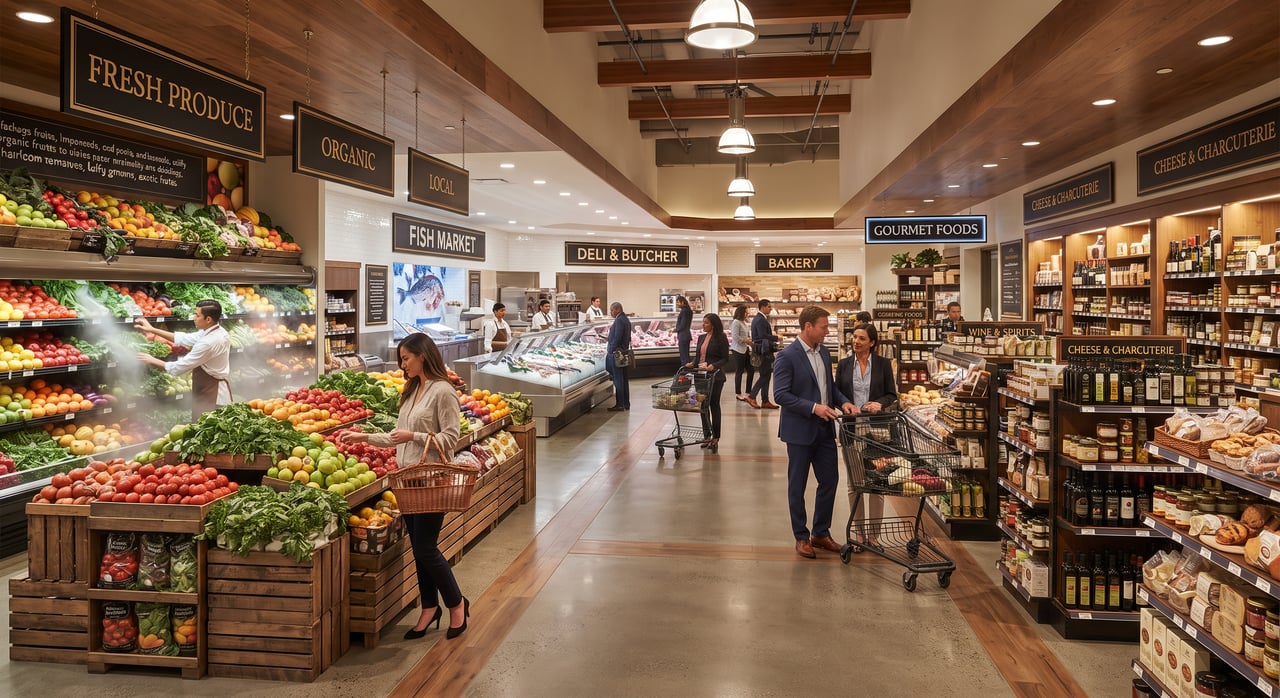
The Corner on Madison is being described as more than a few shelves of snacks. Its official website presents it as a neighborhood marketplace with a deli, café, and patio. In an interview published in August 2026, the owners discussed their goal of making it possible to shop for multiple meals or a week’s worth of groceries, rather than just grab a last-minute item.
That distinction will matter once the doors are open. A market with useful produce, dairy, pantry items, and prepared food could serve several kinds of trips: the planned grocery run, the quick stop after work, and the dinner you did not have time to make. The café and deli could give neighbors another reason to walk over and spend time on the block.
Of course, a planned selection and an operating store are not the same thing. The most useful test will be what is actually stocked, how it is priced, and whether residents find it convenient enough to become part of their regular routine. For now, those details are worth watching rather than assuming.
Why This Particular Building Matters
The address is part of the story. The Corner on Madison is going into the former Frank’s Food Mart space, rather than into a new building elsewhere in northeast Denver. That means a property once associated with an everyday neighborhood errand could serve that purpose again.
Denverite reported on the history of the vacant storefront and the interest neighbors showed in its return. You do not need to have shopped at Frank’s to understand why the reuse matters. An empty building can become something people walk past without a second thought; an active market can make the same corner part of their weekly routine.
Skyland already has destinations nearby, including Ephemeral Rotating Taproom in the former Ben’s Supermarket space. But a place to meet friends serves a different need from a place to buy groceries. The Corner on Madison’s potential lies in adding a practical use back to the mix.
Skyland’s Location Is Not the Whole Story
One of the appealing things about Skyland is its position among several well-known Denver neighborhoods. It sits near Park Hill and Clayton, with City Park also part of the broader area people consider when exploring this side of town.
But access to nearby neighborhoods is different from having something on your own block. When buyers compare homes, they often ask what is close. A better follow-up question is: How would I actually use what is close? A coffee shop, a grocery store, a park, and a restaurant all affect daily life in different ways. Distance alone does not tell you whether the trip is easy or whether the destination meets your needs.
That is why I encourage buyers to spend time in a neighborhood beyond a showing. Walk or drive the routes you would use regularly. Look at where you would shop, how you would get there, and whether the surrounding blocks fit your routine. If you are still narrowing down areas, my Denver neighborhood guides are a starting point, and my buyer page explains how I help clients evaluate a home in the context of their larger goals.
A Separate Change: Park Hill Park
The planned grocery store is not the only notable change near Skyland. Along the area’s northern edge, the former Park Hill Golf Course property has entered a new chapter as Park Hill Park.
The city acquired the 155-acre site after years of debate over its future. According to Denver Parks and Recreation, the property opened for public enjoyment in 2025, while work on the park’s longer-term vision continues. Public access today and a completed future park are two different things, so it is important not to describe every proposed feature as if it already exists.
Park Hill Park and The Corner on Madison are unrelated projects with different timelines and decision-makers. Still, both are relevant to the same question residents and prospective buyers ask: what can I do near home, and how is that changing? One concerns access to a large public outdoor space. The other could bring back a place to buy groceries within Skyland.
What Buyers Should Take From This
If you are considering a home in Skyland, the planned market is worth knowing about, but it should not become the sole reason you buy a property. An opening target can change. A business can adjust its hours or offerings. And your experience of the neighborhood will depend on the particular block, home, and routes you use.
Instead, treat the store as one piece of a larger picture. Compare the home itself, the surrounding streets, your commute, your usual errands, and the amenities that already exist. Then separate confirmed conditions from plans still taking shape. My Skyland guide can help you get oriented, and you can compare it with nearby options such as Park Hill and Clayton.
If you are moving to Denver from somewhere else, this is exactly the kind of detail that can be difficult to pick up from listing photos. A neighborhood may look close to everything on a map, while the day-to-day experience depends on where the useful stops are and how you reach them. My Denver relocation page explains how I help buyers sort through those practical questions.
What Sellers Should Take From This
For Skyland homeowners, a new neighborhood market can be a useful part of the local story, but it is not a substitute for accurate pricing or thoughtful marketing. It also should not be presented to buyers as an established amenity before its operating status is confirmed.
The stronger approach is to describe the location honestly: what buyers can use today, what has been announced, and what they should verify for themselves. That gives people a clearer picture of the neighborhood and avoids promising an experience the business has not yet delivered. If you are weighing a sale, my buy-or-sell resource is a place to start thinking through timing alongside your broader plans.
What Happens Next?
The next milestone is straightforward: The Corner on Madison needs to open and show residents what shopping there is actually like. Its hours, inventory, pricing, and everyday usefulness will tell us more than any opening announcement can.
For now, the takeaway is promising but measured. A long-vacant grocery storefront in Skyland is being brought back into use, with a business that says it wants to serve both daily shopping needs and neighborhood life. At the same time, Park Hill Park has begun its transition into public space nearby.
These changes do not make every Skyland block the same, and they do not replace a careful look at the housing market. They do give residents and prospective buyers more to pay attention to than the usual headlines about prices and interest rates. If you are thinking about buying or selling in Skyland or a nearby Denver neighborhood, contact me. I can help you look at the home, the location, and the details that shape what living there will actually be like.