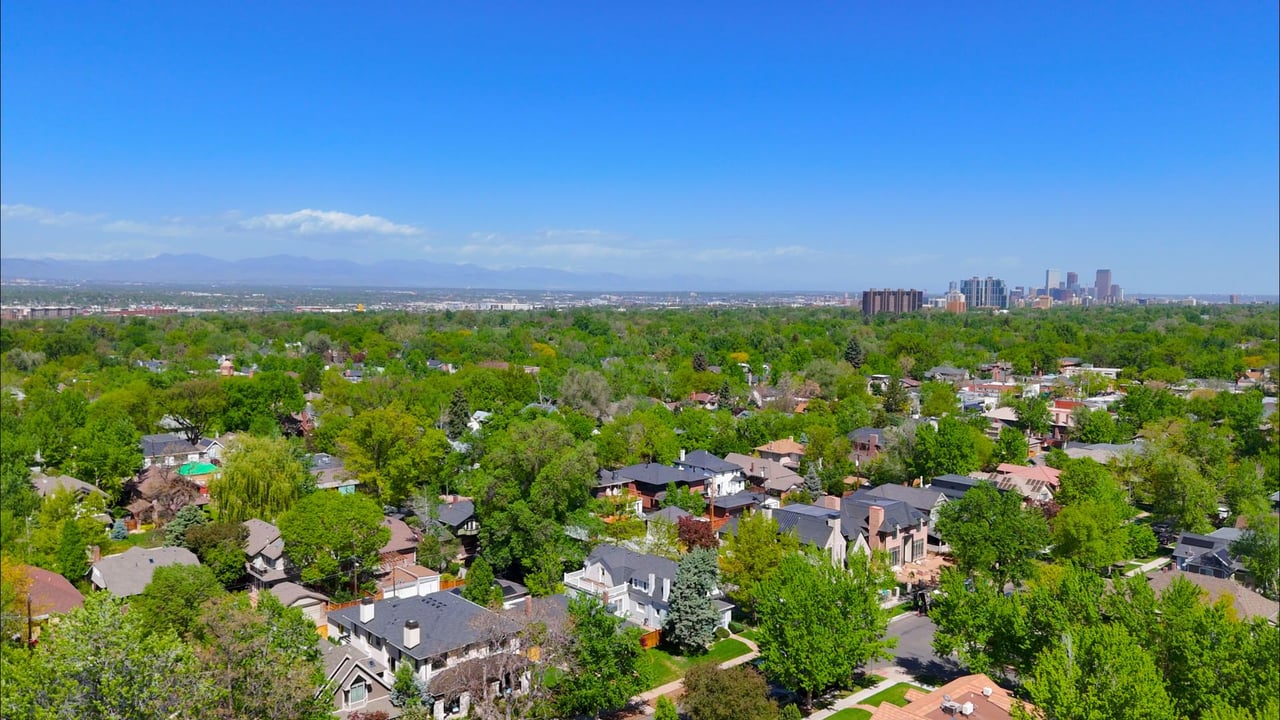
Colorado rewards people who plan ahead. Whether you're moving for work, lifestyle, family, retirement, or a fresh start, this guide covers the best places to live in Colorado, what it actually costs, what to expect when you arrive, and how to build a move plan that fits your real life.
What Colorado Actually Is — and Isn't
Colorado is a state that punches well above its weight in outdoor access, job market quality, sunshine, and quality of life. It has grown significantly over the past fifteen years and that growth has brought real energy: maturing neighborhoods, an increasingly strong food and culture scene, a job market diversified across aerospace, healthcare, technology, and finance, and a lifestyle infrastructure most cities can't replicate.
It is not a cheap state. Denver, in particular, sits roughly 15–20% above the national average for overall cost of living, with housing as the primary driver of that gap. Read what Denver actually costs in 2026 →
It is also not one place. Denver is different from Boulder, Colorado Springs, Fort Collins, Grand Junction, and the mountain towns in price, pace, lifestyle, and daily reality. The right Colorado move starts with picking the right part of Colorado — not just the state.
Is Colorado a Good Fit for You?
Colorado fits people who want outdoor access, an active lifestyle, abundant sunshine, and a strong sense of place. It works well for remote workers who want a home base that delivers on recreation, community, and livability. It's also a strong choice for families relocating for career opportunities, schools, and space.
It can be a harder adjustment if you are highly sensitive to altitude, are budgeting around housing prices typical of the Midwest or South, or expect the same cost structure and social ease of wherever you're coming from. The altitude is real, the cost is real, and the social culture — particularly in Denver — tends toward independence rather than the warm immediacy of some cities in the South or Midwest. The honest guide to moving to Denver covers all of this in depth.
What to Know Before Your Move
Altitude affects most people early
Denver sits at 5,280 feet. Mountain communities are higher still. If you're arriving from sea level or lower elevations, expect some combination of headaches, fatigue, faster dehydration, and shortness of breath during physical activity in your first few weeks. Most people fully adjust within one to three months. Arrive hydrated, go easy on alcohol your first week, and don't schedule a challenging trail run on day two.
The market is hyper-local
Colorado real estate does not move as one market. Price trends, inventory, pace, property taxes, HOA structures, insurance costs, and commute realities vary substantially from one city to the next — and from one neighborhood to the next within the same city. Understanding the Denver metro means understanding it at a granular level. The 2026 Denver neighborhood guide is the right starting point.
Weather is more nuanced than the marketing suggests
Colorado's 300+ days of sunshine are real and genuinely excellent. What the brochures leave out: the air is extremely dry, hailstorms in the Denver metro can be severe and frequent enough to significantly affect home insurance costs, and mountain communities come with a winter rhythm that is meaningfully different from Front Range life. Budget for hail-related insurance premiums and vehicle maintenance if you're buying in the metro.
Total monthly cost is the right number to track
List price and monthly rent are starting points, not the full picture. Your real Colorado housing cost includes property taxes, homeowners insurance, HOA or metro district fees if applicable, utilities, and ongoing maintenance — all of which have risen in recent years. The full 2026 cost of living breakdown walks through every category with real numbers.
Start earlier than you think
The smoothest Colorado relocations begin 8–12 weeks before the move date: with area selection already done, lender pre-approval in hand if buying, school research complete if relevant, and a move timeline built around the actual closing or lease timeline — not a wishful one.
Best Places to Live in Colorado
Colorado works differently depending on which part of it you live in. Here's an honest breakdown of the major regions and who they fit best.
Denver Metro
Best for buyers and movers who want a real city — major employers, strong neighborhood variety, arts, restaurants, professional sports, and a lifestyle infrastructure that delivers daily. Denver neighborhoods range from walkable urban cores to quieter, tree-lined residential streets with excellent park access. Explore Denver neighborhoods →
For buyers focused specifically on where values are moving and where the best opportunities are right now, this breakdown of where Denver buyers are flocking in 2026 and the up-and-coming neighborhoods with the strongest value plays are the most useful starting points. If you want to go deep by ZIP code, the Denver ZIP code buyer's playbook breaks down every major area with hyperlocal detail.
Aurora
One of Colorado's fastest-growing cities and genuinely one of the most underrated options in the metro. Aurora offers home prices roughly 10–20% below comparable Denver properties, newer construction options, and a level of neighborhood diversity that most metro-area cities can't match. The reputation does not always reflect the reality. Read the honest guide to living in Aurora in 2026.
Boulder
Best for buyers who want a world-class outdoor lifestyle, an innovation-driven economy, and a highly educated, active community. Boulder is a premium market and many buyers who fall in love with the lifestyle expand their search into nearby communities — Louisville, Lafayette, Longmont — for meaningfully better value at a reasonable commute.
Colorado Springs
Best for movers seeking outdoor access, relative affordability compared to the northern Front Range, military and aerospace employment, and family-oriented communities. Colorado Springs can appeal to buyers who want a quieter pace without sacrificing recreation or access.
Fort Collins
Best for people who want a strong community feel, university-town energy, easy outdoor access, and a lively but lower-intensity pace than Denver. Fort Collins consistently ranks among the most livable mid-size cities in the western United States.
Grand Junction and the Western Slope
Best for buyers seeking more separation from Front Range density, a genuinely slower pace, outdoor access, and a broader definition of Colorado living. This can be a strong fit for remote workers, retirees, and buyers who want real estate value that the Front Range no longer offers.
Mountain Towns
Best for buyers drawn to alpine lifestyle, resort access, second-home ownership, or luxury mountain living. The scenery and recreation are extraordinary. Buyers should be prepared for higher price points, seasonal dynamics, and winter logistics that differ substantially from metro life.
Not sure which Colorado region fits your situation? Let's talk through it.
What Colorado Actually Costs
Statewide averages tell you almost nothing useful. Your real cost of living depends on the specific city, neighborhood, housing type, and lifestyle you're choosing. Here is what to account for across the major categories.
Housing
Denver's median home price in early 2026 sits in the $550,000–$580,000 range, with condos and townhomes offering entry points in the $350,000–$550,000 range and detached single-family homes in established neighborhoods typically starting at $600,000. Suburbs including Aurora, Lakewood, Thornton, and Westminster generally offer detached homes at $400,000–$550,000 with more square footage. Read the full housing and cost breakdown →
Renting
One-bedroom apartments in Denver average $1,600–$2,200/month depending on neighborhood and building quality. Two-bedrooms run $2,200–$3,200/month. Walkable, high-demand neighborhoods like LoHi, Cherry Creek, and RiNo carry premiums above these ranges.
Insurance
Colorado's hail risk and wildfire exposure have driven homeowners insurance premiums significantly higher in recent years. Annual premiums on a $600,000 Denver home can run $2,500–$4,500+ depending on location and coverage. Factor this into any purchase budget before you get attached to a number.
Taxes
Colorado has a flat state income tax rate of 4.4%. For buyers relocating from no-income-tax states like Texas or Florida, this is a real addition to your monthly cost picture. Combined sales tax in Denver is approximately 8.81%. Property taxes are moderate by national standards, though recent reassessments have produced higher bills for many homeowners.
What salary do you need?
A single renter living a modest but comfortable Denver lifestyle needs approximately $65,000–$80,000/year. A single buyer targeting a home in the $550,000–$600,000 range needs $100,000–$125,000+. Dual-income households typically need $140,000–$180,000 combined to own comfortably in a desirable neighborhood with savings intact. Families of four with homeownership goals should target $160,000–$220,000+ combined.
Renting vs. Buying in Colorado
If you're relocating without a strong sense of which specific neighborhood fits your daily life, renting for six to twelve months while you learn the city is a reasonable and often smart first step. The cost of buying the wrong home in the wrong neighborhood — because you didn't know the area well enough — is far greater than a year of rent.
If you have a clear picture of where you want to be, a stable income, and a timeline of three or more years, buying sooner is almost always the stronger financial move. Every month you rent in Denver at current rates is equity you're not building.
Ready to start the buying process? Fill out the home buying questionnaire →
Want to understand every step first? Read the interactive Denver Buyer's Guide →
Browse current Denver listings →
Relocating from Texas or California?
Two of the most common migration corridors into Colorado are from Texas and California, and each comes with specific tradeoffs worth understanding before you move.
From Texas: The cost gap between Denver and Austin or Dallas has narrowed considerably over the past five years. Many Texas buyers arrive expecting a significant discount on housing and find the difference is smaller than expected — particularly because Colorado adds a 4.4% flat state income tax that Texas does not have. Read the full Texas vs. Colorado comparison. There is also a dedicated relocation guide for buyers moving from Texas →
From California: Most California transplants experience a genuine step down in housing cost when moving to Denver, even as other categories remain comparable. Colorado's income tax is far lower than California's top marginal rates. The lifestyle trade-offs are more nuanced — California's coastal geography is simply different — but for most California movers, the financial case for Denver is strong. Read the relocation guide for buyers moving from California →
Your Colorado Moving Timeline
8–12 weeks before your move
- Narrow your target regions and communities based on commute, lifestyle, budget, and schools.
- Decide whether to rent first or buy immediately — the buyer questionnaire is a good place to start clarifying that.
- Get pre-approved for a mortgage if purchasing.
- Research school options, commute patterns, and your non-negotiable amenities.
- Build a full monthly cost budget — not just housing.
6–8 weeks before your move
- Hire movers or reserve a truck.
- Begin virtual or in-person tours — browse current listings to get oriented.
- Review homeowners or renters insurance options.
- Start address changes, medical record transfers, and utility planning.
2–4 weeks before your move
- Confirm housing and all logistics.
- Transfer utilities and internet.
- Finalize travel plans and temporary housing if needed.
- Plan your DMV, vehicle registration, and residency steps.
Right after you arrive
- Update your Colorado driver's license — required promptly for new residents.
- Handle vehicle registration on the state timeline.
- Check emissions requirements for your county and vehicle.
- Hydrate, rest, and ease into physical activity as you adjust to altitude.
Divorce and Relocation
If you're relocating to Colorado because of a divorce — or navigating both a home sale and a divorce simultaneously — the process has a different set of financial and emotional considerations. Colorado is an equitable distribution state, meaning how the marital home is handled depends on equity, timing, each party's goals, and the terms of your proceedings.
Read the full guide: what happens to your house in a Colorado divorce →
If pre-foreclosure is a concern during this transition, that guide covers your options clearly.
Common Colorado Relocation Mistakes
Choosing a city based on reputation instead of daily life fit
Denver has a strong reputation for outdoor lifestyle, but that reputation covers a huge range of neighborhoods, commutes, price points, and community characters. What you love about Colorado in the abstract needs to match what you experience every day. The most common Denver buyer mistakes are worth reading before you commit to anything.
Underestimating altitude, hail, and winter logistics
Colorado's sunshine is real. So is the elevation, the occasional severe hailstorm, the dry air, and the need for a reliable vehicle in most of the state. Plan for these before you arrive.
Tracking list price instead of total monthly cost
Your monthly cost of owning in Colorado is shaped by property taxes, insurance premiums, HOA fees, utilities, and commuting — not just the mortgage payment. Denver's insurance costs alone have caught many buyers off guard in recent years.
Assuming all Front Range markets work the same way
Denver, Aurora, Lakewood, Westminster, Thornton, Centennial, and Arvada each have different price trends, neighborhood characters, commute patterns, and school systems. The Denver ZIP code buyer's playbook breaks this down area by area.
Moving without a secured job
Denver's job market is strong, but “strong” does not mean a role will materialize after you arrive. Secure your position — or be fully prepared to sustain yourself financially during a search — before the move.
Starting too late
The strongest relocation outcomes start earlier than most people expect, with area selection, lender prep, school research, and a realistic timeline built around the process rather than a hoped-for move date.
How Sallie Helps People Moving to Colorado
Relocating to Colorado is more than a home search. You need local guidance that is honest about tradeoffs, market insight that reflects what is actually happening right now, and someone who can help you move from “I think I want to live in Denver” to a specific plan with a specific timeline.
Sallie Simmons has been a Denver resident since 2009 and a full-time Compass agent since 2014. She works specifically with relocation buyers — people moving from other parts of the country who need ground-level market knowledge and a clear plan, not just a property feed.
- Area and neighborhood matching — based on your actual budget, commute, lifestyle, and goals.
- Virtual consultations for out-of-state movers — so you can make informed decisions before you fly in.
- Honest guidance on rent-vs-buy decisions and how to structure your timing in the current market.
- Real neighborhood insight — not just what neighborhoods are popular, but what daily life actually looks and feels like in each one.
- A complete relocation plan from first conversation through keys in hand — whether you're buying a luxury home, your first Colorado property, or navigating a move alongside a job transition, divorce, or other major life change.
Start your home buying journey →
Read the interactive Denver Buyer's Guide →
Browse featured Colorado listings →
Explore Denver neighborhoods →
Read the Denver buyer and seller FAQ →
Read the full Denver moving guide for 2026 →
Schedule your Colorado relocation consultation →
Frequently Asked Questions
Is Colorado a good place to move?
Colorado can be an excellent place to move if you want outdoor access, abundant sunshine, diverse community types, and a strong mix of lifestyle and career opportunity. The better question is which part of Colorado fits your budget, commute, and daily routine. The honest guide to moving to Denver covers the real tradeoffs in depth.
What is the best place to live in Colorado?
There is no single best place. Denver, Aurora, Boulder, Colorado Springs, Fort Collins, Grand Junction, and mountain towns each offer a different mix of price, lifestyle, access, and daily feel. Exploring Denver neighborhoods is the right starting point for anyone focused on the Front Range.
Is Colorado expensive to live in?
Denver sits roughly 15–20% above the national average for overall cost of living. Your real affordability depends on city, neighborhood, housing type, insurance, commute, and lifestyle. The full 2026 cost breakdown walks through every major category with real numbers.
Should I rent or buy when moving to Colorado?
That depends on your timeline, clarity on location, financial readiness, and need for flexibility. Renting makes sense if you want to learn the market first. Buying makes sense if you know where you want to live and plan to stay. Start the buyer questionnaire or read the interactive buyer's guide to work through both options.
What should I do first when planning a move to Colorado?
Define your priorities, target timeline, budget, and preferred regions. If you plan to buy, get pre-approved early. If you're unsure where to land, work through a city and neighborhood comparison before committing to a home search. The ultimate Denver relocation guide is the right place to start building that plan.
How long does it take to adjust to Colorado altitude?
Most people fully adjust within one to three months. The first few weeks — especially for physical activity — are the hardest. Hydration, rest, and easing into exercise make the transition meaningfully smoother.
Do I need a car in Colorado?
In most of Colorado, yes. Some Denver neighborhoods are walkable or well-served by light rail, but most suburban, mountain, and less urban areas require a reliable vehicle for practical daily life.
What are the biggest mistakes people make when moving to Colorado?
The most common: choosing an area too quickly without understanding daily life tradeoffs, underestimating total monthly costs especially insurance, assuming all Front Range markets behave the same way, moving without a secured job, and starting the planning process too late. Read the full buyer mistakes guide.
What happens to a house in a Colorado divorce?
Colorado is an equitable distribution state. How the marital home is handled depends on equity, timing, and the terms of your proceedings. Read the full guide here.
I'm moving from Texas — is Denver cheaper?
The gap has narrowed considerably. Austin and Denver are now broadly comparable on housing. Dallas and Houston are somewhat more affordable, though Colorado's 4.4% flat income tax partially offsets that advantage. The Texas vs. Colorado guide covers this side-by-side. There's also a full relocation guide for Texas buyers.
I'm moving from California — will I save money?
For most California transplants, yes — meaningfully so on housing. Colorado's income tax rate is also far lower than California's top rates. The California-to-Denver relocation guide covers what the transition actually looks like financially and practically.