

By Sallie Simmons · Denver REALTOR® at Compass
Last updated: November 2, 2026
Bonnie Brae, meaning "pleasant hill" in Gaelic, is one of Denver's most distinctive and architecturally charming residential areas. Its winding streets were planned in the 1920s as a deliberate departure from Denver's traditional street grid, creating a setting that still feels different from the surrounding city. From storybook Tudor homes and brick cottages to thoughtfully renovated properties and newer custom builds, Bonnie Brae offers historic character, mature landscaping, and a convenient southeast Denver location. Buyers are drawn to its individuality, established streetscapes, and proximity to Washington Park, Cherry Creek, and neighborhood businesses along University Boulevard.
For buyers, Bonnie Brae is a neighborhood where the details matter. Architectural style, renovation quality, lot configuration, and the relationship between a home and its street can make a substantial difference. For sellers, those same details help shape the property's pricing, presentation, and marketing strategy.
What Makes Bonnie Brae Special
Bonnie Brae's story began in the early 1920s, when businessman and developer George W. Olinger assembled land southeast of downtown Denver. Inspired by a Kansas City subdivision of the same name, Olinger wanted to create a residential community with a picturesque, village-like atmosphere rather than another extension of Denver's rectangular blocks.
Landscape architects S.R. DeBoer and Walter Pesman designed a network of curving streets that responded to the landscape. Construction began in 1923, and the subdivision filings were completed in 1925. Stone pillars at the Tennessee Avenue and Kentucky Avenue entrances along University Boulevard remain recognizable reminders of that early vision.
Development did not happen all at once. The original land company went bankrupt in 1928, and the Great Depression slowed construction. A turning point came in 1936 with the creation of Bonnie Brae Park, the elliptical green space at the center of the neighborhood's design. Building activity increased around 1940 and continued through the postwar years.
That gradual development helps explain Bonnie Brae's architectural variety. Tudor Revival homes, brick cottages, ranches, and other early- and mid-20th-century designs established its identity. Later renovations, additions, and replacement homes introduced larger residences and contemporary layouts without erasing the winding street pattern that makes the area distinctive.
Today, established trees, individual homes, and neighborhood destinations give Bonnie Brae a recognizable sense of place. Its appeal is not simply that it is close to popular Denver amenities. It is that the residential setting has an identity of its own.
If you're still narrowing your search, my guide to choosing the right Denver neighborhood for your lifestyle can help you compare Bonnie Brae with other areas based on how you actually want to live. You can also browse my Denver neighborhood guides for a broader view of your options.
Bonnie Brae Real Estate: What to Expect in 2027
Bonnie Brae brings together original homes, expanded historic properties, and newer luxury construction. Those are different segments of the housing market, and they should not be priced or evaluated as though they are interchangeable. An original cottage with renovation needs can represent a very different purchase from a large custom home on a nearby street.
Pricing depends on architectural style, above-grade living space, basement functionality, lot characteristics, condition, renovation quality, parking, and location. A home's relationship to the street also matters: privacy, outdoor living areas, driveway access, and the way an addition fits the original structure can all influence its appeal.
Rather than relying on a single neighborhoodwide median, I compare recent closed sales with current listings that would realistically compete for the same buyer. Asking prices show what sellers hope to achieve; completed sales show what buyers have actually paid. The distinction is especially important when a neighborhood includes homes with substantially different sizes, styles, and levels of finish.
Property types and pricing considerations generally break down as follows:
- Original Tudor homes and brick cottages: Appeal to buyers who prioritize architectural character, a more manageable footprint, or renovation potential. Condition, layout, major systems, and lot characteristics are central to the evaluation.
- Updated and expanded older homes: Offer a combination of original details and modern functionality. The quality of the renovation, integration of additions, and usefulness of the finished space matter more than a list of new finishes alone.
- Newer custom and luxury homes: Provide a different ownership experience, often with larger floor plans, contemporary systems, and more extensive amenities. Compare construction quality, design, outdoor space, and maintenance needs as well as square footage.
- Properties considered for redevelopment: Require a separate review of zoning, lot dimensions, setbacks, applicable restrictions, demolition requirements, construction costs, and project feasibility.
Market timing is equally property-specific. A well-positioned home may attract prompt interest, while another listing may need more time because of its price, condition, layout, or competition. Days-on-market figures also vary by source and methodology, so an active-listing statistic should not automatically be treated as the time it takes a home to go under contract or close.
For Buyers
Bonnie Brae is an appealing option for buyers who appreciate architectural individuality, mature landscaping, and a residential setting that feels established rather than newly developed. However, two homes on the same block can offer dramatically different value. An original Tudor requiring substantial improvements should not be evaluated in the same way as a fully renovated property or a recently completed custom home.
Look closely at how the space functions. Above-grade square footage, basement ceiling heights, bedroom locations, bathroom access, storage, garage configuration, and natural light can affect everyday comfort. A larger total square-footage number does not necessarily mean a more practical home.
Older Bonnie Brae homes deserve particular attention during inspections. Depending on the property and inspection findings, that may include additional evaluation of sewer lines, foundations, roofing, electrical systems, plumbing, drainage, and previous additions. Original character can be a tremendous asset, but understanding the systems behind the walls is just as important as appreciating the architecture.
For renovated homes, ask what was actually updated. A new kitchen does not tell you whether the electrical service was improved, the sewer line was replaced, or an addition was permitted. Available plans, permits, warranties, and service records can help distinguish a comprehensive renovation from a primarily cosmetic update.
Buyers considering a renovation or redevelopment should investigate the property's zoning, permitting requirements, and applicable restrictions before assuming what can be built. The presence of a larger custom home nearby is not proof that the same design or building envelope is permitted on another lot.
For a step-by-step look at financing, offers, inspections, appraisals, and closing, explore my Denver home buyer's guide. If you're moving from outside the area, my Denver relocation guide can help you organize your neighborhood research and move planning.
For Sellers
Selling a home in Bonnie Brae requires more than relying on the neighborhood's reputation. Buyers are comparing architectural character, construction quality, renovation choices, functionality, and overall presentation. A beautifully preserved Tudor may appeal to a different buyer than a contemporary custom home, and the marketing strategy should reflect that distinction.
Original woodwork, distinctive exterior details, mature landscaping, inviting outdoor spaces, and thoughtful improvements can all contribute to a property's appeal. The goal is to show how those features work together to create a home, not simply to describe the neighborhood as desirable.
Preparation should be selective. Some properties benefit most from maintenance, landscaping, paint, lighting, and a cleaner presentation of existing spaces. Others may need repairs or documentation to resolve questions about condition. Before committing to an expensive improvement, consider whether it addresses an actual buyer objection and whether it is appropriate for the property's likely competition.
Pricing is especially important when the available comparables span original homes, major renovations, and newer construction. I evaluate recent sales, active competition, buyer expectations, and the property's specific advantages to develop a pricing and marketing strategy. Professional photography, compelling descriptions, targeted exposure, and a clear presentation of the home's features support that strategy.
If your next move involves both selling and buying, my Smart Seller Game Plan explains how to think through timing, the sell-first versus buy-first decision, and protecting your negotiating position. For a property-specific conversation, contact me about selling your Bonnie Brae home.
Life in Bonnie Brae: Parks, Architecture and Community
Parks and Recreation
Bonnie Brae Park is a defining part of the neighborhood's design. Its elliptical shape and surrounding curved streets create a distinctive residential centerpiece rather than a conventional rectangular city block. The park's development in 1936 helped spur construction around it, connecting the neighborhood's landscape history with the homes that followed.
Today, the park offers a nearby green space for residents who want to spend time outdoors without making a larger outing of it. Its relationship to the surrounding streets contributes to the intimate scale and established atmosphere that many buyers notice when first exploring Bonnie Brae.
Nearby Washington Park adds a broader range of recreational options, including paths, lakes, gardens, tennis facilities, and open lawns. If direct access to that park is a central part of your home search, compare Bonnie Brae with the locations covered in my Washington Park neighborhood guide.
The Cherry Creek Trail is another regional recreation option, although the route to an access point depends on your starting address. For walking, running, or cycling, consider the actual street connections and crossings you would use rather than evaluating distance on a map alone.
For buyers who enjoy an active lifestyle, Bonnie Brae offers a balance between residential streets and access to established Denver outdoor amenities. A neighborhood visit is a good opportunity to test the routes you expect to use for a morning run, an afternoon walk, or a longer bike ride.
Architecture and Character
Architecture is one of Bonnie Brae's strongest distinguishing features. Tudor Revival homes, brick cottages, ranches, and custom-built residences sit along curving streets lined with mature trees. Steep rooflines, decorative brickwork, arched entries, and distinctive window details give many older properties a recognizable character.
The neighborhood's development over several decades also produced more variety than a single architectural label suggests. Older homes differ in scale, materials, roof forms, and interior layouts. Later renovations and replacement construction have added another layer of design.
Some homes preserve original details while introducing modern kitchens, updated bathrooms, expanded living areas, and improved functionality. Others offer a more contemporary design from the ground up. That variety gives buyers choices, but it also makes careful property-by-property comparison essential.
The winding roads and unusual street geometry are just as important as the individual houses. Instead of repeating the uniform blocks associated with much of Denver, Bonnie Brae presents a sequence of different streetscapes. Curves, changing sightlines, landscaping, and the central park all contribute to its identity.
To compare other nearby housing options, explore my Belcaro neighborhood guide and Cory-Merrill neighborhood guide for additional context on home styles, location, and amenities.
Community and Convenience
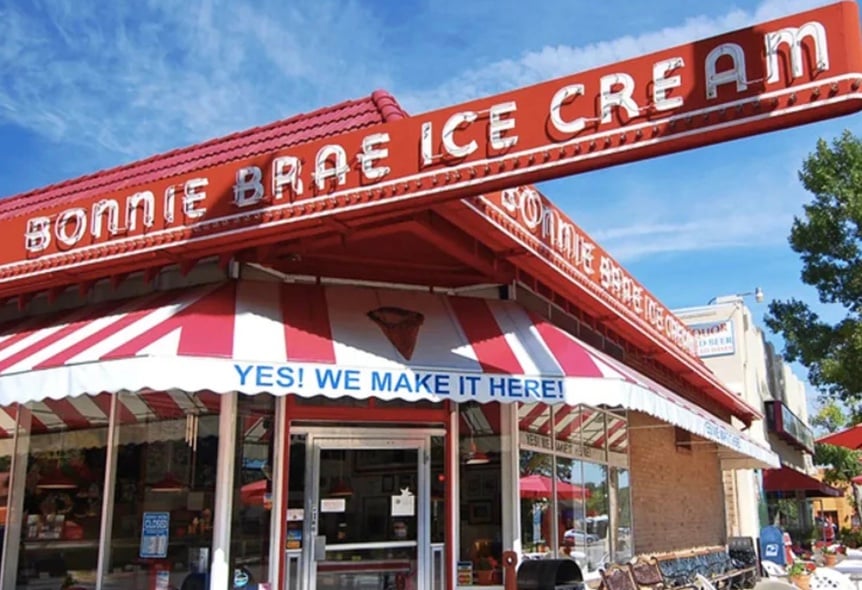
Bonnie Brae's neighborhood identity extends to its commercial area along University Boulevard. Bonnie Brae Ice Cream is one of its best-known gathering places, describing itself as a family-owned neighborhood shop that makes its ice cream in the store. Businesses like this help connect the area's residential streets with familiar local destinations.
For a closer look at changes along the corridor, read my Bonnie Brae University Boulevard development update. If you're considering a nearby property, review the location of a proposed project and its current status rather than assuming every home will be affected in the same way.
Residents also have access to shopping and dining in Cherry Creek, businesses around Washington Park, and destinations near the University of Denver. Which places feel most convenient depends on the property's address and whether you prefer walking, biking, or driving.
Downtown Denver and the Denver Tech Center are reachable through the surrounding street network and nearby transportation corridors. Actual travel times depend on traffic, your destination, and the time of day. If commuting is an important part of your decision, test the route during your normal travel window.
Bonnie Brae Denver: Frequently Asked Questions
What makes Bonnie Brae different from other Denver neighborhoods?
Bonnie Brae is distinguished by its curved streets, central elliptical park, mature landscaping, and varied architecture. Its 1920s street plan deliberately departed from Denver's traditional grid. Older Tudor homes, cottages, ranches, and newer custom residences create a residential setting with a recognizable identity near Washington Park and Cherry Creek.
Who designed Bonnie Brae?
Developer George W. Olinger commissioned landscape architects S.R. DeBoer and Walter Pesman to design the community in the early 1920s. Construction began in 1923. The design used curving streets and a central park to create a picturesque residential setting rather than a conventional grid of rectangular blocks.
What types of homes are in Bonnie Brae Denver?
Bonnie Brae includes Tudor Revival homes, brick cottages, ranches, renovated older properties, and newer custom homes. Development occurred over several decades, so homes vary in architectural style, size, layout, and condition. Buyers may find original properties with improvement potential, expanded homes that combine old and new, and larger contemporary residences.
How much do homes cost in Bonnie Brae in 2026?
There is no single price that accurately describes Bonnie Brae's mix of original homes, renovated properties, and newer luxury construction. A useful estimate requires current comparable sales for the relevant property type, location, size, and condition. When reviewing a published market report, check its date, boundaries, and whether it measures asking prices or completed sales before applying it to a particular home.
How competitive is the Bonnie Brae real estate market?
Competition depends on the property, asking price, condition, and available alternatives. A well-positioned home can attract strong interest, while a property with a less functional layout, substantial maintenance needs, or an ambitious price may take longer to sell. Buyers and sellers should evaluate current competition rather than assume every listing will receive multiple offers.
Is Bonnie Brae close to Cherry Creek and Washington Park?
Yes. Bonnie Brae is near both Cherry Creek and Washington Park, making it an option for buyers who want access to shopping, dining, parks, and recreation while living in a residential setting. The best comparison is the actual route from a specific home to the destinations you use regularly.
Is Bonnie Brae a good neighborhood for buyers who want an older home?
Bonnie Brae can be a strong fit for buyers who value older architecture and established landscaping. Original details and individual home designs are important parts of its appeal. Buyers should also evaluate structural condition, sewer lines, roofing, electrical systems, plumbing, drainage, and previous renovations. An inspection and realistic improvement budget help put the home's character in the context of its ownership costs.
Can you renovate or build a new home in Bonnie Brae?
Renovations, additions, and new construction are part of Bonnie Brae's housing landscape, but what is permitted depends on the specific property. Zoning, lot dimensions, setbacks, building requirements, recorded restrictions, and any applicable preservation rules need to be reviewed before committing to a project. An older home is not automatically a designated landmark, and a large home nearby does not establish what can be built on another lot.
What schools serve Bonnie Brae Denver?
Bonnie Brae is within Denver Public Schools. School assignments, grade configurations, enrollment zones, and school choice procedures should be checked for the specific property. Do not assume that a nearby school is automatically the assigned school or that a real estate portal's school list confirms enrollment eligibility.
For more context on boundaries, application timelines, and enrollment planning during a home purchase, read my guide to Denver metro school districts and school choice enrollment.
How does Bonnie Brae compare with Belcaro or Cory-Merrill?
These nearby areas are worth comparing if you are exploring established southeast Denver locations. Bonnie Brae's curving streets, central park, and mix of older architecture and custom construction give it a distinctive identity. Use my Belcaro guide and Cory-Merrill guide to begin your comparison, then evaluate individual homes, street settings, and routes to your regular destinations.
Work With a Bonnie Brae Specialist
I'm Sallie Simmons, a REALTOR® with Compass and part of the Nostalgic Homes team. Since 2014, I've helped buyers and sellers navigate Denver's established neighborhoods with clear strategy, honest guidance, and detailed market knowledge. I understand that buying or selling in a neighborhood like Bonnie Brae requires looking beyond broad market averages and evaluating the details that make each property different.
Whether you're considering an original Tudor, evaluating a renovation opportunity, purchasing a newer custom home, or preparing to sell a property you've owned for years, my approach starts with understanding your goals. From there, we build a strategy around the property, current competition, your timing, and the decisions that matter most to you.
For buyers, that includes careful evaluation of condition, layout, comparable sales, and potential ownership costs. For sellers, it includes thoughtful preparation, pricing, targeted marketing, and a clear explanation of the home's strongest features.
You can also explore my Denver Real Estate Resource Center for additional buying, selling, relocation, and neighborhood resources.
If you're thinking about buying or selling in Bonnie Brae, I'd welcome the opportunity to talk through your options. Call me at 662.588.2420 or contact me about buying or selling in Bonnie Brae.