

By Sallie Simmons · Denver REALTOR® at Compass
Last updated: November 2, 2026
Lowry transformed a former Air Force base into a Denver neighborhood built around homes, parks, shopping, schools, and preserved pieces of aviation history. Today, its combination of detached homes, townhomes, condos, apartments, and neighborhood destinations offers a different experience from Denver's older residential districts.
Buyers are often drawn to Lowry for its comparatively newer housing, planned streetscapes, outdoor amenities, and access to everyday services. The Town Center, former aircraft hangars, Wings Over the Rockies Air & Space Museum, and surrounding parks give the neighborhood an identity that goes beyond its redevelopment story.
For buyers and sellers, the details still matter. Property type, location within Lowry, association responsibilities, condition, and proximity to amenities can create meaningful differences between homes. This guide explains what to consider when exploring Lowry in 2026.
Discover Lowry: From Air Force Base to Denver Neighborhood
Lowry's modern residential story began after Lowry Air Force Base closed in September 1994. A reuse plan was adopted in 1995, and new home construction began in 1997. The redevelopment introduced housing, businesses, education, recreation, and public spaces while preserving selected structures from the base.
That history remains visible. Former military buildings and aircraft hangars were adapted for new uses rather than removed entirely, giving Lowry recognizable landmarks and a connection to the people who trained and worked here.
Wings Over the Rockies Air & Space Museum occupies Hangar 1 of the former base. Other repurposed buildings and public art help connect the residential neighborhood with its earlier role as a military training center.
Lowry developed in phases rather than as one uniform collection of homes. Established residential sections, attached-home communities, commercial areas, and the later Boulevard One redevelopment provide different settings within the broader neighborhood.
That variety is part of the appeal. A buyer who wants a detached home with a yard may focus on different streets from someone seeking a condo near services or a contemporary townhome with less exterior upkeep.
If you're comparing Lowry with other Denver locations, my guide to choosing the right Denver neighborhood for your lifestyle can help you identify which features matter in everyday life, not just during a weekend visit.
Lowry Homes: Architecture, Layouts and Neighborhood Character
Much of Lowry's residential development followed the base closure, making it a useful option for buyers who prefer newer construction to the early-20th-century homes found in many central Denver neighborhoods. However, the housing is not all the same age, and newer does not mean maintenance-free.
Detached homes include traditional and Craftsman-influenced designs alongside more contemporary architecture. Townhomes, condos, apartments, and adapted historic structures add other choices. Building placement, landscaping, sidewalks, and shared spaces contribute to the planned neighborhood setting.
The experience varies by property. Some homes offer front porches and private yards, while others emphasize patios, balconies, shared landscaping, or proximity to neighborhood destinations. Garage placement, alley access, stairs, storage, and outdoor space deserve attention when comparing listings.
Common Property Types
- Detached homes: Offer different combinations of interior space, private outdoor areas, garages, and owner-managed maintenance. Compare lot usability and layout as carefully as total square footage.
- Townhomes and paired homes: May provide multiple levels, private entrances, garages, patios, or rooftop spaces. Confirm the ownership structure and shared maintenance obligations.
- Condos: Can offer a different balance of purchase price and maintenance responsibilities. Association finances, insurance, dues, reserves, assessments, parking, and storage are important parts of the evaluation.
- Homes in later redevelopment areas: May offer contemporary designs and newer systems, but buyers should still review construction quality, warranties, association requirements, and the practicality of the floor plan.
- Adapted historic properties: Offer a different connection to Lowry's past. Evaluate the specific building, ownership arrangement, maintenance history, and any applicable requirements rather than assuming the experience matches newer construction.
If you're still deciding which type of home fits your plans, my Denver home buyer's guide explains how to connect your property search with financing, inspections, and the purchase process.
Lowry Real Estate: What to Expect in 2027
Lowry should not be evaluated through one neighborhoodwide price estimate. A condo, a townhome, and a larger detached home represent different purchases, with different ownership costs and buyer expectations. Location within the neighborhood, condition, layout, parking, outdoor space, and association obligations all influence value.
Rather than present exact market data, I review recent comparable sales and active competition for the specific property. The most useful comparisons involve homes with similar ownership structures, sizes, features, and locations.
Asking prices show what sellers hope to achieve, while completed sales show what buyers have actually paid. A market report combining multiple property types can be useful background, but it should not replace a property-specific analysis.
What Influences Home Values in Lowry?
- Property type: Detached homes, townhomes, and condos should be compared with appropriate alternatives rather than treated as one market segment.
- Location within the neighborhood: Proximity to parks, businesses, schools, major roads, and shared amenities can affect both convenience and the home's immediate setting.
- Layout and usable space: Bedroom placement, office space, storage, basement functionality, stairs, and garage access can matter as much as the total square-footage figure.
- Condition and maintenance: Roofing, windows, heating and cooling, appliances, exterior finishes, and drainage deserve review even in a comparatively newer home.
- Outdoor areas: A usable yard, private patio, porch, or balcony may appeal to different buyers. Consider privacy, orientation, maintenance, and actual functionality.
- Association costs and responsibilities: Dues, insurance arrangements, reserves, maintenance obligations, and assessments contribute to the total cost of ownership.
Market pace varies with the property, price, condition, and current alternatives. Some listings may attract prompt interest, while others take longer or require a price adjustment. Buyers and sellers should not assume every Lowry home sells within a month or achieves a premium simply because of its location.
For additional buying, selling, and market-planning information, explore my Denver Real Estate Resource Center.
For Buyers
Lowry can be a strong fit if you want a planned neighborhood with a range of housing choices and outdoor destinations nearby. Start by deciding whether you prioritize a detached home, less exterior upkeep, a particular floor plan, or proximity to the Town Center and parks.
Visit more than one section of Lowry. The setting around a commercial destination may differ from an interior residential street, and a home in a later redevelopment area may offer a different design and maintenance experience from an earlier Lowry property.
Do not skip an inspection because the home is newer than properties elsewhere in Denver. Construction quality, drainage, roof condition, heating and cooling, windows, and previous work can still create important ownership considerations.
For attached properties, understand what you own and what the association maintains. Review the applicable documents, financial information, insurance, maintenance plans, rules, and any existing or proposed assessments. Confirm whether more than one association applies to the property.
If you expect to make exterior changes, review the applicable architectural requirements before assuming a fence, paint color, patio, or addition can be approved. Requirements can vary by property and community.
My home buyer's guide walks through financing, offers, inspections, appraisals, and closing. If you're moving from outside Colorado, my Colorado relocation guide can help you organize your broader search.
For Sellers
Selling a Lowry home starts with identifying the properties buyers will realistically compare it against. A larger detached home, a smaller townhome, and a condo may attract different buyers even when they share access to the same neighborhood amenities.
The strongest presentation explains what makes the property useful and appealing. A functional layout, inviting outdoor space, useful garage, good natural light, documented maintenance, and proximity to destinations can all help tell that story.
Preparation should reflect the home's condition and likely competition. Some properties benefit most from maintenance, paint, landscaping, lighting, and a cleaner presentation of existing spaces. Others may need targeted repairs before listing.
Organize available permits, warranties, service records, and information about major improvements. For association-managed properties, clear information about dues, maintenance responsibilities, parking, and community obligations helps buyers understand the ownership arrangement.
If your next move involves selling and buying, my Smart Seller Game Plan can help you think through timing and the sell-first versus buy-first decision. You can also contact me about pricing and preparing your Lowry home.
Life in Lowry: Parks, History and Everyday Convenience
Parks and Open Space
Parks and outdoor areas were an important part of Lowry's redevelopment plan. Lowry's community association describes the broader community as having more than 800 acres of parks and open space, a figure that encompasses a larger recreation landscape rather than only small neighborhood parks or association-maintained land.
That distinction matters. The Lowry Community Master Association separately identifies approximately 22.5 acres across 10 parks among the assets it maintains. Buyers should not interpret the broader 800-acre figure as acreage maintained by the association or as a description of one continuous park.
Great Lawn Park and Crescent Park are recognizable parts of Lowry's outdoor setting. Other spaces, paths, playgrounds, and recreation destinations add options throughout the community, although the most convenient destination depends on the home's location.
For buyers who want outdoor access as part of their daily routine, walk the actual routes from the property. Check crossings, distance, shade, and the facilities you expect to use rather than relying only on the neighborhood's overall park acreage.
The Lowry Community Master Association's owner resources provide additional information about the association and the assets supported by its dues.
Town Center and Neighborhood Businesses
Lowry Town Center brings shopping, dining, and services into the neighborhood. For residents who live nearby, it can make certain everyday errands easier without a longer drive to another commercial district.
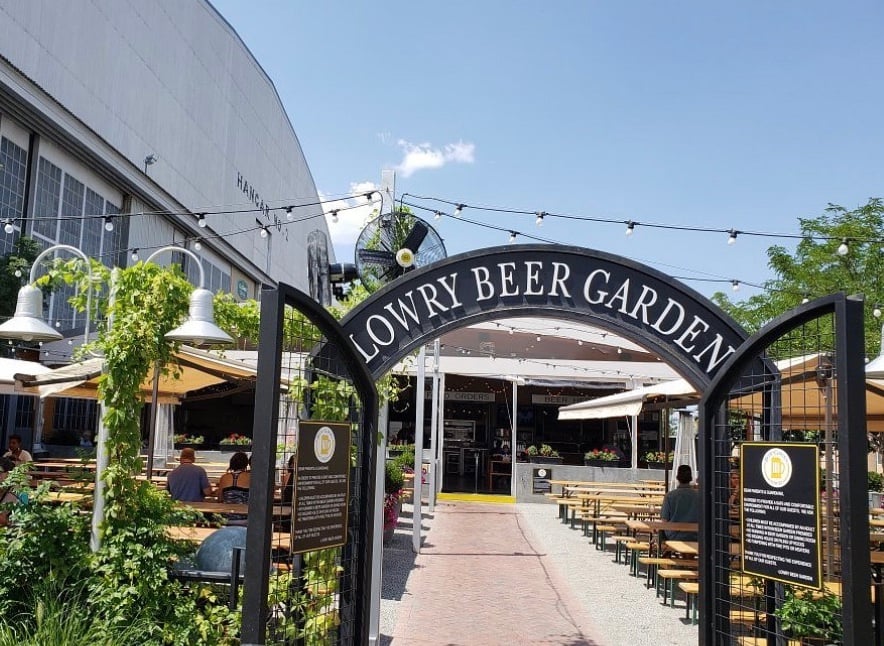
Other destinations, including Lowry Beer Garden and businesses around the former hangars, contribute to the neighborhood's social and dining options. Boulevard One adds another part of the broader Lowry experience with its own mix of housing and commercial activity.
Walkability is still address-specific. A home near the Town Center may offer a different routine from one farther away, even though both are described as being in Lowry. Compare your actual routes to groceries, coffee shops, fitness facilities, and other regular destinations.
Wings Over the Rockies and Lowry's Aviation History
Wings Over the Rockies Air & Space Museum occupies Hangar 1 of the former Lowry Air Force Base. It preserves a visible connection to the site's military and aviation history while operating as a destination for exhibits, educational programs, and events.
The museum is part of what makes Lowry feel different from a conventional residential development. Preserved buildings, public art, and reused military structures give the area landmarks that connect its current identity with its earlier purpose.
Visit the museum's Lowry location page for current visitor information. Lowry's community history page provides more detail about the base closure and redevelopment timeline.
Getting to Cherry Creek, Downtown and the Denver Tech Center
Lowry's east Denver location provides access to destinations across Denver and Aurora. Cherry Creek, downtown Denver, and the Denver Tech Center may all be relevant to a buyer's routine, but travel times vary by starting address, destination, route, and traffic.
Test your expected commute at the times you normally travel. If transit is important, review current routes, stop locations, service frequency, and transfers rather than assuming the entire neighborhood has the same transportation options.
If shopping, dining, and a more concentrated urban commercial district are priorities, my Cherry Creek neighborhood guide offers a useful comparison with Lowry's planned residential setting.
Lowry Schools and Enrollment Research
Lowry is within Denver Public Schools. Current attendance assignments, enrollment zones, school choice procedures, and program availability should be verified for the property under consideration.
The presence of a school near a home does not automatically establish enrollment eligibility. Grade levels, application timelines, transportation, and program requirements can affect the options available.
For more context, read my guide to Denver metro school districts and school choice enrollment, then confirm the current information directly with the district.
Lowry Denver: Frequently Asked Questions
What makes Lowry unique?
Lowry redeveloped a former Air Force base into a mixed-use Denver neighborhood with housing, parks, businesses, schools, and preserved military structures. Its Town Center, aviation museum, former hangars, and planned residential areas give it a different identity from Denver's older neighborhoods.
When did Lowry Air Force Base close?
Lowry Air Force Base closed in September 1994. A reuse plan was adopted in 1995, and new home construction began in 1997. Redevelopment continued in phases, including the later Boulevard One area.
What types of homes are in Lowry?
Lowry includes detached homes, townhomes, paired homes, condos, apartments, and adapted historic properties. Much of the residential construction followed the base closure, but property age, design, condition, and maintenance responsibilities vary.
Does Lowry really have 800 acres of parks and open space?
Lowry's community association describes the broader community as having more than 800 acres of parks and open space. That is not the same as the acreage maintained by the association, which separately identifies approximately 22.5 acres across 10 parks among its maintained assets.
Is Lowry walkable?
Some locations offer convenient walking access to the Town Center, parks, or other destinations, but the experience depends on the address. Walk the routes from a specific property to the places you expect to use regularly.
Do Lowry homes have homeowners associations?
Many properties are subject to association requirements, and some may have more than one applicable association. Confirm the arrangement for the specific property, including dues, maintenance responsibilities, insurance, rules, assessments, and exterior review requirements.
How much do homes cost in Lowry in 2026?
A useful estimate requires current comparable sales for the relevant property type and location. A condo, townhome, and larger detached home can have very different values and monthly costs. Check the reporting period and methodology before applying a neighborhood median to an individual home.
How competitive is the Lowry real estate market?
Competition depends on pricing, condition, property type, location, and available alternatives. Some listings may attract prompt interest, while others require more time or a price adjustment. Buyers and sellers should evaluate current comparable properties rather than assume every home sells within a month.
What schools serve Lowry?
Lowry is within Denver Public Schools. Verify current attendance boundaries, enrollment zones, application procedures, and program availability for the property directly with the district.
How does Lowry compare with Montclair or Hale?
Lowry may appeal to buyers who prefer its redevelopment history, planned amenities, and comparatively newer housing. Montclair and Hale offer different combinations of established streets, older homes, and neighborhood services. Explore my Montclair guide and Hale guide, then compare specific homes and daily routes.
Work With Sallie Simmons in Lowry
I'm Sallie Simmons, a REALTOR® with Compass and part of the Nostalgic Homes team. Since 2014, I've helped buyers and sellers navigate Denver real estate with honest advice, detailed property evaluation, and strategies built around their goals.
For Lowry buyers, that means looking beyond newer finishes and neighborhood amenities to understand condition, layout, location, association responsibilities, and ownership costs. For sellers, it means identifying the property's strengths and building a preparation, pricing, and marketing plan around the right competition.
Whether you're relocating, comparing condos and detached homes, looking for a different maintenance arrangement, or preparing to sell, my approach starts with understanding what matters to you and explaining the tradeoffs clearly.
For additional buying, selling, relocation, and neighborhood information, explore my Denver Real Estate Resource Center.
Let's Get Started
Thinking about buying or selling in Lowry? Let's talk about your goals, timing, and the properties you want to compare. Call me at 662.588.2420 or contact me about buying or selling in Lowry.