If you're wondering whether now is a good time to sell your home in Denver, the short answer is yes — but with an important condition attached. The Denver real estate market in 2026 has shifted into a more balanced environment, and homes are still selling. Some are selling quickly. But only the ones that are priced correctly and positioned well from day one.
According to Redfin's March 2026 market data, Denver home prices are up 5% year over year with a median sale price of $630,000, and homes are averaging just 19 days on market — down from 22 days the prior year. That's not a struggling market. But it is a market where strategy separates the sellers who get strong results from those who sit, reduce, and ultimately leave money on the table.
This guide covers everything you need to know: how to read the current market, how to price and prepare your home, what the selling timeline actually looks like, how to negotiate effectively, and what you'll pay at closing — all specific to Denver in 2026.
Is Now a Good Time to Sell in Denver?
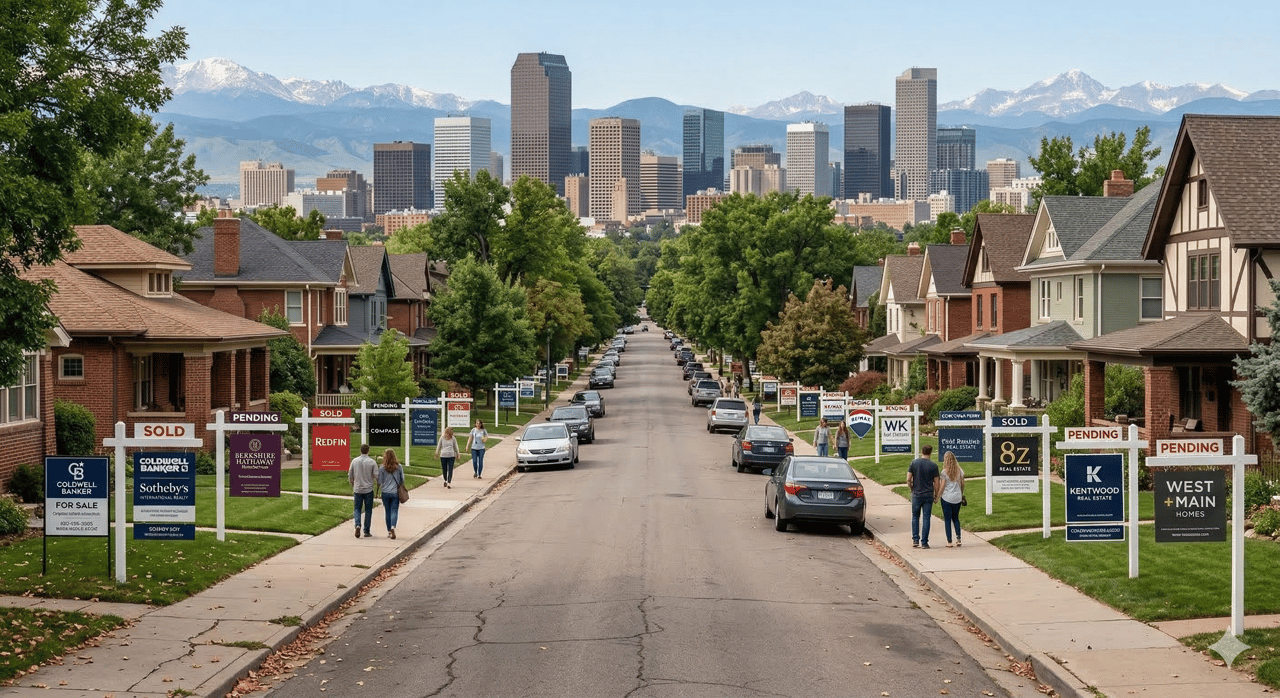
Yes — especially if your home is priced correctly and well prepared. While Denver is no longer the frenzied seller's market of 2021 and 2022, serious buyers are actively purchasing homes, and well-positioned listings are still going under contract fast. According to REcolorado's February 2026 market report, pending sales surged 30% month over month to 3,752 — which is a meaningful signal that buyer demand is alive and moving.
Here's what the market looks like right now for sellers:
- Active inventory has risen — ColoradoBiz reports 8,228 active listings as of early 2026, up 7% year over year — meaning buyers have more options and are being more selective
- Buyers are price-sensitive and comparison shopping more carefully than in prior years
- Sellers are frequently offering concessions — closing cost assistance and interest rate buydowns are common
- Homes that show well and hit the market at the right price are still seeing strong first-weekend activity
There is also a timing dynamic most sellers underestimate. When interest rates drop — even slightly — buyer demand spikes immediately. We've already seen this play out during brief rate dips in 2025 and early 2026: homes go under contract faster, concessions shrink, and competition among buyers increases. Right now, buyers still have room to negotiate. When rates drop further, that room disappears quickly — and sellers who are already on market will benefit most.
Waiting for a "better" market may actually mean more competition from other sellers and less control over your outcome. According to Denver Group RE's seasonal analysis, spring — April through June — consistently delivers the strongest results for Denver sellers, with faster days on market, higher likelihood of multiple offers, and stronger pricing support.
Want a broader read on where the Denver market is headed in 2026? My post on what the 2026 Denver market is already revealing gives you a current, honest breakdown.
How to Price Your Home Correctly in Today's Denver Market
Pricing is the single most important decision you will make as a seller — and in today's Denver market, getting it wrong in either direction is costly. Overpriced homes sit. Sitting leads to price reductions. Price reductions signal to buyers that something is wrong, which leads to lower offers and longer market times. It's a spiral that's very hard to recover from once it starts.
The goal is not to "test the market." The goal is to hit the market correctly from day one and generate the kind of first-week activity that creates urgency and leverage. According to Redfin's 2026 data, homes in Denver are averaging 19 days on market — which means the buyers are there. The question is whether your listing gives them a reason to act.
What correct pricing looks like in 2026
- Based on the most recent comparable sales — not data from 6 or 12 months ago when market conditions were different
- Adjusted for concessions that were actually given in those comparable sales, which affects the true net value
- Positioned competitively against currently active listings, since that's what buyers are comparing you to in real time
- Designed to attract attention and showings in the first 7 to 10 days — because that window is when your leverage is highest
Homes that are priced correctly from the start generate more showings immediately, create urgency among buyers who don't want to miss out, receive stronger and cleaner offers, and often net more than overpriced homes that were later reduced. The first week on the market is everything. If you miss that window, you are chasing the market down rather than leading it.
Pricing also varies meaningfully by neighborhood. What's happening in Washington Park is different from Highland, which is different from Cherry Creek or Central Park. A pricing strategy built on metro-wide averages is not the same as one built on the 10 or 15 most recent sales within a half-mile of your specific home.
Want a data-backed pricing strategy built around your specific home and neighborhood? Start with the Smart Seller Game Plan for a clear picture of what your home is worth in today's market.
How to Prepare Your Home Before Listing
Buyers in 2026 expect homes to feel clean, updated, and move-in ready — even when they're not brand new. Preparation directly impacts your sale price, your days on market, and your negotiation leverage. Homes that show poorly give buyers a reason to negotiate aggressively on price and repairs. Homes that show exceptionally well remove that ammunition entirely.
The good news is that preparation doesn't require a full renovation. It requires prioritization — knowing which improvements actually move the needle on buyer perception and which ones won't earn back what they cost.
First Impressions
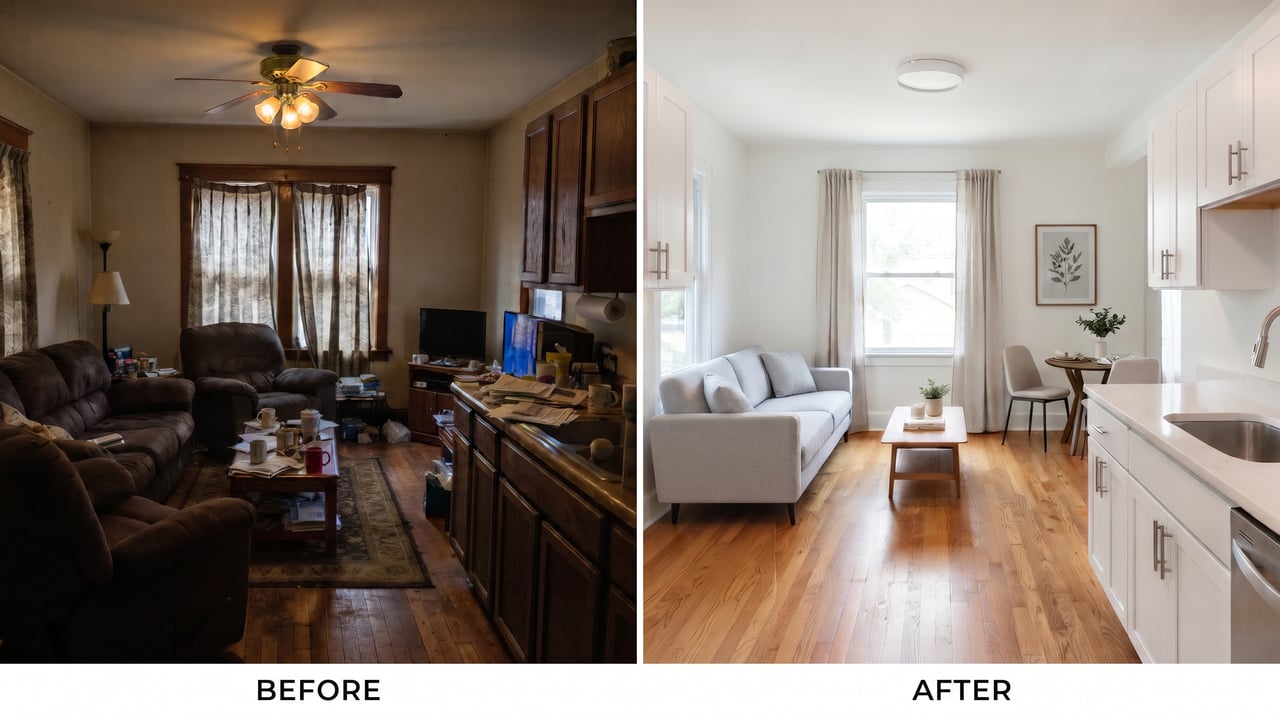
Buyers decide how they feel about a home within seconds of arriving. Fresh neutral paint, clean landscaping, decluttered and depersonalized spaces, and a thorough deep clean are the highest-return investments you can make before listing. These aren't glamorous upgrades — but they're the difference between a buyer who walks in ready to write an offer and one who starts mentally calculating what it would cost to "fix things up."
Fix the Obvious Issues
Today's buyers will notice everything, ask for repairs, and use inspection findings to negotiate price concessions after you're already under contract. Addressing the obvious issues before listing — loose railings, outdated or non-functional fixtures, deferred minor repairs, HVAC servicing — removes those negotiating chips from the buyer's hand before they even pick them up. This is especially important given the current market's tendency toward inspection renegotiations. For more on how buyers approach the inspection phase, see my guide on how Denver buyers approach home inspections.
Strategic Updates — Not Over-Renovating
You do not need a full kitchen or bathroom remodel. In most cases, you won't recoup that investment dollar for dollar, and buyers in this price range often prefer to make those choices themselves anyway. What does move the needle: updated light fixtures, new cabinet hardware, simple bathroom refreshes, and flooring touch-ups in the highest-traffic areas. These are relatively low-cost changes that signal the home has been cared for — and that perception is worth real money in buyer offers.
Professional Marketing
Your home needs more than a spot on the MLS. In 2026, buyers are finding homes through targeted digital advertising, social media, and agent networks — not just Zillow searches. Your listing should include professional photography (non-negotiable), a video walkthrough, targeted social media advertising to active buyer audiences, and an email campaign to agents representing buyers in your price range and neighborhood. Your home should be launched like a product — with a strategy behind it — not just uploaded to a database and hoped for.
How to Choose the Right Denver Real Estate Agent
The agent you choose will directly impact your final sale price, your experience, and whether your deal actually closes. In a balanced market, this is even more true than in a seller's market — because when homes don't sell themselves, the agent's pricing intelligence, marketing reach, and negotiation skill are what make the difference.
Here's what to look for:
- A data-driven pricing approach — Not just an opinion, but a documented analysis of recent comparable sales, adjusted for concessions, current inventory, and neighborhood-specific trends. An agent who can't show you their work on pricing isn't protecting your interests.
- A real marketing strategy — If the plan is MLS, sign in the yard, and an open house, that is not enough in today's market. You need digital advertising, targeted buyer outreach, agent network exposure, and a social media strategy built around your specific property.
- Proven negotiation skills — This market requires real negotiation: handling inspection requests, navigating concessions, keeping deals together when complications arise, and protecting your bottom line without blowing up a transaction unnecessarily. Ask your agent directly about a deal that ran into serious problems and how they handled it.
- Neighborhood-specific experience — An agent who has listed and sold homes in your specific neighborhood in the past 6 months is a fundamentally different resource than one who hasn't. Pricing, presentation, and buyer behavior vary block by block in Denver.
You can read what past clients have said about working with me at salliesimmons.com/testimonials — and you'll notice the reviews are specific: neighborhoods named, situations described, outcomes documented. That's what you should be looking for in any agent you consider.
For a detailed breakdown of what to look for when evaluating any agent's reviews and credentials, see my guide on how to choose the right Denver real estate agent.
What the Selling Timeline Looks Like in Denver
Most homes in Denver go from listing to closing in 30 to 60 days, though well-priced homes in strong neighborhoods can move faster. Here's what to expect at each stage:
Step 1 — Pre-Listing (1 to 3 weeks)
This is where the outcome is built. Pricing strategy, home preparation, staging, and professional photography all happen here. Sellers who rush this phase almost always leave money behind. Sellers who invest the time to prepare properly almost always benefit from it in the offers they receive.
Step 2 — Active Listing (Weeks 1 and 2)
The home goes live, showings begin, and open houses are scheduled. This is your most critical window. The first 7 to 10 days generate disproportionate buyer attention — buyers who have been watching the market notice new listings immediately, and the freshness of a new listing creates urgency. If you're priced correctly and show well, this is when offers come in.
Step 3 — Offers and Negotiation (Weeks 1 to 3)
Offers are received, terms are evaluated, and counteroffers or acceptance happen here. This is also where having an agent who understands net proceeds — not just headline price — matters enormously. A higher price with buyer concessions may still net you more than a lower clean offer, depending on the specifics. Strategy in this phase protects your bottom line.
Step 4 — Under Contract (2 to 4 weeks)
The inspection period, appraisal, and the buyer's loan processing all happen after you're under contract. This is where many deals run into friction. Inspection renegotiations, appraisal gaps, and financing delays are all real possibilities in 2026. A strong agent manages this phase actively — not just waiting to see what happens.
Step 5 — Closing (Day 30 to 45)
Final walkthrough, signing, and transfer of ownership. In Colorado, closings typically happen at a title company. Most sellers receive their proceeds via wire transfer on the day of closing or the next business day.
How to Negotiate Offers in a Balanced Market
Not all offers are equal — and not all concessions are bad. In today's Denver market, buyers frequently request closing cost assistance, inspection repairs or credits, and interest rate buydowns. The instinct for many sellers is to resist any concession. The smarter approach is to evaluate what you're actually netting, not just what the headline price says.
Here's how to think through the negotiation phase strategically:
- Focus on net proceeds, not just price — A $620,000 offer with $10,000 in closing cost concessions may net you the same as a $605,000 clean offer, but it keeps a buyer who is ready and motivated engaged. Run the actual numbers before reacting to any concession request.
- Evaluate buyer strength carefully — A strong buyer with solid financing and a short contingency period is often worth more than a slightly higher offer from a buyer with shakier financing. Deals that fall apart cost sellers time, money, and market momentum. Strong buyers equal smoother closings.
- Prepare for the inspection negotiation — This is where most deals encounter friction in 2026. If you've addressed the obvious issues before listing, you've already reduced the ammunition a buyer can bring to the inspection renegotiation. But expect some back-and-forth regardless — and have a clear sense in advance of what you're willing to address and what you're not.
- Stay strategic, not emotional — This is a business transaction. The goal is the best possible outcome for you — not winning every line item. Sellers who dig in emotionally on minor concessions sometimes lose strong buyers over issues that aren't worth the fight.
What Sellers Pay at Closing in Colorado
Understanding your true net proceeds before you list is essential. According to Anytime Estimate's 2026 Colorado seller closing cost data, average seller closing costs in Colorado are approximately 2.49% of the sale price — separate from real estate commissions. On a $630,000 home, that's roughly $15,700 in closing costs before any commission. DMAR data confirms similar figures, with total closing costs averaging around $10,000 on a $402,000 home and around $20,000 on an $800,000 home.
Here's what sellers in Colorado typically pay:
- Real estate commissions — The largest single cost; the specific structure varies and is negotiable
- Owner's title insurance — Protects the buyer against future title claims; traditionally paid by the seller in Colorado
- Title and closing service fees — Paid to the title company handling the transaction
- Prorated property taxes — You pay your share of annual property taxes through the closing date
- HOA transfer fees — If your property is in a homeowners association, transfer fees and document preparation fees apply
- Negotiated concessions — Any closing cost assistance or credits you've agreed to provide the buyer
- Mortgage payoff — Your remaining loan balance is paid off from proceeds at closing
Running a realistic net proceeds estimate before you list — accounting for all of these items — is something I do with every seller I work with before we ever talk about a list price. Understanding what you'll actually walk away with is the foundation of any real pricing conversation.
For a broader look at what it costs to live in Denver beyond just the transaction, this is a useful read: what it actually costs to live in Denver in 2026.
Frequently Asked Questions
Is it a good time to sell a home in Denver in 2026?
Yes — particularly right now in spring. According to Redfin's March 2026 data, Denver home prices are up 5% year over year at a median of $630,000, and homes are averaging 19 days on market. Serious buyers are actively purchasing, and well-positioned homes are still selling quickly. The key is pricing correctly and preparing the home properly — not testing the market with an inflated number.
How long does it take to sell a home in Denver?
Most Denver homes sell within 30 to 60 days from listing to closing. Homes that are priced correctly and show well in strong neighborhoods can move faster. According to Redfin, the current average days on market in Denver is 19 days — meaningfully faster than the prior year.
What is the best time of year to sell a home in Denver?
Spring — April through June — consistently delivers the strongest seller results in Denver. According to SMDRA's seasonal data, June is the top-performing month for seller premiums in Denver, with homes selling for approximately $23,297 above the annual average. That said, well-priced homes sell year-round — timing is one factor, not the only one.
Should I wait for interest rates to drop before selling?
Not necessarily — and possibly not at all. When rates drop, buyer demand spikes and competition among buyers increases. That can benefit sellers, but it also means more competing listings from sellers who had the same idea. Right now, buyers have more room to negotiate, which also means you have more control over your concessions and timing. Waiting for lower rates may trade today's control for tomorrow's competition.
What do sellers pay at closing in Colorado?
Colorado sellers typically pay approximately 2.49% of the sale price in closing costs, according to Anytime Estimate's 2026 data. This includes owner's title insurance, title and closing fees, prorated property taxes, and HOA transfer fees if applicable — separate from real estate commissions and any negotiated buyer concessions.
Do I need to make repairs before selling my Denver home?
You don't need to fix everything — but addressing obvious issues before listing is almost always worth it. Today's buyers notice deferred maintenance, use inspection findings to negotiate, and are quick to reduce their offers based on condition. Handling the obvious items upfront removes negotiating chips from the buyer's hand before they can use them. You don't need a renovation — you need the home to feel cared for.
How do I know if my home is priced correctly?
Correct pricing is based on recent comparable sales adjusted for concessions, compared against current active competition, and calibrated to generate strong first-week showings. If your home sits beyond 10 to 14 days without serious activity, the price is very likely the issue. The clearest signal that a home is priced right is strong showing volume and offers in the first week. That's the window that matters most.
Which Denver neighborhoods are sellers seeing the best results in right now?
Results vary meaningfully by neighborhood and price point. Washington Park, Cherry Creek, Highland, and Central Park are all seeing active buyer demand in spring 2026. The full Denver neighborhoods guide is a good place to start if you want to understand how your specific area is performing.
Ready to Sell Your Denver Home? Here's Where to Start.
Selling in today's Denver market comes down to strategy — not luck, not timing alone, and not simply "listing it and seeing what happens." The sellers who get strong results in 2026 are the ones who price correctly from day one, prepare their home to show well, market aggressively to the right buyers, and negotiate intelligently when offers come in.
I work with Denver sellers every day — in every price range, every neighborhood, and every situation. Whether you're ready to list this spring, still thinking through the numbers, or trying to figure out whether selling even makes sense for you right now, I'll give you honest data and a clear plan — not a sales pitch.
Start by reading what past clients have said about working with me at salliesimmons.com/testimonials. Then grab the Smart Seller Game Plan for a complete breakdown of how to price, prepare, and position your home for today's market. When you're ready to talk through your specific situation, reach out directly and let's look at the numbers together.
This is not a "list it and see" market. It's a position it and win market — and that starts with the right strategy from day one.