Everyone says Denver is expensive. That's true — but it's also incomplete. Expensive compared to Omaha is a very different statement than expensive compared to San Francisco. And neither one tells you what your specific life is going to cost month to month, which is the only number that actually matters when you're deciding whether to move here, stay here, or plan your finances around it.
Housing costs in Denver aren’t just about price—they’re about where you buy and how those areas differ.
If you're still narrowing that down:
Where Denver Sits Nationally
Denver consistently ranks 15–20% above the national average for overall cost of living, with housing as the primary driver of that gap. Outside of housing, most other cost categories — groceries, utilities, healthcare — run 5–10% above average, which is meaningful but not dramatic. The city lands firmly in the middle tier of major U.S. metros: significantly more expensive than most of the Midwest and South, and meaningfully more affordable than coastal markets like Seattle, Los Angeles, or New York.
For people relocating from Texas — one of the most common migration corridors into Denver — the cost gap is smaller than many expect, especially on housing. Austin and Dallas have converged with Denver's pricing over the past several years. Read the full Texas vs. Colorado cost comparison if that's your situation.
For people moving from California, Denver often feels like a genuine step down in cost — particularly on housing — even as other categories remain close to what they're used to.
Housing: The Number That Drives Everything Else
Housing is where Denver's above-average cost of living is most acutely felt, and it's the category that most determines whether your budget works or doesn't. Here are realistic 2026 figures across property types and scenarios.
Renting in Denver
Rental prices have softened modestly from their recent peaks as vacancy rates have ticked up and new apartment supply has come online, but Denver rents remain well above the national average:
- Studio: $1,300–$1,700/month in most neighborhoods; $1,800+ in prime walkable areas like LoHi, Cherry Creek, or RiNo
- One-bedroom: $1,600–$2,200/month depending on neighborhood and building quality
- Two-bedroom: $2,200–$3,200/month; $3,500+ in high-demand neighborhoods
- Three-bedroom: $2,800–$4,500/month for a house; wide range depending on location
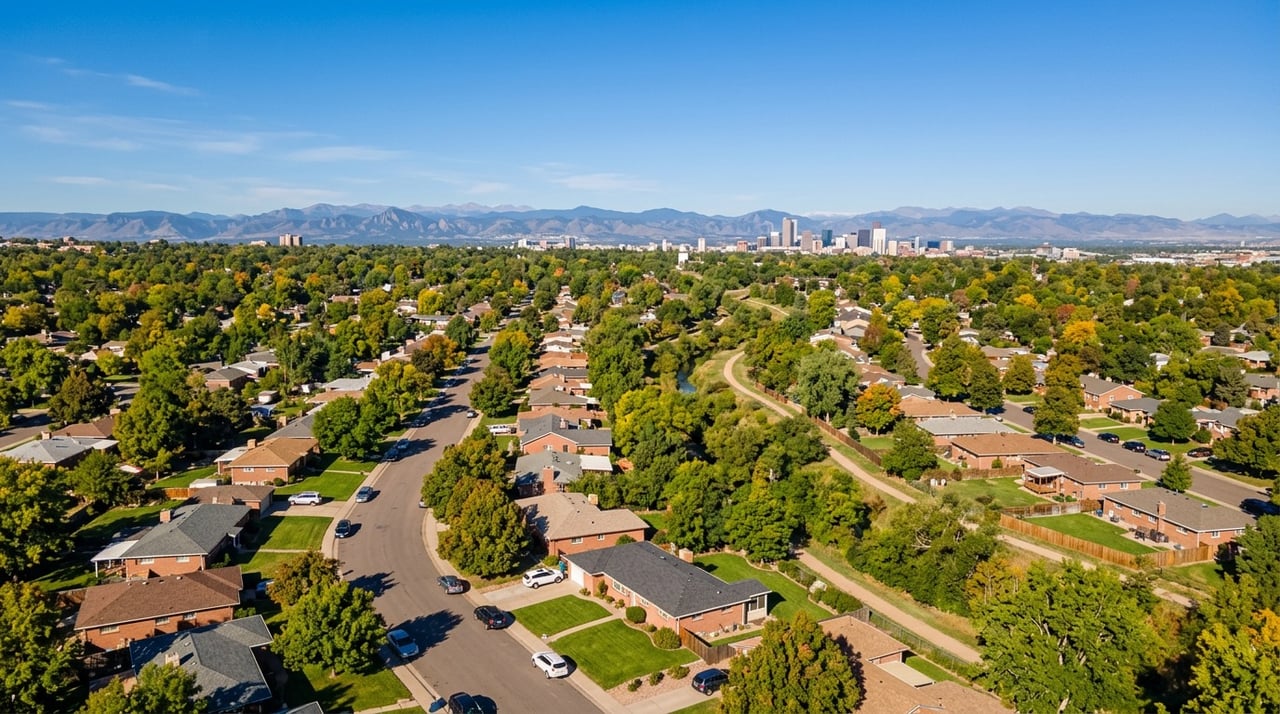
Neighborhoods closest to downtown — LoHi, Cherry Creek, Capitol Hill, RiNo — carry significant premiums. As you move outward to Sloan's Lake, Berkeley, or further into Aurora and Lakewood, you typically gain meaningful square footage for the same dollar.
Buying in Denver
The Denver metro median home price as of early 2026 sits in the $550,000–$580,000 range, though it varies significantly by neighborhood, property type, and condition:
- Condos and townhomes: $350,000–$550,000 for most entry-level options; $600,000–$1M+ in Cherry Creek and premium zip codes — note that HOA fees of $300–$700+/month significantly affect the true monthly cost
- Detached single-family, established neighborhoods: $600,000–$900,000 for most of Denver proper
- Luxury and premium neighborhoods (Washington Park, Hilltop, Cherry Creek North): $900,000–$2M+
- Suburbs (Aurora, Lakewood, Thornton, Westminster): $400,000–$550,000 for comparable detached homes with more square footage
For a full breakdown of what Denver's buying process looks like in 2026, read the 2026 Denver buyer guide. And read the 2026 neighborhood guide to understand how price points vary across the city before you settle on a location.
The Hidden Housing Costs Most People Underestimate
The purchase price or monthly rent is only the starting point. Several secondary housing costs in Denver have risen significantly and regularly catch buyers and renters off guard:
- Property taxes: Colorado's rates are moderate by national standards, but recent reassessments have produced significant bill increases for many homeowners. Read the full Denver property tax guide before you finalize a purchase budget.
Homeowners insurance: Colorado's hail risk, wildfire exposure (especially in mountain-adjacent communities), and broader insurance market pressures have pushed premiums significantly higher. Annual homeowners insurance on a $600,000 Denver home can run $2,500–$4,500+ depending on location and coverage. Read more about insurance shock in Denver.
- HOA and metro district fees: Condos, townhomes, and many newer planned communities carry monthly HOA or metro district fees of $200–$700+. Some Aurora and Highlands Ranch developments carry metro district fees that function like a second property tax. Always get the full monthly cost picture before comparing properties.
- Maintenance reserve: Budget 1–2% of your home's value annually for maintenance and repairs — roughly $500–$1,000/month on a $600,000 home. Denver's hail, UV exposure, and temperature swings accelerate wear on roofs, siding, and HVAC systems faster than many buyers expect.
Trying to build a realistic housing budget before committing to a purchase? Reach out to Sallie — walking clients through true total housing cost is one of the first things she does with relocating and first-time buyers.
Groceries and Food
Grocery costs in Denver run approximately 8–12% above the national average, depending on where you shop. King Soopers (Kroger's Colorado brand) is the most common mid-range option and generally competitive on price. Whole Foods and Sprouts are plentiful but expensive. Natural Grocers offers a more affordable organic alternative. Costco and Sam's Club serve the metro well for bulk buyers.
Realistic monthly grocery budgets for Denver households:
- Single person, moderate habits: $350–$500/month
- Couple: $600–$900/month
- Family of four: $1,000–$1,500/month
Dining out reflects Denver's genuinely strong food scene — and the prices that come with it. A casual sit-down dinner for two typically runs $45–$70 with drinks. A mid-to-upscale dinner for two runs $80–$130+. Denver has no shortage of excellent restaurants, but eating out regularly is a meaningful budget line. A household that dines out three to four times per week should budget $600–$1,000+/month for food and dining combined beyond groceries.
Utilities
Denver's utility costs are close to the national average, though the dry climate and altitude create some specific patterns worth knowing about. Monthly utility figures for a typical Denver home or apartment:
- Electric (Xcel Energy): $80–$150/month average; higher in summer with AC
- Natural gas (Xcel Energy): $50–$120/month; peaks in winter for heating
- Water and sewer: $50–$100/month for a single-family home; often included in apartment rent or HOA
- Internet: $60–$100/month for high-speed service (Comcast, CenturyLink, and fiber options in many neighborhoods)
- Total utilities, average home: $250–$400/month depending on size, season, and efficiency
One thing that surprises some new Denver residents: the combination of intense UV exposure and dry air means HVAC systems, water heaters, and appliances can have shorter life cycles than in more moderate climates. Budget for that in your long-term maintenance reserve.
Transportation
Denver is a car-dependent city for most residents. The RTD light rail and commuter rail system connects many parts of the metro, but the coverage is uneven and most of the desirable neighborhoods require a car for practical daily life. Budget accordingly:
- Car payment (if financed): $400–$700+/month for a typical vehicle
- Auto insurance: Colorado auto insurance rates have risen sharply — $150–$250+/month for a single driver depending on driving history and vehicle. Two-driver households budget $250–$450/month.
- Gas: Colorado gas prices typically run slightly above the national average due to the state's unique fuel blend requirements — budget $80–$150/month depending on commute distance
- RTD monthly pass: $114/month for unlimited regional access — a realistic option only if you live and work near a rail or bus rapid transit corridor
- Parking: Free in most residential neighborhoods; $150–$300/month in downtown or urban cores if you need a dedicated spot
One underrated transportation cost for Denver residents: mountain weekend driving. If you ski or recreate in the mountains regularly, factor in gas and vehicle wear for I-70 trips — plus ski passes, which at major resorts like Vail and Breckenridge run $800–$2,000+ for a full-season Epic or Ikon pass.
Taxes in Colorado
Colorado's tax structure is one of the more favorable aspects of living here, especially for higher earners:
- State income tax: Colorado has a flat income tax rate of 4.4% — straightforward and generally competitive with other western states
- Sales tax: Denver's combined state, county, and city sales tax is approximately 8.81% — moderate but not trivial for high spenders
- Property taxes: Colorado's effective property tax rate is lower than the national average, but recent Gallagher Amendment changes and reassessments have resulted in higher bills for many Denver homeowners. See the full breakdown in the Denver property tax guide.
- No inheritance or estate tax at the state level — an advantage for estate planning
For people relocating from high-tax states like California, New York, or Illinois, Colorado's flat income tax is a meaningful financial improvement. For people coming from no-income-tax states like Texas, Florida, or Nevada, the 4.4% state income tax is a real cost that needs to be factored into total compensation comparisons.
Healthcare
Denver's healthcare costs run slightly above the national average, driven in part by the overall cost of the local economy and the density of high-quality hospital systems (UCHealth, SCL Health, Children's Hospital Colorado, Denver Health). Employer-sponsored insurance is the norm for most full-time workers, though premiums and out-of-pocket costs have continued rising industrywide. Key benchmarks:
- Employer-sponsored individual health insurance: $150–$400/month employee contribution depending on employer and plan tier
- Family coverage premium contribution: $500–$1,200/month depending on employer generosity and plan selection
- Individual/ACA marketplace plans: $350–$700+/month for a mid-tier Silver plan without subsidies
- Dental and vision: Budget an additional $50–$100/month for basic coverage
The Denver Lifestyle Budget — What People Actually Spend
One of the defining features of Denver's cost profile is how strongly lifestyle spending shapes total monthly expenses. Denver is a city built around being active, being outside, and spending on experiences — and many residents invest significantly in that:
- Gym or fitness membership: $30–$200/month (Planet Fitness to high-end climbing gyms, yoga studios, or CrossFit)
- Ski season pass: $800–$2,000 for a full-season Epic or Ikon pass; day tickets at major resorts run $150–$250+
- Outdoor gear: REI co-op, local outfitters, and gear rental are well-established, but building a real kit for hiking, skiing, climbing, or cycling is a multi-hundred to multi-thousand dollar investment
- Entertainment and nightlife: $200–$500/month depending on how frequently you dine out, attend events, or go to concerts — Denver's entertainment scene is genuinely strong
- Travel: Easy access to DIA and Southwest's strong Denver hub makes travel accessible; budget varies widely by individual
Denver residents who lean into the outdoor lifestyle often find they spend more on gear, passes, and mountain trips than they budgeted for — not because it's forced on them, but because the access is right there and it's genuinely excellent. Know that going in and factor it into your budget intentionally rather than being surprised by it six months after you move.
What Salary Do You Need to Live Comfortably in Denver?
This is the question most people actually want answered. Here are realistic income thresholds based on housing situation and lifestyle:
- Single renter, modest lifestyle: $65,000–$75,000/year covers rent, food, transportation, and basics without significant financial stress
- Single renter, active Denver lifestyle with savings: $80,000–$95,000/year allows for dining out regularly, fitness, some mountain trips, and building meaningful savings
- Single buyer (targeting $500,000–$600,000 home): $100,000–$125,000/year minimum; $130,000+ for genuine comfort with savings
- Dual-income household renting: $110,000–$140,000 combined allows for comfortable renting, savings, and a reasonable lifestyle in most neighborhoods
- Dual-income household buying: $140,000–$180,000+ combined for comfortable ownership in the $550,000–$700,000 range with savings and lifestyle budget intact
- Family of four, owning: $160,000–$220,000+ to own in a family-friendly neighborhood like Central Park, cover childcare or school costs, and maintain financial flexibility
These are honest ranges, not aspirational ones. The people who struggle most in Denver are typically those who moved assuming their income from elsewhere would feel the same here — and discovered that Denver's housing costs eat a larger share of the budget than they planned for.
Trying to figure out whether your income actually works for Denver homeownership? Talk to Sallie — she works with buyers at all income levels and can give you an honest assessment of what's realistically within reach.
More Affordable Options: Denver's Suburbs and Surrounding Cities
For buyers and renters who want Denver metro access without full Denver pricing, several surrounding communities offer meaningful value — if you choose the right location within them:
- Aurora: One of Colorado's fastest-growing cities with genuine neighborhood diversity, newer construction options, and home prices 10–20% lower than comparable Denver properties. Read the honest guide to living in Aurora — it's more nuanced than the reputation suggests.
- Lakewood: Offers a good balance of urban access and neighborhood feel, with pricing slightly below Denver proper and easy highway and light rail access west toward the mountains
- Thornton and Westminster: More affordable northern suburbs with newer housing stock and good highway access to both Denver and Boulder
- Centennial and Highlands Ranch: Higher-quality suburban infrastructure — strong schools, newer homes, well-maintained commercial corridors — with pricing that can be competitive with Denver proper on a per-square-foot basis
- Englewood and Littleton: Southwest corridor options with light rail access into downtown, good walkable commercial areas, and generally lower price points than Denver proper
The key is evaluating each of these at the neighborhood and block level — not just by city name. Aurora has excellent pockets and challenging ones; so does every community in this list. Work with someone who knows the specific areas before committing to a location purely based on price. Read the 2026 Denver neighborhood guide to understand the landscape before you start touring.
Is Denver Worth What It Costs?
For most people who move here intentionally and prepare financially — yes, genuinely. Denver's combination of outdoor access, a strong and diverse job market, 300+ days of sunshine, a real food and culture scene, and a lifestyle infrastructure that most cities can't replicate makes it one of the most compelling places to live in the country for a specific type of person.
The people who feel most positively about Denver's cost of living are almost universally the ones who came in with accurate expectations, chose their neighborhood deliberately, bought or rented strategically based on their actual situation, and built a lifestyle budget that was honest about what Denver costs. The people who struggle are the ones who moved on lifestyle aspiration and figured out the financial details afterward.
Denver will cost you more than most of the country. What it gives you in return is genuinely distinctive — but you have to set yourself up financially to actually enjoy it. That starts with knowing your numbers, which is exactly what this guide is for.
Frequently Asked Questions About Denver Cost of Living
Is Denver expensive to live in?
Yes — Denver is approximately 15–20% above the national average for overall cost of living, with housing as the primary driver. Outside of housing, most categories run 5–10% above the national average. Denver is significantly more expensive than most of the Midwest and South, and more affordable than coastal markets like Los Angeles, Seattle, or New York.
What salary do you need to live comfortably in Denver in 2026?
A single renter living a modest but comfortable lifestyle needs approximately $65,000–$80,000/year. A single buyer targeting a $550,000–$600,000 home needs $100,000–$125,000+. Dual-income households typically need $140,000–$180,000 combined to own comfortably in a desirable neighborhood with savings capacity intact. Families of four with homeownership goals should target $160,000–$220,000+ combined.
Why is Denver so expensive?
Denver's above-average costs are driven by a combination of sustained population growth, a strong and diversified job market that sustains high incomes, limited developable land in desirable neighborhoods, rising insurance and construction costs, and broad national demand for western lifestyle. The metro has added hundreds of thousands of residents over the past fifteen years, and housing supply has not kept pace with that demand.
What are home prices in Denver in 2026?
The Denver metro median home price in early 2026 is approximately $550,000–$580,000. Condos and townhomes start in the $350,000–$400,000 range in many neighborhoods. Detached single-family homes in established Denver neighborhoods typically start at $600,000–$650,000. Suburban communities like Aurora, Lakewood, and Thornton generally offer detached homes at $400,000–$550,000.
What is the average rent in Denver in 2026?
One-bedroom apartments in Denver average $1,600–$2,200/month depending on neighborhood. Two-bedroom units typically run $2,200–$3,200/month. Studios run $1,300–$1,700/month. Walkable, high-demand neighborhoods like LoHi, Cherry Creek, and RiNo carry premiums above these averages.
Is it cheaper to live in Aurora or Denver?
In most cases, yes — Aurora offers home purchase prices approximately 10–20% lower than comparable Denver properties and generally lower rents as well. The tradeoffs depend on specific location within Aurora: some areas offer excellent value and quality of life, while others require careful evaluation. Read the honest guide to Aurora for a complete picture.
How much does it cost to buy a home in Denver?
Beyond the purchase price, plan for closing costs of 2–3% of the purchase price, your down payment (3–20% depending on loan type), and an initial transition and maintenance buffer. On a $560,000 home with 5% down, total cash needed to close comfortably is typically $45,000–$55,000. Annual ongoing ownership costs — taxes, insurance, HOA if applicable, and maintenance — typically add $12,000–$24,000/year on top of the mortgage payment depending on property type and location.
How does Denver compare to Texas cities for cost of living?
The cost gap between Denver and Texas's major cities has narrowed significantly over the past five years. Austin and Denver are now broadly comparable on housing costs. Dallas and Houston remain somewhat more affordable on housing, though Colorado's lack of no-income-tax status (Colorado charges 4.4% flat) partially offsets that advantage. Read the full Texas vs. Colorado cost comparison.
Is Denver cheaper than California?
Yes — meaningfully so for most cost categories. Los Angeles and San Francisco home prices and rents are substantially higher than Denver's. Colorado's income tax rate is also far lower than California's top marginal rates. Most California transplants experience a notable step down in cost of living when moving to Denver, particularly on housing. The lifestyle trade-offs are more nuanced — California's coastal climate and geography are simply different from Denver's mountain-adjacent inland setting.
Know Your Numbers Before You Commit
Denver is worth the cost for the right person in the right situation with the right financial foundation underneath them. It is not the right call for someone who moved on a feeling and didn't do the math first. The gap between those two experiences is almost always preparation — specifically, understanding what your actual life in Denver is going to cost before you sign a lease or make an offer on a home.
Sallie Simmons is a Denver real estate agent with Compass based in Aurora, Colorado. She works with relocating buyers from across the country — people who need a local, honest perspective on what Denver actually costs, which neighborhoods fit their lifestyle and budget, and how to make the buying process work on their first try without overpaying or landing in the wrong location.
Whether you're three months away from a move or still in the research phase, the best thing you can do right now is have a real conversation about your specific numbers — not national averages, not best-case scenarios, but what your actual budget looks like and what it can realistically support in Denver's current market.
→ Reach out to Sallie for a free, no-obligation conversation
Or keep building your picture: read the honest guide to moving to Denver, explore the Denver neighborhood guides, and understand whether renting or buying makes more sense for your situation.