On one side of Sheridan Boulevard, Sloan’s Lake is dealing with a slow, expensive environmental problem. On the other, Edgewater is still opening restaurants, filling patios, and giving residents more reasons to spend a Saturday nowhere near the water.
That split is the story of this corner of the metro right now.
Denver has proposed a $50 million plan to restore Sloan’s Lake after years of sediment buildup, algae advisories, fish kills, and warnings to keep dogs out of the water. Edgewater Public Market, a few minutes away, is still adding food concepts and pulling people into a neighborhood whose momentum does not depend on whether the lake gets fixed next year or three years from now.
Neither side cancels out the other. The lake’s problems are real. So is the activity around it.
If you spend enough time around Sloan’s Lake and Edgewater, you start to understand that they operate on different timelines. The lake is a long-term public-infrastructure and environmental story. Edgewater is a daily-life story: where people get coffee, meet for dinner, join a run club, take visiting friends, and decide whether they want to spend their Saturday afternoon.
Both matter if you are considering living on this side of the metro.
The Lake Has a Number Problem
Sloan’s Lake once reached roughly 8 to 12 feet deep in places. Today, Denver officials say many areas average only about 2.5 to 3 feet.
That change is not cosmetic.
Shallow water heats faster. Warmer water, stormwater runoff, nutrients, and decades of sediment buildup create conditions that can fuel harmful algae blooms. In 2024, a bloom during a stretch of near-100-degree weather was linked to an estimated 2,000 dead fish, according to city reporting.
That is why the signs around the lake warning people to keep dogs out of the water are not simply an inconvenience or an overreaction. They are part of a larger problem that has been building underneath the surface for years.
Denver voters approved $5 million for Sloan’s Lake aquatic and environmental improvements through the 2025 Vibrant Denver bond program. That money is intended for shoreline stabilization and stormwater work, but it does not solve the larger sediment problem at the bottom of the lake.
In September 2026, Denver officials announced a proposed $50 million restoration plan that would remove sediment, deepen sections of the lake, rebuild shoreline habitat, and improve stormwater filtering before runoff reaches the water.
The city is targeting permitting in 2027 and a possible construction start in 2028, subject to approvals, funding decisions, engineering, and final project planning. It is a meaningful proposal, but it is not a quick fix and it is not a construction-ready promise.
Historic Depth | Typical Current Depth | 2025 Bond Funding | 2026 Restoration Proposal |
|---|---|---|---|
Roughly 8 to 12 feet in places | Roughly 2.5 to 3 feet in many areas | $5 million for aquatic and environmental improvements | $50 million proposed for dredging, shoreline restoration, and stormwater filtering |
None of this means Sloan’s Lake is closed or unusable as a park.
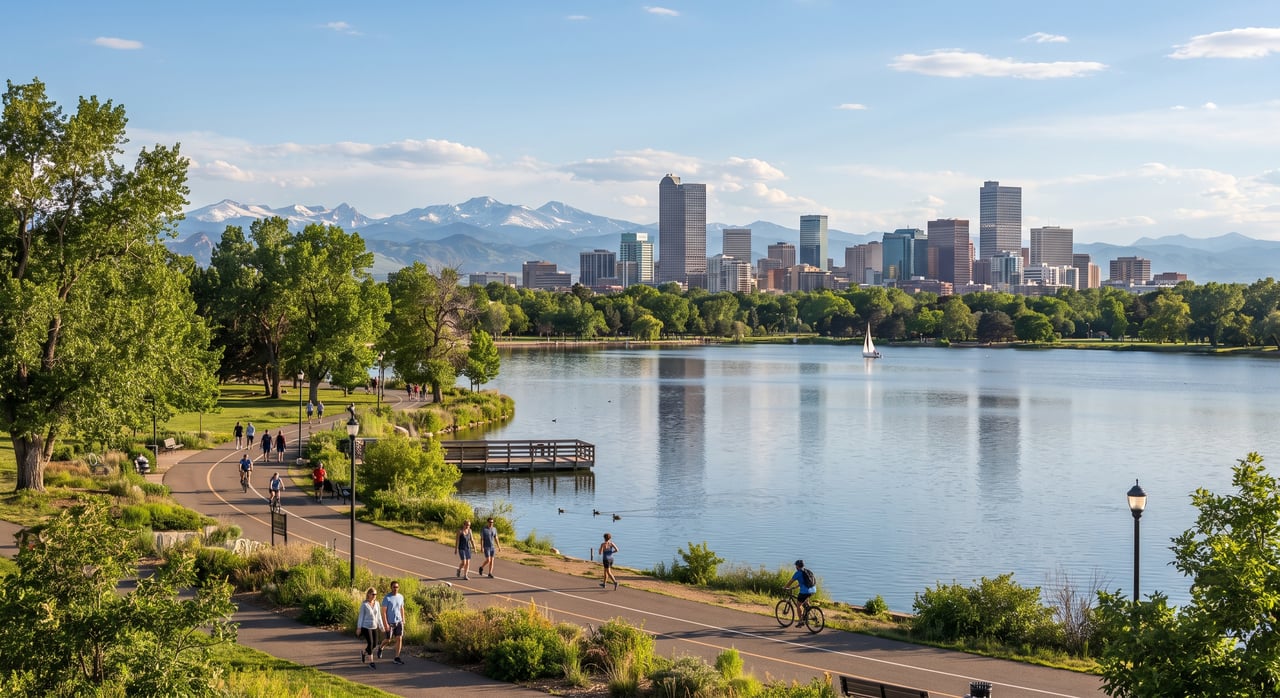
Swimming has never been allowed in the lake, but residents still walk, run, bike, paddle, sit outside, watch sunsets, bring visitors, and use the roughly 2.7-mile paved loop around the water. Sloan’s Lake remains one of the better places in Denver to see the foothills on one side, the skyline on the other, and a cross-section of how people actually use the city’s parks.
It is also a major reason buyers consider Sloan’s Lake in the first place. The lake is not merely a view from a listing photo. For the right buyer, it becomes part of the daily routine.
The Festival That Almost Packed Up
If you want proof that the lake’s issues are real and not just a talking point, look at what happened to the Colorado Dragon Boat Festival.
The festival has been held at Sloan’s Lake since 2001 and typically takes place in July. In 2024, a toxic algae bloom forced the city to bar events on the water, and organizers had to move the races to September instead. At the time, there was open discussion about whether the festival might have to relocate permanently if lake conditions did not improve.
It did not relocate.
The 2026 festival returned August 29 and 30, closer to its usual summer window, for its 26th year. For one weekend, the boats were back, families were back along the shoreline, and the lake once again looked like the large civic gathering place people remember.
That does not mean the underlying problem disappeared. It means the festival remains part of why the lake matters enough for people to fight for its future.
Denver City Councilwoman Amanda Sandoval, whose district includes Sloan’s Lake, has described the park as a gathering place generations of Denver families have used. That is the point of the dredging and restoration conversation. It is not simply about making the lake look better. It is about preserving an amenity people already use and want to continue using.
Edgewater Public Market Is Not Standing Still
The most visible change in the area this year is not at the lake at all.
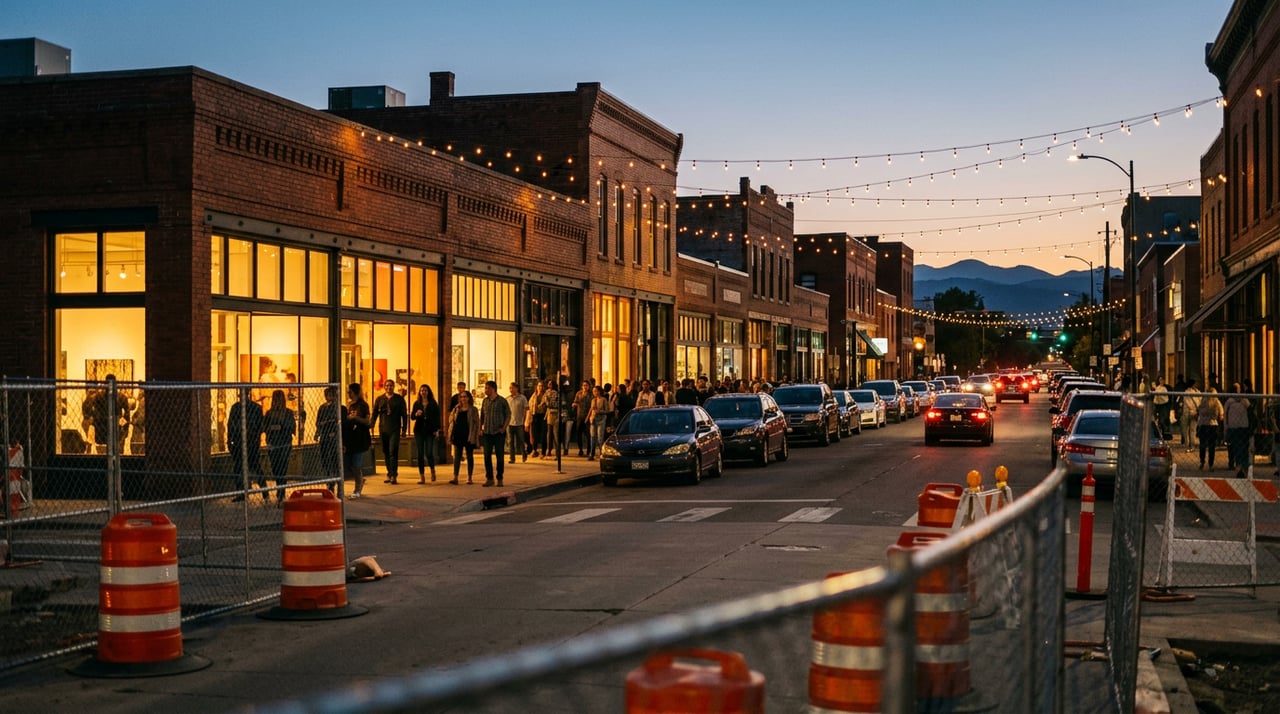
It is inside Edgewater Public Market, where new openings and expanded concepts continue to give residents more reasons to treat the market as a regular part of the week rather than an occasional destination.
Sandomi opened in 2026 with a fast-casual menu built around Japanese milk-bread sandwiches, onigiri, and bánh mì. The concept comes from Christine Ludwick, who already operates Dumpling Spot inside the same market and has built other restaurant concepts around Denver.
That matters because it is not a brand-new operator taking a random chance on the area. It is an experienced local operator who already knows the market and is still willing to invest in it.
Gladys also expanded from a counter-service concept into a fuller dinner experience, adding a larger dining room and table service. The vegetable-forward menu changes with the seasons, which gives the market a different kind of dining option than a quick lunch counter or a grab-and-go food-hall meal.
More than five years after Edgewater Public Market opened in 2019, it is still changing rather than simply coasting on its original vendor lineup.
That is one of the more useful things to understand about Edgewater right now. The neighborhood does not rely on one attraction or one anchor. The market, Joyride Brewing, local restaurants, small businesses, parks, and proximity to both Sloan’s Lake and Denver give it a more layered day-to-day rhythm.
The Economics Behind the Kitchen Door
New dining options do not appear in a vacuum.
The part residents do not see from the patio is the wage and operating-cost conversation happening behind the kitchen door.
Edgewater became the first Colorado city to freeze the minimum wage for tipped workers for a year, holding the rate at its 2025 level while restaurant owners dealt with rising food, labor, insurance, rent, and operating costs.
If City Council does not extend or revise the policy, the rate returns to the prior formula on January 1, 2027. That would increase tipped-worker pay by $3.32 per hour to $16.82, a 25 percent increase in a single day. [525]
For some local restaurant owners, the freeze did not create a windfall. It created breathing room.
That distinction matters in a neighborhood where independent restaurants, neighborhood bars, and food-hall operators are a meaningful part of what makes the area feel active and livable.
The wage issue is not settled, and the policy decision will continue to be debated. But Edgewater’s restaurant scene is growing while the businesses behind it are navigating one of the more consequential local labor-policy experiments in Colorado.
That is a more realistic picture than pretending every new opening means the economics are easy. The demand may be there. The cost structure is still complicated.
The Weekly Rhythm, If You Actually Live Here
For residents, the useful version of all this is not the funding debate. It is the calendar.
Edgewater works because it gives people reasons to leave the house on ordinary weekdays, not only during a major festival or a perfect summer weekend.
- Mondays: Euchre at Joyride Brewing, with gift cards on the line for anyone who still remembers how to play.
- Tuesdays: Trivia night at Joyride Brewing.
- Wednesdays: A 6:30 p.m. run club out of the taproom, with an easy pace available for people who want to participate without pretending they are training for a marathon.
- Weekends: Rotating book clubs, music bingo, pop-ups, and other local events at Edgewater Public Market.
- Saturday, September 26: Edgewater Hometown Fest, the city’s annual small-town-in-the-middle-of-the-metro celebration.
Event schedules change, so check the official venue and city calendars before you make a plan. The broader point is that Edgewater has enough recurring local activity that residents do not need to wait for a big lake festival to have a reason to go out.
None of that requires the lake to be fixed first.
What This Means if You Are Considering the Area
For someone thinking about buying near Sloan’s Lake or Edgewater, the lake conversation should not be ignored. But it also should not become the only thing you know about the area.
Sloan’s Lake is a major outdoor amenity, and the proposed restoration work is relevant to anyone who values the park, the water, the running loop, the views, and the activity it brings to the neighborhood.
Edgewater has a different appeal. It offers its own municipal identity, a compact walkable core, public-market energy, locally owned businesses, parks, and practical access to both west-side amenities and central Denver.
The exact block matters.
A home beside Sheridan Boulevard can feel different from a home deeper into Edgewater. A home immediately adjacent to Sloan’s Lake can feel different from one several blocks away. A buyer who wants a daily lake loop may value proximity very differently from someone who simply likes knowing the park is nearby.
That is why I do not want buyers choosing this part of the metro based on a listing photo of the lake or a Saturday afternoon visit to the market. I want them to drive the route they would actually use, see the neighborhood at different times, understand the traffic patterns, consider the future park work, and decide whether the daily rhythm fits how they actually live.
If you are comparing this part of the metro with nearby Denver neighborhoods, browse my Denver neighborhood guides. If you are focused on the lake itself, start with my Sloan’s Lake neighborhood guide.
Two Clocks, One Area
The honest way to think about Edgewater and Sloan’s Lake this fall is that they are moving on different timelines.
One is slow.
Sloan’s Lake took decades to become shallow, sediment-heavy, and vulnerable to algae blooms. Fixing it, if Denver’s proposed restoration plan moves forward, will take years of permitting, engineering, funding, construction, and public patience.
The other is fast.
A new sandwich counter opens. A dining room expands. A festival returns. A run club leaves the taproom on a Wednesday evening. A local wage policy gets debated at City Council. The neighborhood keeps moving whether or not the water cooperates.
Both clocks are real.
The lake’s problems are not exaggerated, and neither is the growth happening around it. Understanding this part of the metro means holding both at once, which is more useful than either the doom version or the booster version.
If you are considering a home near Sloan’s Lake, Edgewater, or another west-side neighborhood, the right question is not simply whether the area is “up and coming.” It is whether the specific block, property, park access, traffic pattern, amenities, and long-term tradeoffs work for how you actually want to live.
Start with my Sloan’s Lake neighborhood guide, browse my Denver neighborhood guides, or visit my Denver home-buying resources when you are ready to compare the real options.