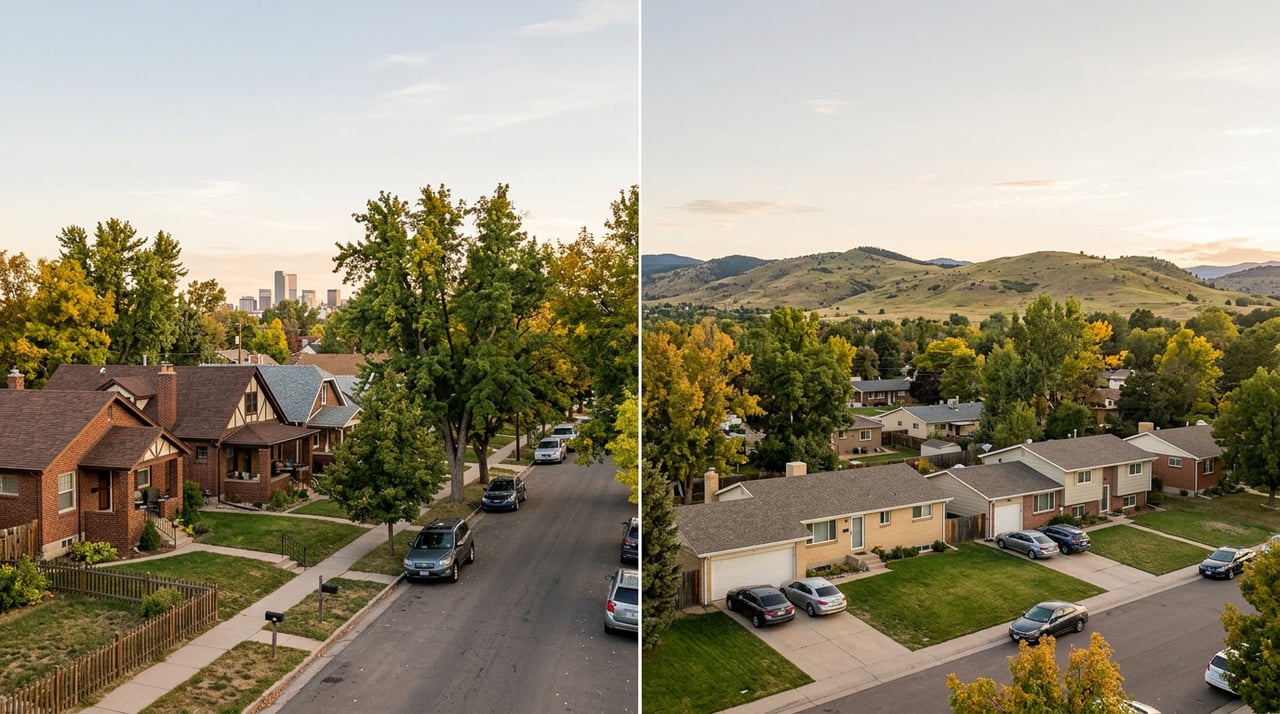
Compare neighborhood life, Olde Town, trails, rail connections, Golden and Boulder access, home features, and ownership costs to find the location that fits your real routine.
This Is Not Really a Denver-versus-Arvada Question
Denver may fit better if your regular routine revolves around specific closer-in neighborhoods, city destinations, and walking to the places you enjoy. Arvada deserves a serious look if Olde Town, walking and biking trails, proximity to Golden, access toward Boulder along scenic Highway 93, or a different combination of house, garage, and outdoor space fits the way you live.
Neither city automatically offers the better home, easier commute, or lower ownership cost. The useful question is: “Which home and location will make my real routine work better?”
Most buyers are comparing two versions of daily life, not just two city names.
Would you rather walk to dinner or have more room for an office? Would you use a nearby trail several times a week? Is Olde Town somewhere you want to reach on foot, or would you be happy driving there? Would you regularly head to Golden, Boulder, or the foothills? Does the home work for your actual commute, not just your favorite weekend activities?
Denver and Arvada can both be good answers. The decision gets clearer when you compare specific properties, complete ownership costs, and the compromises you would actually be making.
This guide is for buyers planning a 2027 purchase. It is not a prediction about mortgage rates, inventory, appreciation, or next year's prices. Those conditions should be evaluated when you are ready to buy.
Denver vs. Arvada at a Glance
Use this table to identify what to investigate. It is not a guarantee that every property in either city delivers the same experience.
If this matters most | What to compare in Denver | What to compare in Arvada |
|---|---|---|
A closer-in neighborhood routine | Homes near the particular business districts, parks, and city destinations you use. | Whether the address provides the local access you want or requires more driving. |
More house, garage, or usable yard | Layout, condition, storage, parking, and outdoor space at your budget. | Whether available properties offer a more useful combination of those features at the same total budget. |
Restaurants, coffee, and shopping | The actual route to your preferred neighborhood destinations. | Access to Olde Town or other businesses you would regularly use. |
Downtown access | The trip from the specific home to your downtown destination. | The actual drive or G Line connection, including the first and last parts of the trip. |
Walking and recreational biking | Useful neighborhood, park, and regional trail connections. | Access to Ralston Creek, Little Dry Creek, Van Bibber Creek, or other relevant routes. |
Golden access | The route from the Denver neighborhood to the Golden destinations you use. | Whether the particular address makes Golden convenient for work, dining, or recreation. |
Boulder and scenic Highway 93 | The actual route to your Boulder destination and how it fits your schedule. | The connection to Highway 93, especially from west Arvada, and the complete trip to Boulder. |
Foothills and mountain outings | How the home connects to your preferred trailheads and westbound routes. | Whether a west-side starting point improves the outings you regularly make. |
Airport travel | The actual drive, rideshare arrangement, or useful rail connection to DIA. | The drive to DIA or the complete G Line and A Line connection, including station access and transfers. |
Older homes and established settings | Architecture, layout, landscaping, maintenance, and documented updates. | The same property-level review in older Arvada neighborhoods. |
Newer housing | Available newer construction, infill, and other options within your search area. | Available newer properties, with attention to location, taxes, association obligations, and construction details. |
A quieter or less urban setting | The street, nearby activity, traffic, and surrounding development. | The same address-specific review rather than an assumption about all of Arvada. |
An Arvada address does not automatically mean a large yard, a quiet street, or walking access to Olde Town. A Denver address does not automatically mean a convenient commute or restaurants around the corner.
The property has to deliver the experience you are paying for.
What Your Budget Can Actually Buy
I would not promise that your budget will buy a larger or better home in Arvada without comparing the properties available when you are shopping.
There may be useful alternatives. But “more house for the money” can hide important differences in location, condition, layout, and recurring costs.
A smaller Denver home near the destinations you use and a larger Arvada home with a different commute are not interchangeable products. Neither are a renovated older house and a newer home with a different tax structure.
Compare Similar Properties Before Comparing City Names
Start with homes in the same purchase range that meet the same basic requirements. Then compare:
- Detached versus attached property type.
- Above-grade living space and finished basement space separately.
- The location of bedrooms, bathrooms, and potential office space.
- Garage dimensions, driveway space, and storage.
- Usable yard space, privacy, and outdoor maintenance.
- Documented updates and likely upcoming repairs.
- Property taxes, insurance, HOA obligations, and applicable district charges.
- The commute and access to regular activities.
- Cash needed after closing.
Do not let an extra bedroom distract from a layout that still does not work. Do not treat every finished square foot as equally useful. And do not assume an updated kitchen means the expensive systems have been addressed.
Arvada Is Not One Housing Type or Price Point
A home near Olde Town, an established central Arvada property, a west Arvada home, and a house in a newer development can present very different choices.
The relevant tradeoff might be proximity versus garage space, established landscaping versus newer construction, or a shorter trip to one destination versus a longer trip to another.
A west Arvada location that appeals because of its foothills setting and Highway 93 connection may offer a different daily routine from a home selected for walking access to Olde Town and the train.
That is why I prefer a small comparison of relevant homes over a citywide average that does not match what you want to buy.
If you are still setting your budget, start with How Much House Should You Actually Buy in Denver? The goal is a comfortable ownership budget, not simply using every dollar a lender approves.
Denver Lifestyle vs. Arvada Lifestyle
Denver: A More Central, Closer-In Routine
For many buyers, the appeal of a Denver neighborhood is what becomes easy outside the house.
That might mean walking to coffee, meeting friends for dinner, reaching a favorite park, or being near city activities you already enjoy.
But “Denver lifestyle” is not one thing. The daily experience depends on the neighborhood and the particular block.
My Best Denver Neighborhoods guide can help you identify places worth investigating. From there, evaluate the route from the actual house to the destinations that make the area appealing.
In a closer-in search, you may encounter homes where the location is appealing but storage, parking, outdoor space, or condition requires a compromise. Decide whether that tradeoff is worthwhile for the way you live.
A neighborhood name should not do all the decision-making. The specific home still needs to function.
Arvada: Olde Town, Trails, and a Different Home Base
Arvada deserves more than a description of “more space outside Denver.”
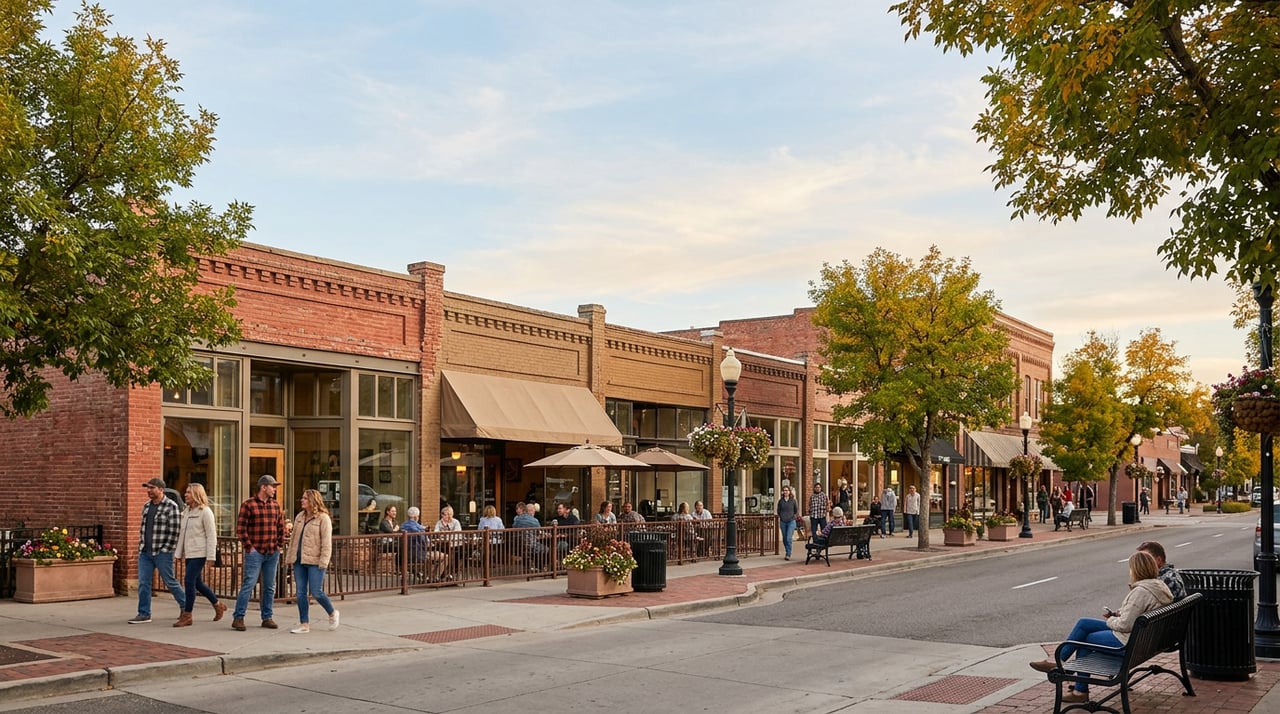
Olde Town offers a distinct shopping, dining, and local-business district. The city also has walking and biking corridors, parks, and nature areas that can become part of an ordinary week rather than an occasional outing.
For some buyers, the appeal is being near Olde Town. For others, it is a home that works better for storage, guests, hobbies, or outdoor time, combined with a location that suits their northwest-metro routine.
For buyers looking farther west, proximity to Golden and a useful connection toward Boulder on Highway 93 can add another reason to consider Arvada.
Those are different reasons to buy in Arvada, and they do not necessarily point to the same neighborhood.
The important question is not whether Arvada sounds appealing in general. It is which part of Arvada supports the life you actually want.
Olde Town Arvada Is a Real Draw, but It Is Not All of Arvada
Olde Town Arvada gives buyers a recognizable local destination with restaurants, coffee shops, breweries, boutiques, galleries, and events.
Its appeal is not just having a place to complete errands. It is having a district where you might meet someone for coffee, browse local shops, go out to dinner, or spend time without planning an entire day around the outing.
The city has also maintained pedestrian-oriented street areas that support outdoor seating, shopping, and walking. Check the City of Arvada's Olde Town information for current access, construction, and street information.
Olde Town does not need to be described as another neighborhood's equivalent. It has its own identity and should be evaluated on its own terms.
Living Near Olde Town
If you want to walk there regularly, the route matters as much as the distance.
Check sidewalks, crossings, lighting, and the walk back after dinner. Decide what “close enough” means to you before paying for proximity.
A property can be nearby on a map without offering the comfortable walk you imagined.
Driving or Biking to Olde Town
You may like having Olde Town as a regular destination without needing it outside your front door.
That can open a different set of housing options. Test the actual trip, parking arrangements, or bike connection instead of assuming the experience will be the same from every Arvada address.
Enjoying Olde Town While Prioritizing the House
Some buyers want to visit Olde Town but place more weight on a particular layout, garage, yard, or newer property elsewhere.
That is a reasonable choice. Just be clear that you are buying access to a destination, not necessarily an Olde Town-centered daily routine.
Being “in Arvada” does not automatically mean being walkable to Olde Town. That distinction belongs in the search from the beginning.
Trails, Parks, and the Outdoor Routine You Would Actually Use
If walking, running, or biking is part of your week, Arvada's trail connections deserve a real place in the buying decision.
The useful question is not simply whether the city has trails. It is whether the home connects comfortably to the kind of route you want.
The City of Arvada identifies three primary east-west trail corridors: Ralston Creek, Little Dry Creek, and Van Bibber Creek. Each offers a different setting and set of connections.
Ralston Creek Trail
Ralston Creek Trail links multiple parks and open-space areas across Arvada. Along the corridor, users encounter settings that include lakes, ponds, wildlife habitat, picnic areas, and playgrounds.
For a buyer who enjoys recreational riding, walking, or running, a useful connection to this corridor may become part of the home's everyday appeal.
But investigate the relevant segment. A short evening walk, a longer bike ride, and a transportation route are different uses. Terrain, crossings, access points, and the route from the house all matter.
Little Dry Creek Trail
Little Dry Creek Trail provides a paved, off-street route through northern Arvada, connecting parks and open-space settings and continuing toward regional connections.
If you want a route for walking, recreational biking, or other permitted activities, this is another corridor worth investigating in relation to the actual address.
Do not assume that every home in northern Arvada has a convenient entrance or a route that fits your needs. Check the connection yourself.
Van Bibber Creek Trail
Van Bibber Creek Trail follows a stream corridor with open-space settings, creekside woodlands, and meadows along parts of the route.
That offers a different experience from walking a neighborhood sidewalk or climbing a foothills trail. For some buyers, an accessible place for an ordinary walk is more valuable than a mountain destination they visit occasionally.
Majestic View Park and Nature Center
Majestic View Park and Nature Center offers nature trails through prairie and wetland settings, along with exhibits, educational programs, and a demonstration garden.
It is worth knowing about if your preferred outdoor routine includes nature walks and a nearby place to spend time outside without organizing a larger trip.
Recreational Access Is Not Automatically a Bike Commute
A trail can be excellent for a weekend ride without providing a practical route to work.
Evaluate the full connection, permitted uses, street crossings, current conditions, and any closures. The city's local trail information can help you investigate beyond the primary corridors.
The same standard applies to Denver. Compare the trails and parks you would actually use from the homes under consideration, not which city sounds more outdoorsy.
Golden, Boulder, and Scenic Highway 93
One of Arvada's location advantages worth considering, especially in west Arvada, is access toward Golden and Boulder without making downtown Denver the center of every trip.
Highway 93 connects Golden and Boulder along the foothills. Its open-space setting and views toward the Flatirons make it a scenic route as well as a practical connection between destinations.
If Boulder is a regular destination for work, dinner, shopping, or recreation, a convenient connection to Highway 93 can be a meaningful part of a home's appeal.
For some west Arvada buyers, that route is part of why the location makes sense. They are evaluating a home base for a Golden-and-Boulder routine, not simply looking for an alternative commute into Denver.
Proximity to Golden Can Be Part of Ordinary Life
Golden belongs in the conversation separately from Boulder.
Depending on the Arvada address, its proximity can make Golden a practical destination for an evening out, work, or recreation rather than an occasional excursion.
Ask whether you would actually spend time there. Would being positioned for regular Golden trips improve your week? Or is it a place you like visiting a few times a year?
The answer helps determine how much weight that location benefit should carry.
West Arvada and Olde Town Access Are Different Priorities
A west Arvada home with a useful Highway 93 connection offers a different starting point from a home selected primarily for walking access to Olde Town or the G Line.
You may value both, but one address will not necessarily maximize every kind of access.
That is why “Arvada is convenient to Boulder” should start a property-specific conversation rather than end it. Test the complete trip from the house to the destination you actually use.
Golden's scenic-drive information highlights Highway 93 as part of the area's foothills driving experience. Enjoying the scenery, however, is different from establishing a reliable commute.
Drive the route during your expected travel hours and consider current traffic, weather, and road conditions. A scenic connection is an advantage you may appreciate, not a promise of a traffic-free trip.
Foothills and Mountain Access: Compare the Trips You Actually Make
Mountain access deserves its own discussion because it can mean very different things to different buyers.
For one person, it means reaching a nearby foothills trail after work. For another, it means driving to a mountain town, a ski area, or a weekend camping destination.
Those are not the same trip, and they should not be treated as one universal location advantage.
A West-Side Starting Point May Fit Your Outdoor Routine
If you regularly head toward Golden, the foothills, or mountain routes, an Arvada home with the right connections may fit the way you spend your free time.
The value is practical: does the home make your regular outings easier enough that you will go more often or enjoy the routine more?
That could matter more to you than being closer to a Denver destination you rarely use.
Nearby Trails and Longer Mountain Drives Are Separate Benefits
A useful neighborhood trail connection can improve an ordinary weekday. A good starting point for a longer mountain trip may matter mostly on weekends.
Decide which one you are actually buying for.
Then compare the route from each home to your preferred trailheads and destinations. Do not assume every Arvada address provides the same access or that a west-side location eliminates congestion and weather-related delays.
The same applies to Denver homes. A particular Denver location may connect well to the routes you use. Compare the actual alternatives instead of awarding either city a blanket mountain-access advantage.
If outdoor recreation is central to your lifestyle, include those trips in the search from the beginning. They deserve the same attention as your commute and grocery routine.
Commute, the G Line, and Northwest-Metro Logistics
Your workweek can change the answer completely.
A home that works well for a Golden destination may not work well for Anschutz. A downtown commuter may evaluate the G Line differently from someone who needs to reach a particular Denver Tech Center office.
Downtown, DTC, Anschutz, DIA, Golden, Boulder, and hybrid-work arrangements should not be treated as one generic commute question.
The G Line Is Commuter Rail, Not Light Rail
RTD's G Line is an electric commuter rail line connecting Union Station with Wheat Ridge–Ward. Stops include Olde Town Arvada and Arvada Ridge.
That can make an Arvada property worth considering for downtown trips, but a station on the map is not the same as a convenient door-to-door journey.
Review the current G Line schedule and evaluate:
- How you would reach the station from the house.
- The actual walking or biking route.
- Parking arrangements if you would drive to the station.
- Service times that match your work hours.
- The distance from Union Station to your final destination.
- Any additional transfers.
- The return trip, especially after a late workday or evening event.
A train connection can be useful for work, social plans, or occasional downtown trips. It does not need to replace every drive to be valuable.
But “near the G Line” should not stand in for checking the trip yourself.
Golden and Boulder Are Separate Commute Questions
If your week takes you to Golden or Boulder, test those trips individually.
An Arvada address may fit a northwest-metro routine, but its usefulness depends on the starting point, destination, route, and travel hours.
For a Boulder trip, check whether Highway 93 is the route that actually makes sense from the property. For Golden, identify the particular workplace or destination rather than using a general city-center pin.
Do not assume every part of Arvada offers the same convenience, and do not assume a Denver address is automatically less practical.
Hybrid Work Changes the Weight of the Tradeoff
If you commute twice a month rather than five days a week, you may reasonably place more value on a home office, storage, yard, or nearby recreation.
But occasional does not mean irrelevant. Test the trip and decide whether the inconvenience is acceptable before committing.
My practical advice is to try the drive or transit trip during the hours you expect to use it. Do not base a home purchase on an optimistic weekend map estimate.
Airport Access: Driving to DIA vs. Taking the Train
If you travel regularly, airport logistics deserve more than a passing mention.
A home that works beautifully for Olde Town, Golden, or a trail connection may still create a different airport routine from the one you prefer.
Compare the options you would realistically use, including the trip home.
Driving, Rideshare, and Parking
For each serious property, evaluate the route to DIA at the times you normally travel.
- How does the trip work for early departures?
- What does the return look like after a late arrival?
- Would you drive and park, use rideshare, or arrange another option?
- Are you evaluating a toll route or a route without tolls?
- What recurring parking or transportation costs belong in your budget?
- How much flexibility do you need for weather and traffic?
Do not assume a route that works well at midday will feel the same during your normal travel window.
The G Line Connects to the Airport Route, but It Is Not Direct
The G Line does not provide a direct, one-seat rail trip to DIA. Airport rail service uses the A Line, so a trip beginning on the G Line requires a connection at Union Station.
Evaluate the complete journey: home to station, waiting time, the G Line ride, transfer time, the A Line trip, and airport procedures after arrival.
Review the return journey as well, especially for a late flight or a schedule change.
RTD's airport transportation information and current schedules are useful starting points. Confirm service again when planning your trip.
For some buyers, rail will be an appealing option. Others will prefer driving or rideshare. The important point is that airport access should be evaluated from the exact home, not assumed from the city name.
The same standard applies in Denver. A Denver address does not automatically mean convenient A Line access or a shorter airport trip.
Housing Stock, Condition, and What You May Inherit
Denver and Arvada searches can both include older homes, renovated properties, flips, and newer construction.
Arvada is not automatically the “no-project” alternative to Denver.
A newer-looking kitchen does not answer questions about the roof, sewer line, electrical panel, drainage, furnace, air conditioner, or quality of renovation work.
Four Questions Matter More Than Fresh Finishes
- What is original?
- What has been replaced or substantially altered?
- What documentation supports the work?
- What may need attention during your ownership?
Depending on the property and inspection findings, investigate:
- Roof age, condition, and available installation records.
- Heating and cooling equipment, water heater, and other major mechanicals.
- Electrical systems and recommendations for specialist evaluation.
- Drainage, grading, and evidence of moisture intrusion.
- Sewer condition where relevant and accessible.
- Permits and documentation for additions, basement finishes, and significant alterations.
- Structural concerns and other findings that warrant qualified specialists.
My Denver home inspection guide explains how to separate meaningful findings from ordinary maintenance and when additional investigation may be appropriate.
For sewer-line questions, read my Denver sewer scope guide for homebuyers. The ownership responsibility and the condition of the actual line matter more than the city name or cosmetic updates.
Newer construction deserves careful review, too. A newer home may offer features you prefer, but age alone does not establish construction quality, drainage performance, or the absence of defects.
The goal is not to find a house with no maintenance. It is to understand the responsibilities you are accepting and whether they fit your budget and tolerance for projects.
Compare the Full Monthly Cost, Not Just the List Price
Two homes with similar asking prices can produce different ownership budgets.
For each serious option, compare:
Cost or obligation | What to verify |
|---|---|
Mortgage principal and interest | Use consistent financing assumptions and lender estimates. |
Total property taxes | Review the actual parcel and identify any district component already included. |
Homeowners insurance | Obtain a property-specific quote and review deductibles, coverage, and exclusions. |
HOA obligations | Review dues, assessments, included services, and owner responsibilities where applicable. |
Separate district charges | Confirm any applicable charges outside the property-tax total. |
Utilities and maintenance | Investigate available usage information and the systems, exterior, and landscaping you will maintain. |
Near-term repairs | Use inspection findings and qualified estimates rather than a generic allowance. |
Transportation | Include the parking, transit, tolls, airport transportation, or other recurring costs relevant to your routine. |
Do Not Count District Taxes Twice
If a property's total tax figure already includes a metropolitan-district levy, do not add that component again. Separate district charges require their own review.
Not every property has the same structure. My Colorado Metro District Guide explains what to investigate before relying on a payment estimate.
My Denver property-tax guide provides background on tax calculations and budgeting. For an Arvada home, use the actual parcel's applicable county records and taxing entities rather than importing a Denver property's assumptions.
Insurance deserves the same property-specific attention. Read my Denver-area insurance-cost guide, then obtain a quote for each serious option.
New Construction Requires a Careful Tax Estimate
If you are comparing a newly built home with an established resale property, ask whether the available tax history reflects the completed residence.
Have the lender explain the value, tax, insurance, and financing assumptions in the payment estimate. Identify separate charges and other obligations that may appear outside the advertised payment.
Do not compare a builder's promotional payment with a resale home's more complete ownership estimate without reconciling those assumptions.
A home that leaves room for savings, repairs, and the activities you enjoy may fit better than one that uses every available dollar.
Test an Ordinary Week, Not Just a Saturday Showing
A showing tells you something about the house. Testing the routine tells you whether you want to live there.
Before you narrow the search based on a city name:
- Walk the route to Olde Town or the Denver business district you want to use.
- Try the home-to-station connection if rail access matters.
- Visit the grocery store you would use regularly.
- Check the route to a relevant trail or park.
- Test the trip to Golden if it will be part of your week.
- Drive the Highway 93 connection toward Boulder if that is part of the location's appeal.
- Compare the route to your preferred foothills or mountain destination.
- Evaluate airport transportation if you travel regularly.
- Experience the street during your normal departure and return times.
- Consider nearby traffic, activity, parking, and construction.
- Decide whether the actual experience matches the reason the location appealed to you.
A home can photograph beautifully while creating a routine you do not enjoy. Another may look less exciting online but function much better for your week.
Do not pay for a lifestyle benefit you are unlikely to use, and do not overlook one that would improve daily life.
Questions I Ask Buyers Before Narrowing Their Search
- Do you want to walk to restaurants regularly, or do you mainly want good places nearby?
- Would you rather have a larger house, garage, yard, or more storage than a closer-in address?
- Is Olde Town somewhere you would spend time weekly or simply visit now and then?
- Would a nearby walking or biking route become part of your routine?
- Do you want recreational trail access, a bike commute, or both?
- How often would you go to Golden?
- Would a convenient Highway 93 connection toward Boulder improve your actual routine?
- Does mountain access mean nearby foothills outings or longer weekend trips?
- Where do you need to be during the week?
- Would the G Line genuinely work for any of those trips?
- How frequently do you travel through DIA, and how do you prefer to get there?
- How much renovation or maintenance are you willing to manage?
- Do you need more square footage or a more functional layout?
- What total ownership cost feels comfortable?
- How much cash do you want available after closing?
- How long do you reasonably expect the home to work for you?
- Which compromise would irritate you six months after closing?
That last question often reveals more than another hour of browsing listings.
If you moved because you wanted to walk more, a bigger house may not compensate for a routine that requires driving everywhere. If your main frustration is a lack of workspace or storage, a recognizable neighborhood name may not solve the problem.
If you regularly spend time in Golden or Boulder, or head toward the foothills, those destinations belong in the decision rather than being treated as an occasional lifestyle bonus.
If you are still organizing the process, the Denver Buyer Game Plan can help connect your budget, timing, search, and due diligence.
Denver May Fit Better If…
- Your regular work, social, and activity routine is centered around particular Denver destinations.
- You value walking access enough to accept the specific tradeoffs in space, parking, or condition.
- You have identified a neighborhood and block that deliver the experience you want.
- The house still meets your layout and storage needs.
- The complete ownership budget and maintenance expectations are comfortable.
- The actual airport, recreation, and out-of-town trips work well enough that another location would not materially improve your routine.
Choose Denver because a particular home and location work for you, not because every Denver address offers the same benefits.
If you are comparing nearby Denver options, my Berkeley vs. West Highland guide shows how the decision can become more specific even within one part of the city.
Arvada May Fit Better If…
- The available homes offer a useful combination of layout, garage, yard, and storage.
- Olde Town is a destination you would enjoy, with a connection that fits your expectations.
- Nearby trails or parks would become part of your ordinary week.
- You value proximity to Golden and a convenient connection to Boulder along scenic Highway 93, particularly from a west Arvada location.
- The home provides a useful starting point for the foothills or mountain trips you actually make.
- The address works for your Golden, Boulder, downtown, or other regular trips.
- A G Line connection serves your actual schedule and destination.
- Your preferred airport transportation remains practical from the property.
- The total ownership cost and future maintenance picture remain comfortable.
Choose Arvada for what the particular home and location provide, not simply because you expect a quieter setting or more space everywhere.
Keep both cities in the search if you have not compared enough relevant homes to know which tradeoff you prefer.
If the west side is broadly appealing, my Denver vs. Lakewood buying guide offers another comparison of housing, recreation, commute, and daily routine.
Frequently Asked Questions About Buying in Denver vs. Arvada
Is Arvada more affordable than Denver?
It may offer useful alternatives at your budget, but affordability depends on the property type, location, condition, financing, and recurring costs. Compare similar homes and complete ownership estimates rather than assuming a citywide average answers your question.
Does the same budget buy a larger house in Arvada?
Possibly, depending on current listings and the Denver neighborhoods you are comparing. Treat that as something to investigate rather than a promise. Separate above-grade space from basement space and decide whether the additional room improves the way the home functions.
Is Olde Town Arvada walkable?
Olde Town has a pedestrian-oriented shopping and dining district. Whether a particular home provides comfortable walking access depends on its location, route, crossings, and your preferences. Test the actual walk rather than relying on a listing's proximity claim.
Is every Arvada home near Olde Town?
No. An Arvada address does not establish a short walk, bike ride, or drive to Olde Town. Decide how often you expect to visit and evaluate the connection from the particular property.
Does Arvada have walking and biking trails?
Yes. The city's primary east-west corridors include Ralston Creek, Little Dry Creek, and Van Bibber Creek trails. Other local connections and parks provide additional options. Check the relevant segment, permitted uses, current conditions, and route from the home.
Is Arvada convenient to Golden?
It can be, depending on the starting address and the Golden destination. Proximity to Golden is worth evaluating if you regularly go there for work, dining, or recreation. Test the actual trip rather than treating every Arvada location as equally convenient.
Can you drive from Arvada to Boulder using Highway 93?
A useful connection to Highway 93 can provide a route toward Boulder, especially from west Arvada. Highway 93 links Golden and Boulder along the foothills. Whether it is your best option depends on the property, destination, travel hours, and conditions.
Is Highway 93 a scenic route?
Yes. Its foothills setting, open-space landscapes, and views toward the Flatirons are part of its appeal. That scenic character does not establish a traffic-free commute, so test the route during the hours you expect to use it.
Does Arvada have good mountain access?
A particular Arvada location may provide a useful starting point for foothills and mountain outings. The benefit depends on the home and the destinations you use. Nearby recreation and longer drives to mountain towns or resorts are separate considerations, and neither should be reduced to a universal drive-time promise.
Can you take the train from Arvada to downtown Denver?
Yes. The G Line connects Arvada stations, including Olde Town Arvada and Arvada Ridge, with Union Station. It is commuter rail, not light rail. Whether it works for you depends on the complete trip and current service schedule.
Can you take the G Line directly to DIA?
No. The G Line does not provide a one-seat airport trip. Airport rail service uses the A Line, so a rail journey beginning on the G Line requires a connection at Union Station. Check current schedules and allow for the complete trip.
Is driving or taking the train better for airport trips from Arvada?
That depends on the home, flight schedule, station connection, luggage, parking preferences, and transportation costs. Compare driving or rideshare with the complete G Line and A Line journey, including the return trip. Do not assume the same answer works for every flight.
Is Denver or Arvada better for commuting?
The answer depends on the home, workplace, travel hours, parking, and transportation options. Downtown, DTC, Anschutz, Golden, Boulder, and DIA are different trips. Test the routes you actually need rather than choosing based on a broad citywide assumption.
Do Arvada homes have HOAs or metro districts?
Some properties have HOA obligations, district obligations, or both. Others have different arrangements. Verify the exact parcel and relevant documents. Do not assume every Arvada home shares the same tax or community-cost structure.
Are newer Arvada homes necessarily lower-maintenance?
Not necessarily. Newer systems and construction may be appealing, but age does not replace inspection and document review. Investigate condition, drainage, construction details, maintenance responsibilities, and applicable warranties.
Should I choose the city first or the house first?
Evaluate them together. A house you love does not fix a location that makes daily life difficult, and a desirable neighborhood does not make an unsuitable layout work. Build a shortlist of areas, then compare the properties and obligations available in each.
Which is the better long-term investment?
Neither city name guarantees stronger performance. Purchase price, condition, financing, recurring costs, location, ownership timeline, and future market conditions all matter. Review relevant comparable properties and avoid relying on appreciation to make an uncomfortable purchase work.
How can Sallie Simmons help me compare Denver and Arvada?
I can help turn your budget, commute, layout requirements, and lifestyle priorities into a focused search. Then we can compare actual homes, review relevant sales, identify questions for inspectors and other professionals, and decide which tradeoffs fit your goals.
Compare Real Homes, Not City Labels
Before you decide Denver or Arvada is the better choice, let's compare actual homes that fit your budget, commute, layout needs, and ownership comfort level.
That means looking beyond listing photos at the street, condition, documented updates, recurring obligations, and the places you will go during an ordinary week.
Maybe that leads to a Denver home where walking to dinner becomes part of your routine. Maybe it leads to an Arvada property with a better workspace, a useful trail connection, or access to Olde Town and the G Line.
Or maybe a west Arvada location makes sense because Golden, Boulder, scenic Highway 93, and foothills outings are already part of how you spend your time.
The right answer is rarely just a city name. It is the property and routine that work best for you.
Work with Sallie Simmons to build your buying strategy, or text 662.588.2420 with your purchase range, timing, commute destinations, and must-have features.
Still narrowing the map? Explore my Best Denver Neighborhoods guide, use the Denver ZIP Code Guide for orientation, and start organizing the process with the Denver Buyer Game Plan.