Denver has a ridiculous amount of architectural history for a city that still pretends it’s “new.” The big names are everywhere once you start looking, and locals don’t just live in these buildings—they love them. It’s part of the city’s soul.
A few of the headline acts:
- Frank E. Edbrooke gave Denver icons like The Brown Palace and the Oxford Hotel.
- Burnham Hoyt is tied to two “only in Denver” staples: Red Rocks Amphitheatre and the (very) iconic Central Library.
- Fisher & Fisher left their mark with the Daniels & Fisher Tower—and with elegant estates in neighborhoods like Belcaro and Polo Club.
- I. M. Pei brought sleek modernism to the skyline with The Mile High Center at 1700 Broadway.
- Victor Hornbein is behind the Boettcher Memorial Conservatory at the Botanic Gardens and designed homes in Cory-Merrill.
- William Lane has notable Mid-Century Modern designs across the metro.
- And then there’s Cliff May—the “father of the California ranch.”
These designs aren’t trapped downtown, either. They’re tucked into everyday life in neighborhoods like Capitol Hill, Cory-Merrill, and Belcaro—the places where you’re grabbing coffee, walking the dog, and realizing your “starter home” is sitting inside a living design museum.
If you know anything about me, you know I’m a total architecture nerd—so much so that last year I went to tour Frank Lloyd Wright houses in Oak Park. (Yes, as a vacation. Yes, I have opinions about windows.)
Which brings us to Cliff May. He’s famous for Harvey Park, but his work shows up in other MidMod-rich pockets too—like Arapaho Hills in Littleton—and you’ll find similar design DNA sprinkled across the metro if you know what to look for.
Now, zoom in on 2026: if you’ve been keeping an eye on the Denver real estate market over the last few years, you know it’s been a wild ride. We’ve seen record-low inventory, bidding wars that felt like contact sports, and prices that made everyone do a double-take. But as we move through March 2026, the vibe in Harvey Park is changing, and if you’re a buyer, that change is actually looking pretty good for you.
Harvey Park has always been one of those "if you know, you know" spots. It often gets grouped into discussions about Trendy Denver Neighborhoods or the next big Up And Coming Denver Neighborhoods, but it has a character all its own. For Mid-Century enthusiasts, it’s still the ultimate destination: a real concentration of Cliff May homes, a strong neighborhood feel, and (in this market shift) a little more room to shop with your head instead of pure adrenaline.
Whether you’re a first-time buyer or looking to level up into a home with more soul, here are the five things you absolutely need to know about the 2026 shift in Harvey Park.
If you want to explore other Denver areas with a similar vibe (or a very different one), start here: Denver Neighborhoods. You can also compare Bonnie Brae and Hilltop for higher-price, lower-inventory pockets with a totally different housing mix.
1. The Mid-Century Modern Soul (Yes, We’re Talking Cliff May)
You can’t talk about Harvey Park without talking about the architecture, and I’m not saying that just because I’m a Realtor who’s seen every gray LVP flip known to man. I’m saying it because I genuinely love design history. Last year I carved out time to tour Frank Lloyd Wright homes in Oak Park, because I’m the kind of person who sees a good roofline and immediately starts asking questions.
Harvey Park has a Mid-Century Modern (MCM) backbone that’s getting harder to find in Denver. While other neighborhoods are being overtaken by "modern farmhouse" builds that all start to blur together, this area still reads like a real chapter in postwar American design: intentional proportions, livable layouts, and a vibe that feels optimistic instead of copy-and-paste.
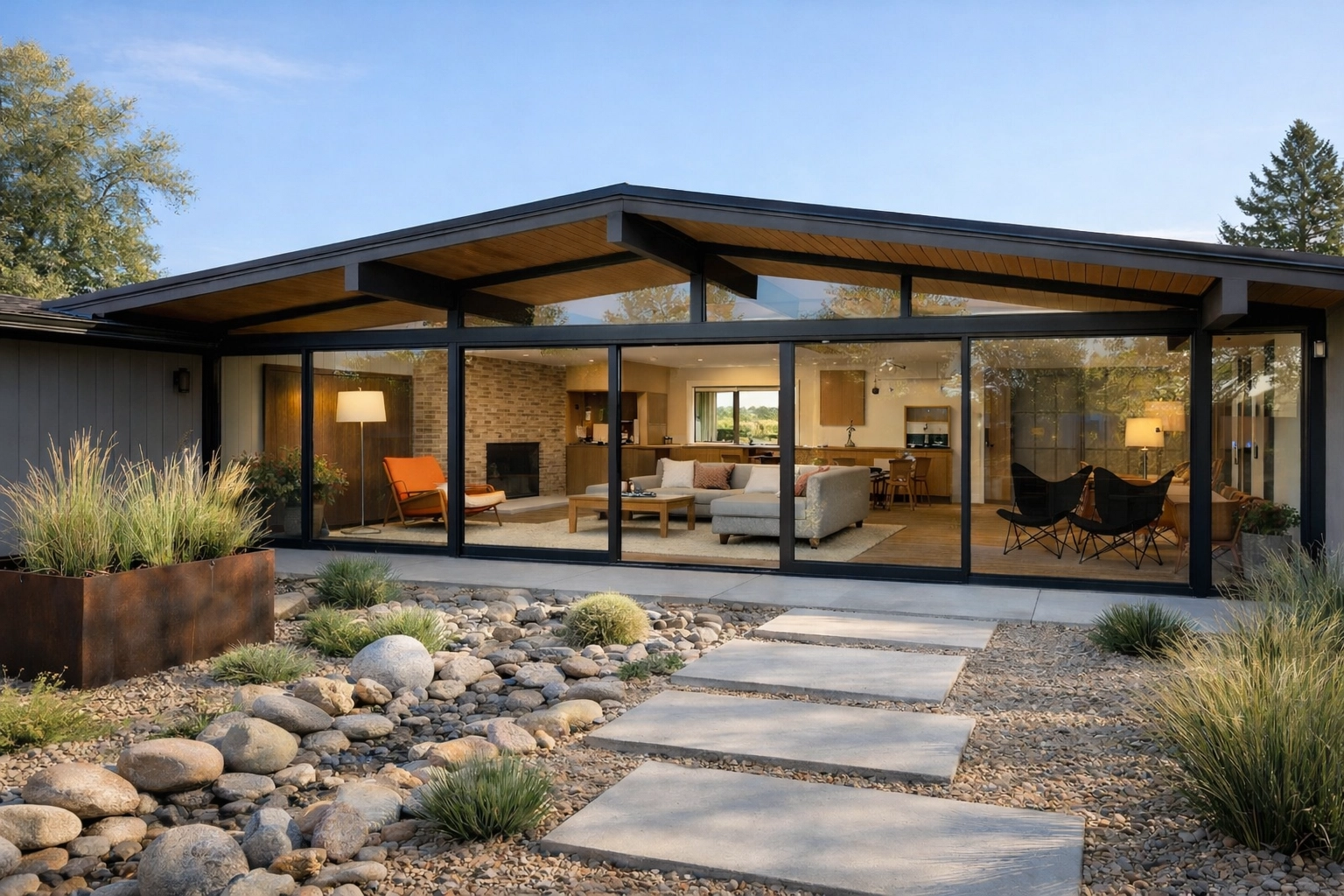
The crown jewel is the collection of Cliff May homes. For the uninitiated, Cliff May was the "father of the California ranch house." These homes are iconic: low-slung profiles, indoor-outdoor flow, walls of glass, and courtyards/patios that make the whole place feel bigger (and calmer) than the square footage suggests.
Here’s the straight talk: in 2026, buyers aren’t chasing MCM in Harvey Park because it’s trendy. They’re chasing it because it’s hard to replicate. You can renovate kitchens all day long, but you can’t easily fake the original lines, the light, and that effortless connection to the yard. If you appreciate clean design and sunlight that actually matters to how a home lives, Harvey Park is a serious contender.
2. The 2026 Market Shift: From "Hurry Up" To "Hold On"
Let’s talk about the numbers. According to recent data, we’re seeing a fundamental shift in buyer leverage. The median home sale price in Harvey Park currently sits around $500,000. While that’s still a significant investment, it’s actually down about 4.76% year-over-year.
What does that mean for you? It means the "peak" of the post-pandemic frenzy has plateaued. We’re seeing homes stay on the market for a median of 71 days. Compare that to 2023 or 2024, when a house would hit the market on Friday and be under contract by Sunday night with ten offers.
Today, buyers have the luxury of time. You can actually visit a house twice. You can think about it overnight. Most importantly, you can negotiate. We’re seeing more sellers willing to cover closing costs or offer interest rate buydowns to get the deal across the finish line. If you've been sitting on the sidelines waiting for the "bubble to burst," this isn't a burst, it’s a healthy correction that gives you a seat at the table.
If you want to see what your money gets you in the current market, browse recently listed homes in the area and track price reductions and days on market to get a real feel for Harvey Park pricing.
3. Incredible Outdoor Amenities: More Than Just A Yard
One of the biggest draws for Harvey Park Denver is the actual park that shares its name. In a city where outdoor space is a premium, Harvey Park delivers. You’ve got Harvey Park Lake and the private Riviera Lake, which offer a sense of tranquility that’s hard to find seven miles from a major city center.
Harvey Park Lake is a public gem, featuring walking paths, a massive recreation center, and plenty of space for a weekend picnic. Riviera Lake, on the other hand, is a private water-ski lake. Yes, you read that right: water skiing in the middle of a Denver residential neighborhood.
In 2026, as people continue to prioritize mental health and "work-from-home" balance, having these amenities within walking distance is a massive value-add. It’s not just about the four walls of the house; it’s about having a place to breathe when you step outside your front door.

4. The Perfect Balance: Suburban Quiet Vs. Urban Access
One of the reasons Harvey Park is consistently ranked among the top Up And Coming Denver Neighborhoods is its location. It’s a rare sweet spot in Denver real estate:
- To Downtown: You’re about 7 miles from the heart of Denver. On a good day, that’s a 15-minute commute via Santa Fe Drive or Federal Boulevard.
- To the Mountains: You’re positioned perfectly for a quick jump onto Hwy 285 or I-70, meaning you’re hitting the slopes or the hiking trails before your friends in East Denver have even cleared traffic.
- The Vibe: It feels like a suburb: wide streets, quiet nights, and neighbors who actually know each other: but you’re still within the City and County of Denver.
For buyers who want the convenience of the city without the headache of parking a car on a narrow street in Capitol Hill, Harvey Park offers a level of functionality that’s hard to beat. You get a garage, a backyard, and a driveway, all while staying connected to the urban core.

5. Why It’s Still "Up And Coming" (And Why That Matters)
You might hear people say, "Is Harvey Park still up and coming, or has it already arrived?" The truth is, it’s in a beautiful middle ground. While it has become one of the Trendy Denver Neighborhoods for enthusiasts of 1950s design, it hasn’t lost its soul.
The community vibe here is strong. You’ll see a mix of original owners who have been in their homes for 40 years and young professionals who are meticulously restoring Cliff May homes to their former glory. This mix of generations creates a stable, grounded neighborhood feel that you don't always get in "new build" communities.
The investment potential is also still very real. Even with the 2026 market shift and more inventory available (about 21 active listings on average), the scarcity of this specific architectural style ensures long-term demand. When you buy a Mid-Mod home in Harvey Park, you aren't just buying real estate; you're buying a piece of design history.
Making Your Move in 2026
The takeaway for 2026 is simple: the "Wild West" days of Denver real estate are behind us for now, and we’ve entered a period of "Reasonable Real Estate." You have more inventory to choose from, more room to negotiate, and a chance to find a home that actually fits your life.
If you’re looking for a neighborhood that offers more than just a roof over your head: one with history, style, and a real sense of place: Harvey Park Denver should be at the top of your list.
Want to go deeper on the area? Read the full Harvey Park neighborhood guide.
Let’s Connect
Navigating a shifting market requires a steady hand and local expertise. Whether you're looking to buy your first Cliff May or sell a property in the Denver metro area, I'm here to give you the clear guidance you need to make a smart move.
Leave a Message or Chat with us today to start your search.
