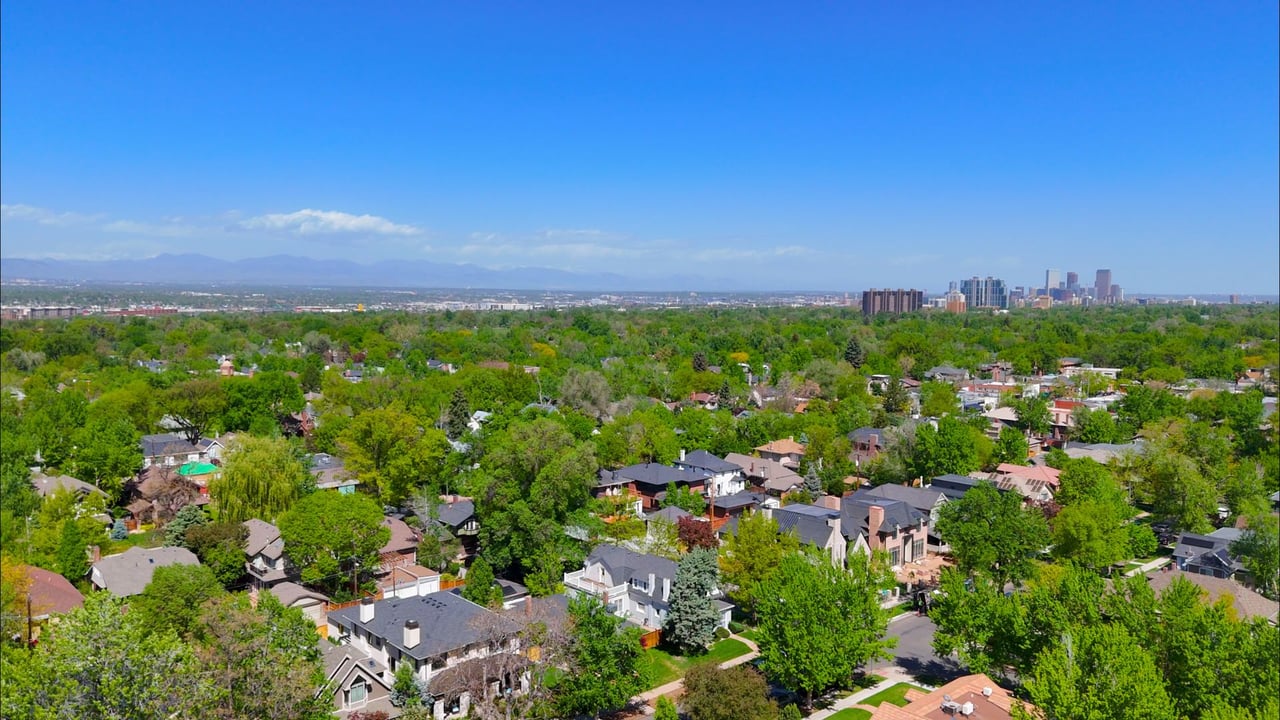
Bethesda Park is finally under construction near Iliff and Bellaire, while the Schlessman Family YMCA redevelopment at Yale and Colorado remains a long-term vision without a public build date. Here is what the difference means for University Hills residents, buyers, and homeowners.
Drive down Yale Avenue toward Colorado Boulevard this month and you will pass two properties that have spent years promising to become something else.
One now has a chain-link fence, a gravel staging pad, and the kind of orange equipment that means a schedule exists. The other still has the same parking lot it has had for decades, along with a redevelopment plan that has been “in progress” since before many current University Hills residents signed their mortgages.
The fenced lot is the future Bethesda Park at Iliff Avenue and Bellaire Street. The unchanged one is the Schlessman Family YMCA campus at Yale Avenue and Colorado Boulevard.
Both sites sit within University Hills, an established southeast Denver neighborhood known for mid-century homes, larger lots, access to I-25 and Colorado Boulevard, nearby shopping, light rail access, Eisenhower Park, and proximity to the High Line Canal Trail.
Both projects received public announcements. Both have been described as meaningful improvements for the neighborhood. Both could shape how residents use, experience, and evaluate this part of southeast Denver.
Only one has bulldozers.
That distinction matters more than it may seem. Neighborhood redevelopment announcements can create excitement, headlines, speculation, and real estate chatter years before a project changes anything on the ground. A rendering is not a construction schedule. A developer partnership is not a funded project. A public meeting is not the same as a permit, a budget, or a contractor mobilizing on site.
For University Hills homeowners and buyers, the useful question is not simply whether Bethesda Park or the YMCA redevelopment will be “good” for the neighborhood. The useful question is what is actually funded, what is actually underway, what remains uncertain, and how much weight each project should carry in a real estate decision today.
The Short Version: What Is Actually Happening?
Bethesda Park is a nearly two-acre future neighborhood park at Iliff Avenue and Bellaire Street on the former Ground Covers Nursery site. Construction began in early 2026, and the project has identified public bond funding behind it. Denver’s 2025 RISE bond annual report lists Bethesda Park as an early-2026 groundbreaking project supported by $5.5 million in bond funding, with a playground, walking paths, shaded picnic areas, seating, a half-basketball court, open green space, and improved lighting planned for the site. [22]
The Schlessman Family YMCA campus redevelopment is a larger and more complicated concept. In 2021, the YMCA of Metro Denver announced a partnership with Denver-based Confluent Development and San Francisco-based Republic Metropolitan, operating together as Y CoRe, to reimagine the YMCA campus at 3901 E. Yale Ave. The stated vision included a rebuilt YMCA anchoring a mixed-use campus with potential apartments, retail, and shared open space.
As of now, the YMCA redevelopment remains publicly framed as a planning and community-engagement effort. There is no public construction start date, no public completion date, and no disclosed final project budget that residents can use as a reliable timeline.
That does not mean the YMCA project is dead. It means it should be treated as a long-term redevelopment possibility, not as a guaranteed near-term neighborhood change.
The Lot That Waited Decades for a Park
If you have lived in University Hills for a while, you may know the parcel at Iliff Avenue and Bellaire Street as the old Ground Covers Nursery site. The greenhouse operation closed in 2019, leaving an empty, fenced half-block in a neighborhood where nearby residents had wanted more walkable green space for years.
What is easy to miss is how long the demand for a park existed before the city acquired the land.
In a 2025 Denverite report about Bethesda Park, nearby resident Patty Ortiz said she had advocated for a park near her corner of University Hills since 1999. Her closest existing green space, Mamie D. Eisenhower Park, required crossing Yale Avenue, a barrier that became more difficult as she got older.
That is a meaningful distinction. A park may look close on a map, but a park that requires crossing a busy arterial is not experienced the same way as a park that is genuinely walkable for children, older adults, dog owners, and people who simply want to sit outside without getting in a car.
Denver acquired the former nursery property using Parks Legacy Fund money, the voter-approved sales-tax funding stream created in 2018 to support new parks, trail investment, and recreation infrastructure across the city. Community design work followed, with a formal vision plan completed in 2023. The project received the Bethesda Park name in 2024, recognizing the medical facility that once occupied the site.
Then came the part residents had waited for: construction.
Denver’s RISE bond annual report states that Bethesda Park broke ground in early 2026. The report describes the project as part of Denver Parks and Recreation’s effort to expand park access and provide additional nearby green space for residents. It also identifies $5.5 million in bond funding for the project. [22]
The current concept includes a neighborhood playground, walking paths, shaded picnic areas, seating, a half-basketball court, open lawn space, and improved lighting. The city’s previously shared timeline has pointed to a spring 2027 completion.
That timeline could still change. Public construction projects can run into weather delays, contractor issues, site conditions, supply problems, or budget adjustments. Residents who watched an empty fenced lot for years have every right to remain cautiously optimistic rather than blindly trusting a completion date.
But there is an important difference between skepticism and uncertainty.
With Bethesda Park, the project has moved beyond an idea. It has a city-controlled site, a defined public purpose, a scope of work, an identified funding source, and visible activity on the ground.
Why Bethesda Park Has Real Momentum
Projects become more credible when the hard pieces have already been addressed.
For Bethesda Park, several of those pieces are now in place:
- Denver acquired the land.
- The parcel has a defined public use as a neighborhood park.
- The project went through community input and a formal vision-planning process.
- The project has dedicated public funding.
- The work is part of an established bond-funded capital program.
- Construction began in early 2026.
That does not make the park immune from delay. It does make it substantially more concrete than a project that still needs to resolve land economics, private financing, development approvals, construction costs, a tenant or use mix, and partnership details at the same time.
This is why a public neighborhood park can sometimes move faster than a much larger mixed-use redevelopment. It is not because parks are automatically simple. It is because the project has fewer business models to reconcile once acquisition, design, funding, and construction approvals are in place.
The YMCA Corner Still Has a Vision, Not a Schedule
The Schlessman Family YMCA at 3901 E. Yale Ave. sits on approximately 5.8 acres near one of University Hills’ most prominent intersections. The campus includes the existing wellness center and a second building that has housed YMCA regional operations.
In October 2021, the YMCA of Metro Denver announced a redevelopment partnership with Confluent Development and Republic Metropolitan, operating together as Y CoRe. The broad concept was to reimagine the campus as a mixed-use hub with a rebuilt YMCA at the center, along with potential residential, retail, and public or shared open-space components.
At the time, it was an ambitious and understandable idea. The site is large for the area, highly visible, near Colorado Boulevard and Yale Avenue, close to I-25 access, and positioned in a part of Denver that has seen ongoing interest in infill, mixed-use development, and transit-adjacent growth.
But redevelopment visions and redevelopment projects are not the same thing.
A true redevelopment project needs a financial structure that works. That can involve land valuation, construction-cost estimates, financing commitments, debt and equity partners, future revenue assumptions, city approvals, zoning and entitlement work, construction sequencing, community support, retail strategy, and an agreement among every party with a financial stake in the outcome.
As the project has progressed publicly, the YMCA’s redevelopment messaging has continued to describe a future YMCA facility at the heart of a potential mixed-use campus and an ongoing community-engagement process. What has not been publicly announced is the information residents need to treat the project as imminent: a final plan, construction budget, financing announcement, groundbreaking date, or completion date.
That does not mean nothing is happening behind the scenes. Development work can continue privately for a long time before a project reaches the public stage where plans, financing, permits, or a construction schedule become visible.
It does mean that buyers and homeowners should be careful about treating the 2021 announcement as if new apartments, retail, open space, or a replacement YMCA building are guaranteed to arrive soon.
Bethesda Park vs. Schlessman YMCA: Where Each Project Stands
Milestone | Bethesda Park | Schlessman Family YMCA Campus |
|---|---|---|
Public plan announced | Community design work began after the city acquired the site in 2019. | Redevelopment partnership with Y CoRe announced in October 2021. |
Project type | Public neighborhood park. | Potential mixed-use redevelopment with a YMCA anchor. |
Land control | City-owned public park site. | YMCA-owned campus working through a private redevelopment partnership. |
Formal planning status | Community vision plan completed in 2023, followed by construction planning. | Publicly described as continuing through community engagement and redevelopment planning. |
Funding | $5.5 million in identified bond funding for construction. [22] | No public total project budget or final financing package announced. |
Construction start | Early 2026. [22] | No public construction date announced. |
Expected completion | City timeline has pointed to spring 2027. | No public completion date announced. |
What residents can see today | Fencing, site activity, and active construction progress. | The existing YMCA campus and parking configuration remain in place. |
Why One Project Moved and the Other Did Not
The difference is not simply that the city moves fast and nonprofits move slowly.
Public projects can move slowly too. Bethesda Park itself took years to progress from land acquisition and early community conversations to actual construction. Neighbors watched the site sit empty after the nursery closed in 2019, and it was reasonable for people to question whether another public promise would become another permanent fenced lot.
The meaningful difference is the funding structure.
Bethesda Park had a defined public path. The city acquired the property. The project had a clear public purpose. It had Parks Legacy Fund support, went through a public design process, and ultimately received bond funding for construction.
Once a project has an approved scope, a funded budget, a public capital plan, and a contractor mobilizing on site, the remaining question is usually execution.
The YMCA redevelopment is more complex because it depends on a private partnership and a mixed-use financial model.
That model has to work for the YMCA, the development partners, lenders, potential investors, the city approval process, future residential or retail uses, community expectations, and the realities of construction costs and market demand at the time the project is ready to move.
That is not a criticism of the YMCA or its development partners. It is simply the nature of large redevelopment projects. They are harder to finance, harder to phase, and more vulnerable to changes in interest rates, construction costs, apartment rents, investor appetite, land values, and entitlement requirements.
Every year a project remains in an early planning phase, its numbers may need to be reevaluated. A plan that seemed workable when it was announced can require new assumptions when financing costs rise, construction pricing changes, or the broader development market shifts.
For neighbors, the practical takeaway is simple: a public park with land control, approved funding, a defined scope, and active construction is a much more reliable near-term signal than a privately financed mixed-use concept without a public construction schedule.
The YMCA Is More Important to the Area Than It Was in 2021
While the University Hills redevelopment remains unresolved publicly, the existing Schlessman Family YMCA has become even more important to the metro YMCA network.
The historic Downtown Denver YMCA closed permanently on December 30, 2025. The building is being sold to the Colorado Coalition for the Homeless for conversion into affordable housing, and current YMCA members were directed to transfer to one of the organization’s five remaining metro Denver locations, including the Schlessman Family YMCA in University Hills. [25]
That means the University Hills facility is not simply waiting for a future redesign. It is also serving current members who may have lost access to the downtown location.
For neighbors, that may make a future redevelopment both more valuable and more complicated. A rebuilt facility could provide a modernized YMCA, additional housing, retail activity, and more intentional open space. But any construction plan would also need to consider how services continue during redevelopment, whether the project is phased, and how the YMCA can remain accessible to the people who currently depend on it.
Until a final plan and schedule are public, those questions remain unanswered.
University Hills Is Not on Pause
University Hills has not been frozen in place while these projects move at different speeds. If you are considering a move, my University Hills neighborhood guide covers the area’s mid-century housing stock, lot sizes, parks, shopping, transportation access, nearby light rail, and the practical reasons buyers continue to consider the neighborhood.
The neighborhood functions as a practical southeast Denver option for buyers who value access to I-25, Colorado Boulevard, Hampden Avenue, the University of Denver area, the High Line Canal Trail, nearby retail, and an established residential setting.
Its mix of mid-century ranches, split-level homes, remodeled properties, townhomes, and condos creates a different buyer profile than many of Denver’s more walkable urban neighborhoods. University Hills is not trying to be Berkeley, Washington Park, Sloan’s Lake, or City Park.
Its appeal is often convenience, relative space, access, and the possibility of finding a home that fits a buyer’s budget and daily needs without paying the same lifestyle premium as some of Denver’s most competitive central neighborhoods.
For buyers deciding among commute, lot size, lifestyle, home condition, price, and long-term resale considerations, it helps to remember that the “best” Denver neighborhood is rarely the one with the loudest reputation. It is the one that fits the way you actually live. That is the difference explored in the Denver neighborhood you think you want versus the one you may actually be happiest in.
University Hills also benefits from existing daily-use amenities. Kokoro, the longtime Japanese restaurant on South Colorado Boulevard, remains a recognizable neighborhood institution. Junction Food & Drink at 2000 S. Colorado Blvd. adds a food-hall option with multiple vendors. Mamie D. Eisenhower Park and the High Line Canal Trail remain the neighborhood’s established outdoor and recreation resources.
Bethesda Park will not replace those amenities. It will add something more localized: a walkable neighborhood park for residents on the west side of University Hills who have long lacked nearby green space.
The YMCA campus, if it eventually redevelops, could have a broader effect. A successful mixed-use project at Yale and Colorado could change the visual character, activity level, housing supply, retail mix, and daily traffic patterns at one of the neighborhood’s most prominent corners.
But “could” is the important word.
What These Projects Mean for University Hills Home Values
Homeowners often ask whether a new park, redevelopment plan, retail center, transit investment, or neighborhood improvement will raise home values.
The honest answer is that no individual project guarantees appreciation.
Home values are influenced by the broader Denver market, mortgage rates, inventory, buyer demand, condition, school preferences, employment patterns, affordability, competing neighborhoods, and the specific location and condition of each home.
But neighborhood improvements can influence how buyers perceive an area.
A new park can improve nearby quality of life, walkability, recreational access, and the emotional appeal of a location. A well-designed mixed-use project can create activity, amenities, housing options, retail, and a stronger neighborhood center. At the same time, redevelopment can bring construction disruption, traffic, parking pressure, noise, density concerns, and changes that different buyers may view differently.
That is why it is risky to market a home based on a future project as if the result is guaranteed.
If you are buying near Bethesda Park, it is reasonable to treat the new park as a tangible future amenity because construction is underway. If you are buying near the YMCA campus, it is reasonable to be aware of the redevelopment concept, but you should not make a purchase decision based on an assumed completion date, assumed retail mix, assumed apartment design, or assumed effect on property values.
This is especially important in a market where buyers are comparing homes carefully and asking more questions about condition, location, livability, maintenance, monthly costs, outdoor space, and future resale. For sellers, that means preparation and honest positioning matter. For a closer look at the features buyers prioritize, read what Denver buyers want in 2026.
Move-in-ready condition, functional layouts, usable outdoor areas, visible maintenance, and realistic pricing all influence how buyers respond. A future neighborhood amenity may help a listing’s story, but it will not overcome an overpriced home, an unresolved maintenance issue, or a poor fit compared with the alternatives buyers can purchase that week.
How to Evaluate a Neighborhood Redevelopment Promise Before You Buy
If you are looking at a home near Bethesda Park, the Schlessman YMCA campus, or any other planned Denver project, do not rely solely on an agent’s enthusiasm, an old news article, or a developer rendering.
Ask practical questions:
- Who owns the land? City ownership, a public agency, a nonprofit, and a private developer each create different timelines and levels of certainty.
- Is the project funded? Look for approved bond funding, capital budgets, financing announcements, or public filings rather than general statements of intent.
- Has construction started? Site work, fencing, permits, demolition, grading, and visible contractor activity are stronger signals than a press release.
- What is the official project timeline? Check whether the stated dates are a construction schedule or simply a long-range vision.
- What approvals remain? Zoning, site development plans, neighborhood review, financing, and permits can all affect timing.
- What will change during construction? Consider traffic, access, parking, construction hours, noise, and how long disruption may last.
- What is the likely finished use? A park, retail center, apartment project, school, medical facility, or mixed-use site can each affect the immediate area differently.
- Does the home work for you today? A future amenity should be potential upside, not the only reason the home makes sense.
That last point matters most. You should buy a home because its current location, condition, price, layout, and daily functionality make sense for your life. Future neighborhood improvements can be a bonus, but they should not be the entire investment thesis.
This is one reason buyers need a strategy beyond simply getting an offer accepted. A competitive offer can win a house. A thoughtful buying strategy helps you avoid paying too much for a property based on assumptions that may not play out. For more on that, read what it takes to buy a Denver home without overpaying.
What to Watch Next
For Bethesda Park, the next story is construction progress.
Residents should expect visible site changes through the construction period: grading, infrastructure work, hardscape, playground installation, landscaping, lighting, paths, seating, and final site completion. The stated target has been spring 2027, although timelines can shift.
For the Schlessman YMCA campus, the next meaningful milestone is not another broad vision statement. It is one of the following:
- A specific redevelopment plan or site concept.
- A defined development phase.
- A public financing announcement.
- A land-use, zoning, or entitlement filing.
- A community meeting that includes a more detailed schedule.
- A construction or demolition permit.
- A groundbreaking date.
Until one of those things happens, the project remains a possibility rather than a timeline.
That does not make it unimportant. The site is too prominent, the YMCA is too established, and the intersection is too central for the property to be ignored indefinitely. But real estate decisions should be based on what is known, not what a rendering makes easy to imagine.
University Hills Is Changing, Just on Two Different Clocks
Bethesda Park and the Schlessman Family YMCA campus are both important to University Hills, but they are not in the same stage of reality.
One is a publicly funded park project that spent years moving through acquisition, community planning, design, and capital funding before construction began. Its progress may not be perfect, but it is now visible.
The other is a larger private redevelopment concept that could eventually reshape one of University Hills’ most recognizable corners. It may still happen. It may become a valuable long-term addition to the neighborhood. But it remains dependent on the financing, approvals, partnerships, and market conditions that determine whether ambitious redevelopment plans become actual buildings.
For now, one clock is running on a construction schedule.
The other is still running on a vision.
Thinking About Buying or Selling in University Hills?
If you are watching Bethesda Park, the YMCA campus, or other changes because you own nearby or are considering a move, start with my guide to living in University Hills. It provides the broader neighborhood context, while this article explains what these two redevelopment sites do, and do not, mean right now.
If you are selling, it is especially important to understand how your home compares with the competition today, not simply how the neighborhood may change in the future. Buyers are cautious, homes can take longer to sell, and a listing needs the right combination of condition, presentation, pricing, and strategy from the beginning. Read why even good homes are sitting in Denver right now for more context on what buyers and sellers are experiencing.
If you are buying, I can help you evaluate a specific University Hills home, a location tradeoff, neighborhood changes, future resale considerations, and whether a property makes sense at its current price. If you are selling, I can help you price and position your home around what buyers are actually responding to in today’s market.
Start the conversation with Sallie Simmons whenever you are ready.