If you are torn between City Park and Park Hill, you are not alone. These are two of the most recognizable and most desirable neighborhoods on Denver’s east side, and for buyers moving within Denver or relocating from out of state, they often rise to the top of the list for the same reasons: mature trees, historic homes, strong neighborhood identity, and a location that keeps you connected to the city without putting you in the middle of downtown chaos.
They can look similar at a high level, but they do not live the same day to day. One leans more urban, park oriented, and culture adjacent. The other leans more residential, community driven, and rooted in classic neighborhood rhythm. If you only compare price points or square footage, you can miss the lifestyle difference completely.
A neighborhood is not just a backdrop for your home. It shapes how your mornings feel, how often you drive, where you spend weekends, what kind of buyer competition you face, and how long a home fits your life before you outgrow it.
If you want to go deeper after reading this, start with my Denver Real Estate Resource Center, then explore the individual neighborhood pages for City Park and Park Hill. If you are moving from out of state, my Relocate to Denver guide is also a smart next step before you tour anything in person.
Why buyers compare City Park and Park Hill so often
City Park and Park Hill attract many of the same people on paper. Both appeal to buyers who want older Denver neighborhoods with real architecture, real identity, and a stronger sense of place than you usually get in newer planned communities. They both offer access to the urban core, they both have beautiful homes, and they both feel like places people intentionally choose rather than places they simply land.
They also attract people who do not want generic Denver. These are neighborhoods people usually choose because they want something with texture: tree-lined streets, distinctive housing, neighborhood landmarks, local routines, and a lifestyle that feels rooted instead of interchangeable.
At the same time, City Park and Park Hill usually attract buyers for different emotional reasons. City Park often pulls in people who want a destination park lifestyle, better access to big city attractions, and more urban energy. Park Hill often pulls in buyers who want quieter residential blocks, larger lots in many sections, and a neighborhood feel that is strong even when you are just walking the dog or driving home from work.
If you are still deciding broadly where you want to live in Denver, it is worth browsing my full Denver neighborhood guide collection before you lock yourself into only these two options.
Location and access: close on the map, different in real life
These neighborhoods are geographically close. A quick online search can make them seem almost interchangeable. They are not. The day to day experience is different, and that matters more than people realize.
City Park is shaped by the park itself and the major destinations tied to it. The City Park Alliance identifies the Denver Zoo, the Denver Museum of Nature and Science, and the City Park Golf Course as key places to visit inside the park area. That tells you a lot right away. This is not just a neighborhood with a park nearby. It is a neighborhood tied directly to one of Denver’s major recreational and cultural anchors.
City Park living often comes with more destination energy. You will see more visitors, more foot traffic in surrounding areas, and more days where the neighborhood feels connected to citywide activity. For some buyers, that is the point. They want to be able to wake up, walk around the park, meet friends at the museum, take kids to the zoo, or book an evening tee time at the golf course.
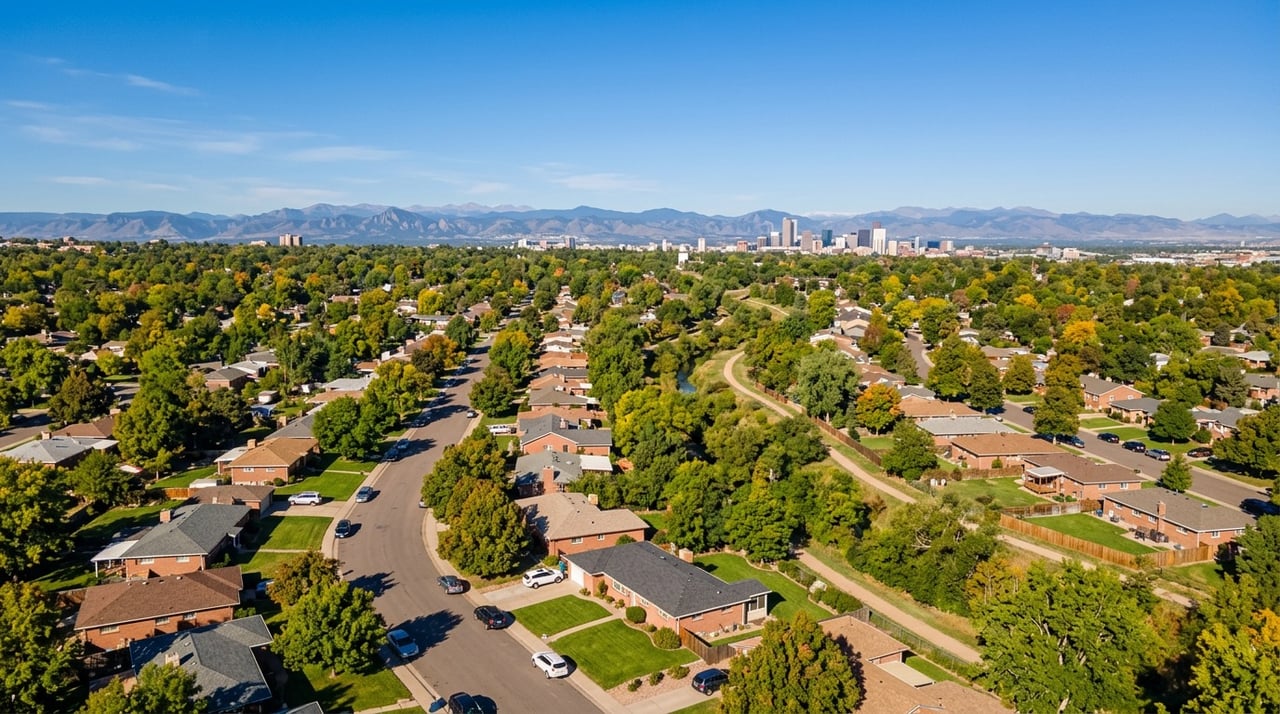
Park Hill tends to feel more internal. Even though it is well connected to downtown, Cherry Creek, major corridors, and the airport side of the city, much of the neighborhood experience is about the residential fabric itself. The streets, the homes, the schools, the yards, the community rhythm, the front porches, and the way the blocks feel when you are simply living there, not doing something special.
If you care how a neighborhood feels when nothing special is happening, Park Hill often stands out. If you care more about what is immediately around you when everything is happening, City Park often gets the edge.
If you are relocating, my Relocate to Denver guide helps you reframe the usual question. Instead of asking which neighborhood is better, we look at which neighborhood lines up better with your actual routine and your long term plans.
Housing stock and what buyers notice first
Both City Park and Park Hill have the kind of homes that make buyers fall in love with Denver. The mix is different enough that most buyers feel a preference quickly once they start touring both.
In City Park, you feel more of the blend between residential and urban. You will see historic homes, but you will also see more proximity to condos, apartments, duplexes, and mixed use edges depending on the exact pocket. That can be a positive if you want variety, if you value location over lot size, or if you like the layered feeling of a neighborhood that has several housing types and more movement.
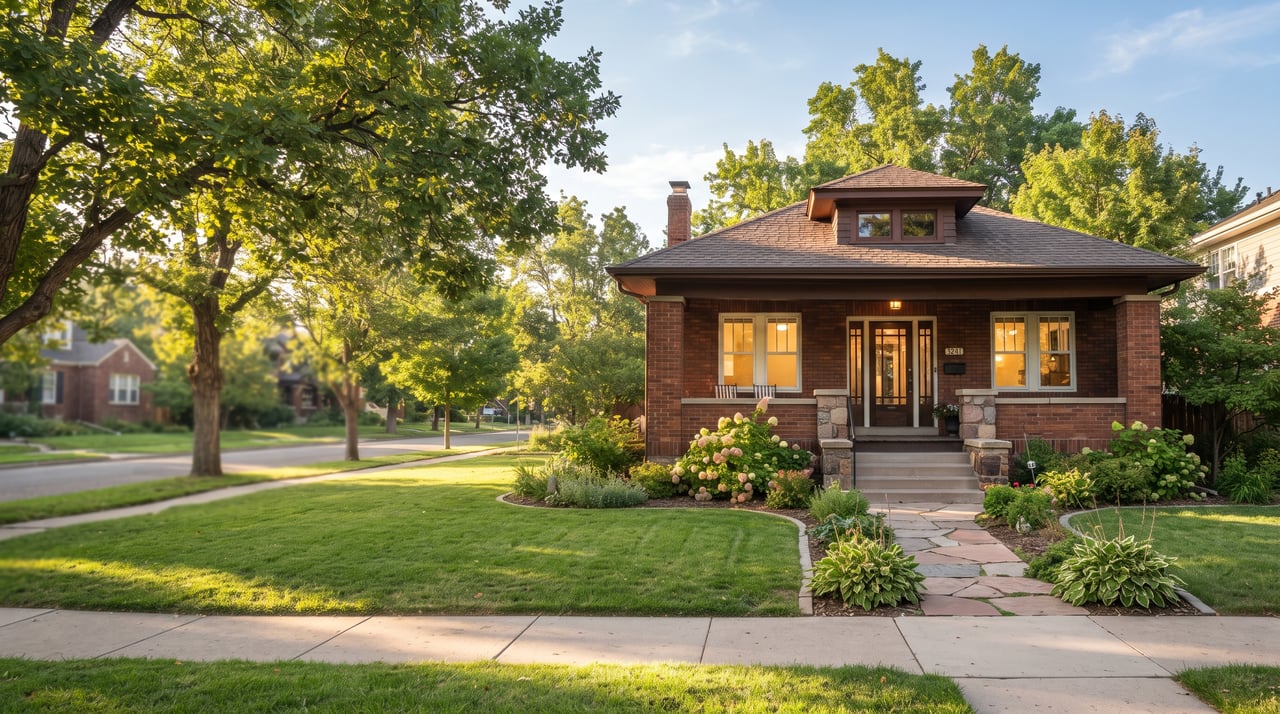
In Park Hill, the housing often reads as more consistently residential. Buyers notice larger lots, more detached single family homes, and the sense that the streets are shaped by homes first and destinations second. Bungalows, Tudors, brick homes, and classic Denver architecture show up in ways that appeal strongly to people who want a traditional neighborhood feel.
Neither option is objectively better. The question is what kind of buyer you are.
If you love the idea of living in a place that feels visually anchored by a park, a museum, a zoo, and a golf course, and you are willing to trade some privacy or lot size for that kind of positioning, City Park may feel more exciting. If you want your home life to feel more insulated, more residential, and more rooted in the block itself, Park Hill may feel more natural.
If you are currently shopping, pair this post with my Denver Buyer Game Plan so you can compare not just neighborhood vibe, but your budget and what it realistically buys in each area.
Lot size, yard space, and long term livability
For many buyers, this is where Park Hill starts to pull ahead. A lot of people begin with broad goals like wanting charm or wanting a good neighborhood, but once they walk actual homes they realize they also care about driveways, bigger yards, quieter streets, room to grow, or the option to stay longer without feeling boxed in.
Park Hill often aligns better with that longer view. Not every home is large and not every lot is oversized, but as a whole the neighborhood frequently gives buyers the feeling that they are buying into a place they can grow with rather than a place they might outgrow quickly.
City Park can work long term too, but it often appeals more to buyers who prioritize adjacency, walkability, and a central feel. That buyer is more willing to compromise on yard size or block quiet because the surrounding amenities carry so much weight in their decision.
This becomes especially important if you are deciding whether you are buying for the next three to five years or the next ten to fifteen. Those timelines produce different choices.
What a Saturday actually feels like
Sometimes the simplest way to compare neighborhoods is not through data at all. It is by imagining a regular Saturday.
In City Park, your weekend often revolves around neighborhood amenities even when you are not trying very hard. You might start with a walk around the park, stop at the Denver Zoo, spend part of the day at the Denver Museum of Nature and Science, or book a tee time at the City Park Golf Course. Those are not abstract selling points. They are active amenities that define the neighborhood experience.
City Park gives you built in activity and a sense that you are living close to things that make Denver feel like Denver.
In Park Hill, weekends often feel more residential and relationship centered. The value is less about your neighborhood being a citywide destination and more about it being a place where your home life feels grounded. You spend more time noticing the quality of the blocks, the feeling of the yards, the rhythm of neighborhood life, and the steady comfort of the area.
The difference is not about one being fun and the other being boring. It is about one being more destination oriented and the other being more neighborhood oriented.
Schools, community feel, and who these neighborhoods attract
For families, this comparison usually comes down to community feel as much as anything else. Both neighborhoods attract people who want to stay in the city instead of moving far out into the suburbs, but they tend to attract different versions of that buyer.
City Park often appeals to families who still want some city energy in their daily life. They value proximity to institutions, access to culture, and the ability to build family routines around major Denver attractions. They are comfortable with more activity around them if that means their lifestyle feels richer and more connected.
Park Hill often appeals to buyers who want a city neighborhood that feels more like a classic residential community. They may weigh school options more heavily, think more about long term street feel, or look for a place where home life feels more buffered from visitor traffic and event use.
If family fit is one of your top filters, you should also review the neighborhood content and collections inside my Denver Real Estate Resource Center and the individual neighborhood pages.
Walkability and livability
Walkability is a word that gets used a lot. It means different things to different people.
For some buyers, walkability means being able to walk to coffee, restaurants, the park, and cultural attractions. For that buyer, City Park is hard to beat. Living near one of Denver’s signature parks with direct access to the zoo, museum, and golf course is a specific kind of lifestyle.
For other buyers, livability matters more than destination walkability. They care about walking the dog on calm streets, feeling relaxed when they come home, and living where the block feels stable. Park Hill can be a better fit for that kind of buyer.
So when you ask which neighborhood is more walkable, make sure you also ask walkable to what and walkable for whom.
Resale strength and buyer behavior over time
Both neighborhoods have strong long term appeal, but their resale psychology is different.
City Park benefits from broad recognition. People know the park, the zoo, the museum, and the central location. It is easy for buyers to emotionally connect to the area quickly.
Park Hill benefits from loyalty. Buyers often want to stay in the neighborhood rather than leave it. The strength is not just visibility. It is depth of attachment. People who love Park Hill tend to really love Park Hill.
For broader market context, pair this article with: What Actually Sells in the Denver Market Right Now and What Does Not, Why Homes Are Sitting in Denver Right Now Even the Good Ones, and Denver Real Estate Market Forecast for the Next Five Years.
Which neighborhood fits which buyer
City Park may fit you better if:
- You want major park access to shape your daily lifestyle.
- You like being close to the Denver Zoo, the Denver Museum of Nature and Science, and the City Park Golf Course.
- You value central location, destination energy, and cultural access.
- You are comfortable trading some privacy or lot size for those location perks.
Park Hill may fit you better if:
- You want a more residential, block focused neighborhood feel.
- You care about lot size, detached homes, and long term livability.
- You want a quieter day to day environment while staying connected to central Denver.
- You picture yourself investing in a neighborhood for many years, not just buying for convenience.
How to approach this decision
If you are seriously choosing between City Park and Park Hill, do not base your decision on one open house in each. The right comparison is not house versus house. It is lifestyle versus lifestyle, block versus block, and the future version of your life versus another future version of your life.
Before you tour, I recommend you:
- Read my full City Park neighborhood guide.
- Read my full Park Hill neighborhood guide.
- Use my Denver Buyer Game Plan and Relocate to Denver guide to line up your budget, commute, and priorities with the right blocks in each neighborhood.
If you are selling before buying, my Smart Seller Game Plan can help you structure that transition without guessing.
FAQ: City Park vs Park Hill
Is City Park or Park Hill better for families?
It depends on what matters most to your family. City Park can work very well if you want direct access to the Denver Zoo, the Denver Museum of Nature and Science, and a major city park. Park Hill can work very well if you want larger residential blocks, bigger lots in many sections, and a more traditional neighborhood rhythm.
Which neighborhood is more walkable?
If you define walkable as being close to major destinations, City Park usually wins. If you define walkable as being able to enjoy quiet streets, neighbors, and a more relaxed block feel, Park Hill can be a better fit.
Where do you usually get more house for your money?
Park Hill often feels like it offers more traditional single family options and more yard in many areas. City Park often commands value through centrality and access to park, zoo, museum, and golf amenities. The right answer depends on the block, the specific home, and your budget.
Is City Park too busy to live in full time?
City Park has more destination energy than many neighborhoods, but for buyers who want access and activity, that is part of the appeal. It is not automatically too busy. It is simply a different rhythm.
Is Park Hill too quiet if I still want city access?
Park Hill gives you a calmer residential feel while still keeping you close to central Denver and major routes. For many buyers, that balance is exactly what they are looking for.
Which neighborhood tends to hold value better?
Both have strong long term appeal. City Park benefits from broad recognition and proximity to major attractions. Park Hill benefits from deep neighborhood loyalty, classic housing stock, and residential stability. Your personal plans and time horizon matter more than broad generalizations.
What should I do next if I am deciding between these neighborhoods?
Start with the neighborhood pages for City Park and Park Hill. Then use the Denver Real Estate Resource Center, Denver Buyer Game Plan, and Relocate to Denver guide to narrow your search in a strategic way.
Next steps
If this comparison helped, here are the best next clicks:
- City Park neighborhood guide
- Park Hill neighborhood guide
- All Denver neighborhood guides
- Denver Real Estate Resource Center
- Relocate to Denver guide
- Denver Buyer Game Plan
- Smart Seller Game Plan
If you want help choosing between City Park, Park Hill, and a few other east side options, that is exactly the kind of neighborhood strategy I help buyers with. The goal is not just to find a house. The goal is to choose the version of Denver that fits how you actually want to live.
If you’re buying, selling, or moving to Denver and want to talk through your specific situation, feel free to reach out directly.
Call or text: 662.588.2420
Email: [email protected]