Every Denver relocation article gives you the same highlight reel. The mountains. The sunshine. The craft beer. The active lifestyle. All of it is real — but none of it tells you what it actually feels like to live here after the honeymoon period ends, what the city costs at ground level, or what the people who move here and regret it got wrong.
This guide is written for people who are seriously considering a move to Denver and want a complete, honest picture before they commit. Not a tourism pitch. Not a top-ten listicle. The real version — including the parts that most relocation content deliberately glosses over.
If you're also trying to understand the buying side of this move — what it takes to compete in Denver's market, what things cost, and how to navigate an offer without overpaying — read the 2026 Denver buyer guide alongside this one.
What Denver Actually Is — and Isn't
Denver is a mid-size western city that punches above its weight in almost every category that matters to people who move here intentionally: outdoor access, job market, food scene, weather, and quality of life. It has grown significantly over the past fifteen years and the growth has brought real energy — new neighborhoods, new restaurants, a downtown that actually functions, and a culture that skews active, young, and entrepreneurial.
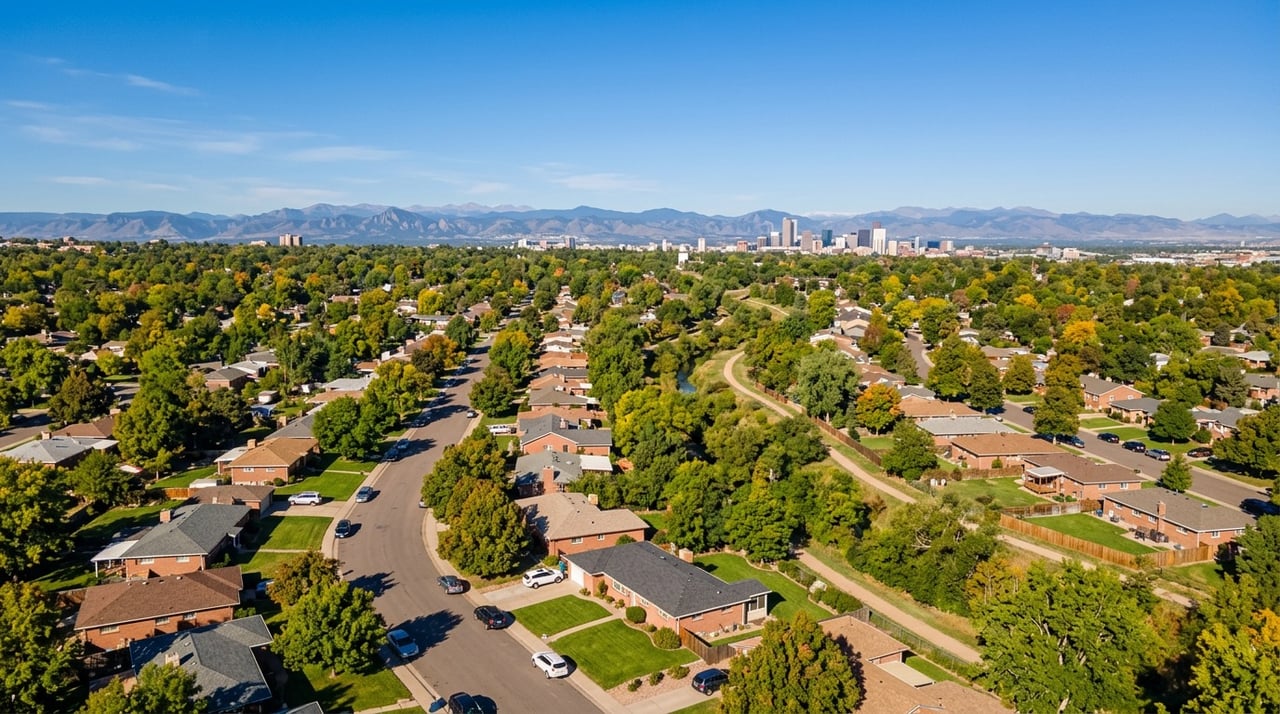
It is not a sleepy mountain town. People move here expecting a laid-back ski-bum vibe and discover a real city with real traffic, real cost of living, and real competitive dynamics in the housing market. The mountains are there — visible from almost everywhere on a clear day — but they're about an hour away from most of Denver. You're not stepping out your front door onto a ski slope. You're in a city, with all that entails.
It is also not a cheap city. According to Numbeo's 2026 cost of living data, Denver ranks significantly above the national average for housing, dining out, and overall consumer prices. That has surprised a lot of people who moved here from similarly expensive cities like Austin or Seattle expecting a relative bargain — and it's surprised even more people who moved from genuinely affordable parts of the country expecting Colorado to be less expensive than they're used to.
The people who love Denver most are almost universally the ones who came in with accurate expectations. The people who struggle with it are usually the ones who fell in love with the idea and didn't fully think through the day-to-day realities. That gap is what this guide is trying to close.
The Weather: Better Than You Think and Weirder Than You Expect
Denver gets around 300 days of sunshine per year — more than Miami or Los Angeles. [web:180] That number surprises most people, especially those coming from the Pacific Northwest or the Midwest where gray winters are the norm. Winters in Denver are genuinely sunny and mild much of the time, punctuated by occasional snowstorms that are heavy but short-lived. Snow often melts within a day or two because the sun comes back out.
What people don't warn you about: the dryness is extreme, especially if you're coming from somewhere with humidity. Denver sits at 5,280 feet of elevation, and the air is genuinely dry year-round. Your skin dries out faster than you're used to. You'll drink more water than you think you need to. Altitude affects some people more than others — headaches, fatigue, and shortness of breath during the first few weeks of physical activity are common, especially for people moving from sea level. Most people fully adjust within a few months, but it's real and worth knowing about.
The other weather surprise: hailstorms. Colorado has some of the most severe hail in the country, and it causes significant damage to roofs, cars, and siding. If you're buying a home, this is a material factor — hail damage affects insurance rates and premiums, and it's one reason insurance costs in Denver have risen sharply in recent years. Read more about how rising insurance costs are affecting Denver homeowners before you finalize a purchase.
What It Actually Costs to Live in Denver in 2026
Most relocation content gives you vague ranges. Here is a more grounded picture of what you should budget for across the main categories. For a complete deep dive on monthly expenses, read the 2026 Denver cost of living guide.
Housing
The Denver metro median home price as of early 2026 sits around $550,000–$580,000, though it varies significantly by neighborhood and property type. [web:177] Condos and townhomes offer lower entry points — often in the $400,000s — but carry HOA fees that can add several hundred dollars per month to your total housing cost, and some of those HOA fees have risen substantially due to insurance and deferred maintenance issues. Detached single-family homes in desirable neighborhoods start in the $600,000s and run well into the millions in areas like Cherry Creek, Hilltop, and Washington Park.
Renters will find the market has loosened somewhat from its pandemic-era peak — vacancy rates have risen and some landlords are offering incentives again. [web:183] One-bedroom apartments in central Denver typically run $1,600–$2,200/month. Two bedrooms in desirable neighborhoods run $2,200–$3,000+. If you're renting before buying, understand that you're paying market rate with no equity building — for most buyers with a 3–5 year horizon, buying still makes more financial sense. Read the full breakdown in the renting vs. buying in Denver guide.
Groceries and Dining
Groceries in Denver run noticeably above the national average — roughly 8–12% higher depending on where you shop. Whole Foods and Sprouts are plentiful but expensive. King Soopers (Kroger's Colorado brand) is the most common mid-range option. Natural Grocers is a popular affordable alternative. Dining out is similarly above average: a sit-down dinner for two at a mid-range restaurant typically runs $60–$90 with drinks. Denver's food scene is legitimately strong, but you'll pay for it.
Transportation
Denver has a light rail and commuter rail system (RTD) that works reasonably well if you live and work near a station. For most people, a car is still necessary — Denver is a spread-out city and many of the most desirable neighborhoods are not well-served by transit. Traffic is a real issue on I-25, I-70, and C-470 during peak hours, and it has gotten worse as the metro area has grown. If you're relocating and your job is in a specific location, map your commute at 8am on a Tuesday before you decide where to live — commute times vary dramatically by direction and neighborhood.
Property Taxes and Insurance
Colorado's property tax rates are relatively moderate, but recent reassessments have led to significant bill shock for some homeowners. Read the full breakdown in the 2026 Denver property tax guide. Home insurance has also risen sharply — hail risk, wildfire proximity for mountain communities, and broader insurance market pressures have made Colorado a more expensive state to insure property in than it was five years ago. Budget accordingly.
Relocating from out of state and trying to figure out what Denver will actually cost you? Reach out to Sallie directly — she works with relocation buyers regularly and can walk you through a realistic budget before you make any commitments.
The Job Market
Denver's job market is genuinely strong and diversified across multiple industries — which is one of the city's most underrated advantages. The metro is home to significant aerospace and defense employers (Lockheed Martin, Raytheon, United Launch Alliance), a large and growing healthcare sector (UCHealth, SCL Health, Denver Health), strong technology and software companies, and a substantial federal government presence that provides stability regardless of private sector cycles.
Denver is also increasingly a hub for financial services, renewable energy companies, and startups. The city has attracted a meaningful amount of corporate relocation over the past decade from both coasts — companies looking for educated talent at slightly lower cost than San Francisco or New York. [web:180]
The important caveat: secure your job before you move if at all possible, especially in a market where remote work has become more competitive and return-to-office mandates are forcing people to be physically present. Do not move to Denver assuming the job will materialize once you're here. It sometimes works out that way — but not reliably enough to build a financial plan around it. [web:182]
Where to Live: Matching Neighborhood to Lifestyle
Denver's neighborhoods vary dramatically in feel, price point, and what daily life looks like. Choosing the wrong one is one of the most common and expensive mistakes relocating buyers make — because unlike a kitchen renovation, you can't fix location after you close. Read the full 2026 Denver neighborhood guide for a comprehensive breakdown. Here's a quick map by buyer profile:
You want walkability, energy, and things to do
Look at LoHi / Highland, Berkeley / Tennyson Street, or Sloan's Lake. These areas give you walkable restaurant and coffee corridors, proximity to downtown, and a neighborhood feel that's genuinely usable on a daily basis. LoHi is the most urban and energy-forward. Berkeley is walkable but quieter. Sloan's Lake balances outdoor access with city proximity.
You want an established neighborhood with long-term stability
Washington Park is one of Denver's most consistently desirable neighborhoods — wide streets, mature trees, excellent park access, and strong demand that has held through multiple market cycles. It's not cheap, but it holds its value reliably.
You're moving with kids and want newer construction and community infrastructure
Central Park is the top choice for families seeking newer homes, planned amenities, and school proximity. It's more suburban in feel but delivers on family livability consistently.
You want luxury, access, and long-term value
Cherry Creek and Hilltop are Denver's most consistent luxury neighborhoods. Cherry Creek offers walkable high-end retail and dining. Hilltop gives you larger lots, privacy, and quiet — close to Cherry Creek but with a distinctly residential feel.
You want value and are willing to be strategic about location
Aurora — Sallie's home base — is one of Colorado's fastest-growing cities and offers meaningful value compared to Denver proper, especially for buyers willing to evaluate location carefully at the block level. Read the honest breakdown of what it's actually like to live in Aurora in 2026.
Not sure which neighborhood actually fits your lifestyle? Talk it through with Sallie — matching buyers to the right neighborhood before they start touring is one of the most valuable things a local agent can do for relocating clients.
Should You Rent First or Buy Right Away?
This is one of the most common questions relocating buyers ask, and the honest answer is: it depends on how confident you are about where you want to be and how long you plan to stay.
If you're moving to Denver without knowing the city well and you're unsure which neighborhood will actually fit your life, renting for six to twelve months to learn the city before committing to a purchase is completely reasonable. The cost of buying the wrong home in the wrong neighborhood — because you didn't know the city well enough yet — is far greater than a year of rent.
If you have a clear picture of where you want to be, you have a stable income, and you're planning to stay three or more years, buying sooner rather than later is almost always the stronger financial move. Every month you rent in Denver at current rates is equity you're not building. Read the full analysis in the renting vs. buying in Denver guide.
One thing worth knowing: if you're coming from Texas or California, the Denver market may feel slower and more negotiable than what you're used to. That's real — inventory has risen and buyer leverage has improved in many segments. But the best homes in the best locations still move quickly and still attract multiple offers. Being pre-approved and working with someone who knows the market remains the difference between getting the house and not getting it. The 2026 Denver buyer guide walks through exactly how to position yourself.
The Things Most Relocation Guides Don't Tell You
These are the realities that consistently surprise people who move to Denver from other states:
- The altitude is real and it takes time. Most people feel it in the first few weeks — especially during exercise. You'll feel winded faster, you'll need more water, and alcohol hits harder. Most people fully adjust within one to three months, but don't plan your first trail run for your second day in town.
- Denver is not a Southern hospitality city. People are friendly but independent. It can take longer to build deep friendships than in communities with a stronger culture of neighborliness. The "Colorado Freeze" — a reputation for people being superficially warm but hard to get close to — is something transplants mention regularly. Come with existing community if you can, and invest in building new ones intentionally.
- The traffic is worse than people expect. I-25 through downtown and I-70 heading toward the mountains are genuine bottlenecks. Weekend mountain traffic — especially on ski weekends — can turn a one-hour drive into two and a half. Know your commute pattern before you choose where to live.
- The outdoor access is as good as advertised — but it requires a car. World-class hiking, skiing, climbing, and cycling are genuinely within reach. But "within reach" usually means a 45-minute to 90-minute drive. You're not walking out your door into Breckenridge. Plan around it and it's fantastic. Expect it to be right there and you'll be disappointed.
- HOA fees can be a serious budget factor. Many Denver condos and townhomes carry HOA fees of $300–$700+/month, and those fees have risen as buildings deal with deferred maintenance and rising insurance costs. Always factor total housing cost — mortgage plus HOA plus taxes plus insurance — not just the purchase price. Read more about the HOA situation in Denver's condo market.
- Coming from Texas? The cost gap is smaller than you think. If you're relocating from Dallas, Austin, or Houston, you may expect Denver to cost significantly less than where you came from. In housing and overall cost of living, the gap has narrowed considerably. Read the Texas vs. Colorado comparison guide for a full side-by-side breakdown.
What the People Who Love Denver Most Have in Common
After years of helping relocating buyers find homes in Denver, there is a clear pattern in who thrives here. The people who love Denver most are almost always:
- Active and outdoors-oriented — they actually use the mountains and the trails and the bike paths, and those things are built into their regular life rather than occasional aspirations
- Willing to drive — they accepted early that Denver requires a car for most of daily life and built their schedule around it instead of fighting it
- Intentional about neighborhood — they did the work to understand which part of the city actually fits their life before they bought, rather than buying where things sounded good and discovering the mismatch later
- Prepared for the cost — they came in with accurate budget expectations and made housing decisions accordingly, rather than being caught off guard by what they discovered after signing
- Community builders — they didn't wait for Denver to come to them; they went out and found their people through running clubs, climbing gyms, breweries, neighborhood events, or whatever else fits their world
None of those are complicated. They're all just about coming in with your eyes open rather than your eyes closed to the parts that require adjustment.
Frequently Asked Questions About Moving to Denver
Is Denver a good place to live in 2026?
Yes — for the right person. Denver offers exceptional outdoor access, a strong and diversified job market, over 300 days of sunshine per year, and a city that has matured significantly over the past decade. The tradeoffs are real: cost of living is above average, the altitude requires adjustment, and the lifestyle is genuinely active and independent rather than slow-paced or southern-hospitable. People who research it thoroughly and move with realistic expectations overwhelmingly love it. [web:180]
What salary do you need to live comfortably in Denver?
A household income of $90,000–$110,000 covers a comfortable renter lifestyle in Denver. To buy a home comfortably — covering mortgage, taxes, insurance, and maintenance without being house-poor — most single-income buyers need $100,000–$130,000+, and dual-income households are significantly better positioned. These numbers vary based on neighborhood, property type, and lifestyle choices.
Is Denver still growing in 2026?
Yes. Colorado's population has grown to nearly 5.8 million, and the Denver metro continues to attract corporate relocations, remote workers, and people drawn by lifestyle. [web:181] Growth has moderated from its pandemic-era peak, but Denver remains one of the consistently desirable destinations in the western United States.
What are the pros and cons of living in Denver?
Pros: 300+ days of sunshine, easy mountain access, strong job market across multiple industries, a genuinely good food and culture scene, an active outdoor lifestyle culture, and neighborhoods with real character. Cons: Above-average cost of living especially in housing, high altitude requiring adjustment, an increasingly real traffic problem, extreme dryness, severe hail risk affecting insurance costs, and a social culture that can take time to break into. [web:180]
Should I rent or buy when I first move to Denver?
If you don't know the city well yet, renting for six to twelve months while you learn the neighborhoods is reasonable. If you have a clear picture of where you want to live and a three-plus year horizon, buying sooner is almost always the stronger financial move. Read the full breakdown in the renting vs. buying guide.
What is the best neighborhood in Denver for relocating buyers?
There is no single best neighborhood — it depends entirely on your lifestyle, budget, and commute. For walkability: Berkeley, LoHi, or Sloan's Lake. For stability and long-term value: Washington Park. For families and newer construction: Central Park. For luxury: Cherry Creek or Hilltop. For value and space: Aurora. Read the full Denver neighborhood guide.
How hard is it to buy a home in Denver as a relocating buyer?
It's more manageable than it was at the peak of the market in 2021–2022, but it still requires preparation. Pre-approval, a clear sense of neighborhood priorities, and a local agent who knows how to structure competitive offers are all still necessary in the right price ranges. Read the 2026 Denver buyer guide for a complete playbook.
Does the altitude in Denver really affect you?
Yes, for most people — especially in the first few weeks. Common effects include headaches, fatigue, shortness of breath during exercise, and faster alcohol absorption. Staying well hydrated, avoiding intense exercise in the first week, and limiting alcohol initially all help. Most people fully adjust within one to three months. [web:181]
What do people regret about moving to Denver?
The most common regrets among Denver transplants fall into three categories: choosing a neighborhood that doesn't fit their daily life, underestimating the cost of living, and not having a job secured before the move. All three are avoidable with the right preparation.
Moving to Denver? Do It Right the First Time.
The people who have the smoothest moves to Denver are the ones who did the work before they arrived — on neighborhood, on budget, on the buying process, and on what the city actually requires of you day to day. The ones who struggle are the ones who moved on feeling and figured out the details afterward.
Sallie Simmons is a Denver real estate agent with Compass based in Aurora, Colorado. She works specifically with relocating buyers — people moving to Denver from Texas, California, and other parts of the country who need someone who knows this market at ground level and can guide them from "thinking about it" to "keys in hand" without wasting time or making expensive mistakes.
Whether you're three months out from a move or just starting to seriously research Denver, the best first step is a real conversation. No pitch, no pressure — just a clear-eyed look at what your move actually looks like, what the market is doing, and how to position yourself well.
→ Reach out to Sallie to start the conversation
Or start with the resources: read the 2026 Denver buyer guide, explore the Denver neighborhood guides, and get a realistic sense of what Denver costs in 2026 before you commit.