A family restaurant returns, the Asia Center’s future remains unresolved, and the timing of bus rapid transit raises new questions about what comes next along Federal.
“We want to see that area come alive again,” An Nguyen told The Denver Post in late June, shortly before she and her sisters opened Rễ Tre at 630 S. Federal Blvd.
It was an expression of hope, not a promise. Nguyen also acknowledged the risks of opening a restaurant when food and labor costs are much higher than they were when her parents operated a business in the same building.
That tension runs through the biggest stories along Little Saigon this fall. On this stretch of Federal Boulevard, along the western edge of Denver’s Athmar Park neighborhood, one family has brought a longtime restaurant space back to life. Farther south, a landlord’s redevelopment proposal has raised questions about the future of an established shopping center.
Meanwhile, the arrival of bus rapid transit is less immediate for this part of the corridor than some had expected. Public investment and new zoning will help shape Federal’s future, but property owners and tenants are making the decisions residents can see today.
A New Restaurant With Three Decades of Family History
Thai Nguyen and Ha Pham operated New Saigon Restaurant at 630 S. Federal Blvd. from 1987 to 2017. When they sold the restaurant business, they kept the property. New Saigon eventually closed in 2024.
Their daughter An initially declined the opportunity to take over the space. She was focused on Dân Dã, her restaurant in Aurora, and told The Denver Post she felt discouraged by what she saw as an aging restaurant scene along Federal.
Visits to the corridor and the empty dining room last winter changed her mind. Her sister Thao, who works in real estate, had also mentioned difficulty selling the former New Saigon space.
“The more I came back to that area, the more vacant buildings I saw,” An told 5280.
Recognition as Chef of the Year at the Colorado Restaurant Association’s Hospy Awards helped give her the confidence to move forward. She partnered with Thao and another sister, Thoa, who owns Banh & Butter Bakery and Cafe next to Dân Dã. Their father rebuilt and remodeled the Federal Boulevard restaurant space himself.
A fourth sister, Thu, already operates New Saigon Bakery and Deli next door.
The result is Rễ Tre, which means “bamboo roots.” The owners say the name reflects their deep family and community ties.
The opening also illustrates why property ownership matters in a neighborhood’s evolution. The family still controlled the building, allowing them to bring the space back into use without first acquiring a property or negotiating a new lease.
What Rễ Tre Serves
Rễ Tre opened July 3, 2026. In its August 4 feature, 5280 reported hours of 11 a.m. to 8 p.m., Tuesday through Sunday, with no reservations. Check current hours before visiting.
An told The Denver Post that the menu reaches further into traditional Vietnamese cooking than the menu at Dân Dã.
- Brunch centers on “what Vietnamese people eat when they wake up in the morning,” including a steak-and-eggs dish.
- Dinner emphasizes seafood and pronounced fish flavors, including a dish made with two fermented fish sauces.
- Family-style options include herb-filled seafood salads and build-your-own spring roll platters, a signature at Dân Dã.
- Khoai kho quẹt pairs fries with caramelized fish sauce, crispy shallot, and pork belly, drawing on a Southern Vietnamese clay-pot tradition.
- Thoa’s daytime cafe serves French pastries, espresso, and coffee flights. Thu’s neighboring bakery offers Vietnamese pastries.
- Cocktails developed by Thao and Thoa incorporate Southeast Asian ingredients.
Westword’s July, August, and September restaurant roundups listed Rễ Tre as the only new opening on Federal between Alameda and Mississippi. That makes it a notable addition, although those roundups alone do not establish a complete inventory of business activity along the corridor.
For anyone researching where to live in Denver, stories like this add context that a home search cannot provide on its own. The businesses people return to, and the families behind them, are part of understanding a neighborhood beyond its listings.
At the Asia Center, Redevelopment Remains Unresolved
Farther south, near Federal and Tennessee, the Asia Center presents a different question: whether a property’s next chapter will come through renovation or replacement.
The one-story shopping center dates to 1956. On April 20, landlord Jason Truong submitted a concept plan to replace it with a four-story mixed-use building. An updated design filed a few days later incorporated more East Asian architectural elements, including upturned roof eaves.
The proposal drew substantial opposition. More than 18,000 people signed a petition to save the center, and tenants said they had not been told about the proposal before it was submitted.
Businesses identified in the coverage included Tony Pho, Hong Kong BBQ, Kim Son Jewelers, and Miracle Touch and Reflexology. Angel Dao, who works at Tony Pho, told Rocky Mountain PBS that she wanted the existing building repaired rather than demolished and replaced.
The disagreement was not simply about whether the property needed work. Tenants and other community members acknowledged its condition. The more difficult questions concerned what improvements should look like and what would happen to the businesses already there.
What the City and Developer Said
By early June, Denver Community Planning and Development had closed the concept plan, citing “significant massing and design issues.”
The city and the developer’s representative offered different accounts of what that meant:
- Chuong Le, legal representative for Asia Center Development, LLC, said the closed plan was an outdated design and that the newer version remained active.
- A city spokesperson said there was no active concept plan and that the developers had received a letter outlining required changes.
A concept plan is an early step in Denver’s development review process, not permission to begin construction. The initial review generally takes about three weeks and concludes with a feedback meeting. An applicant can then move on to a site development plan, which requires additional review.
The June coverage did not establish an approved redevelopment project or a construction schedule. An earlier landlord letter to tenants also stated that there were “no finalized plans and no timeline for construction.”
The reporting reviewed for this article does not establish a subsequent resubmission, tenant changes, or completed repairs.
As Denverite reported in June, Councilmember Flor Alvidrez described Truong’s goal as creating a place where younger Vietnamese people could feel proud of their culture, potentially with a community center.
That aspiration overlaps with the community focus behind Rễ Tre. The approaches, however, are different: one family reopened an existing restaurant building, while the Asia Center proposal would replace a shopping center occupied by multiple businesses.
Federal BRT Has a Service Target, but Little Saigon’s Construction Timing Is Less Clear
The Federal Boulevard bus rapid transit project is another major piece of the corridor’s future. Its overall schedule, however, should not be mistaken for a construction date for every block.
Alvidrez said the Asia Center developers had connected their timing to the arrival of BRT. CDOT subsequently told her that construction would begin at the northern end of Federal in fall 2027 and progress south.
“We really don’t know when the BRT will be coming to this part of Federal at the moment,” she said.
CDOT’s project schedule lists:
- Final design in 2026 and 2027.
- Construction and testing from 2027 through 2029.
- Service beginning in 2030.
The proposed route could extend approximately 18 miles, from Dartmouth to 120th Avenue.
For residents and property owners near Mississippi, the important distinction is between the corridor-wide schedule and the local construction schedule. A northern construction start in 2027 does not establish when work will reach Little Saigon.
If you are planning a move to Denver, keep that distinction in mind when comparing commute options. Evaluate the transportation available today separately from a proposed future service.
New Zoning Shapes Future Development, Not Its Start Date
Denver City Council adopted Southwest Area Plan rezonings on July 13, 2026.
Some properties along Federal and Mississippi now fall within a design overlay requiring active, nonresidential ground-floor uses. The overlay also prohibits drive-thru buildings and parking between a building and the street.
These rules influence how future development meets the sidewalk and what occupies its ground floor. They do not require an owner to redevelop, set a construction deadline, or resolve the future of a particular tenant.
For anyone evaluating a property near the corridor, zoning requirements, development applications, and public infrastructure schedules are separate pieces of the picture. A proposal is not an approval, and an approval is not a construction start.
My Denver Home Buyer’s Guide provides a broader starting point for the purchase process. Neighborhood-specific questions, including nearby proposals and transportation plans, deserve additional attention when you narrow your search to a particular home.
What’s Completed, Scheduled, and Still Uncertain
Completed or Adopted
- Rễ Tre opened July 3, 2026.
- City Council adopted the Southwest Area Plan rezonings July 13, 2026.
- Denver installed 14 electronic speed feedback signs on Federal and completed signal retiming at Federal and Alameda.
Scheduled, With Details Still Pending
- Speed safety cameras on Federal and Alameda are listed as planned for 2026, without posted installation dates or specific locations in the information reviewed.
- Federal BRT service is targeted for 2030. Construction is expected to begin in the north, while the timing for Little Saigon remained unclear in the June reporting.
Unresolved in the Reporting Reviewed
- The Asia Center’s next development-review step. The city said there was no active concept plan as of June, while the developer’s representative said an updated design remained active. The city also listed the overall project as in progress, which is not the same as an approved plan.
- The status of a proposed Little Saigon community advisory group. Colorado Asian Pacific United’s 2026 preservation study recommended the group, and May reporting anticipated a summer launch. That reporting does not confirm whether it subsequently began meeting.
A Fall Visit to This Stretch of Federal
Rễ Tre and New Saigon Bakery and Deli offer a starting point for spending time on the corridor.
At 630 S. Federal, the cafe menu includes French pastries and coffee flights. Next door, the bakery offers Vietnamese pastries. For a shared meal at Rễ Tre, the menu includes khoai kho quẹt and build-your-own spring roll platters.
The Asia Center businesses named in this spring’s coverage, including Tony Pho, Hong Kong BBQ, and Kim Son Jewelers, are also part of the neighborhood story. Check current hours and operating status before making a special trip.
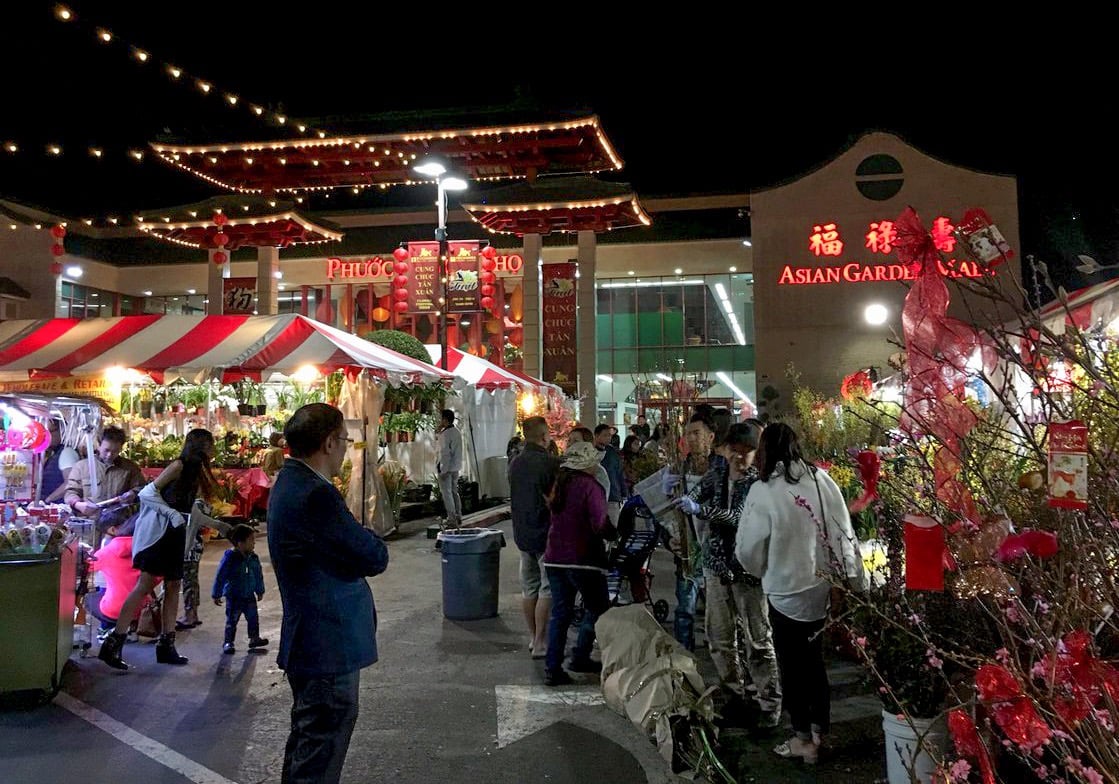
North of Alameda, the Far East Center at 333 S. Federal held its Mid-Autumn Festival on September 19. Earlier in the year, the center announced a new mural and historic-landmark plaque unveiling ahead of its February 21–22 Lunar New Year celebration. A date for the 2027 celebration was not available in the information reviewed.
If you are using the visit to explore southwest Denver more broadly, read my Athmar Park neighborhood guide and Ruby Hill neighborhood guide to put the surrounding residential areas into context.
What This Means if You’re Considering a Home Near Federal
A new restaurant, a proposed redevelopment, a zoning overlay, and a transit project can all influence how a corridor evolves. None, on its own, tells you what will happen to a specific property or when.
For buyers, the useful questions are specific: What is nearby today? What has actually been approved? Is there a construction schedule? How does the location work for your daily routine before any proposed improvements arrive?
For homeowners considering a sale, the same distinction matters. Neighborhood investment can provide context, but it is not a substitute for evaluating comparable sales, property condition, and current competition.
You can explore more buying, selling, neighborhood, and relocation information in my Denver Real Estate Resource Center.
Looking at Property Near Federal or Mississippi?
If you are considering buying or selling near the corridor, I can help you separate what is approved, what is proposed, and what remains uncertain, then put that information in the context of your real estate goals.
Connect with Sallie Simmons to discuss a property, compare neighborhoods, or plan your next move in Denver.